
Reviewed · OLD TOWN WALKING TOURS
Walking tour of Split with an Art Historian
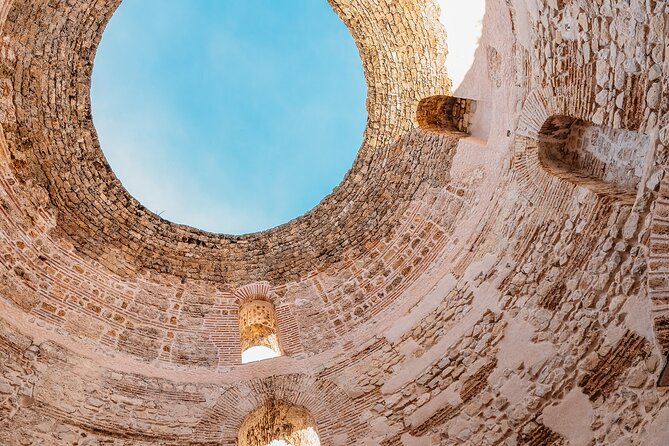
Split has a rare trick up its sleeve. You walk through one of the world’s most famous Roman monuments, and it still feels like a living neighborhood. This guided walk uses art history to connect the stones, the street layout, and the local stories, starting with water at Strossmayer Park and ending near the Old Town model by Riva.
I like two things right away. First, Josipa (your guide and an art historian) explains the “why” behind what you’re seeing, not just the what. Second, the tour is paced to help you actually notice details, with photo-friendly stops and practical tips for where to go next.
One consideration: this is not a sit-down museum tour. Expect some uneven ground and unavoidable steps in places, plus you do not go inside paid sites like the Cathedral of Saint Domnius. If stairs are a deal-breaker, plan carefully.
Key highlights worth planning around
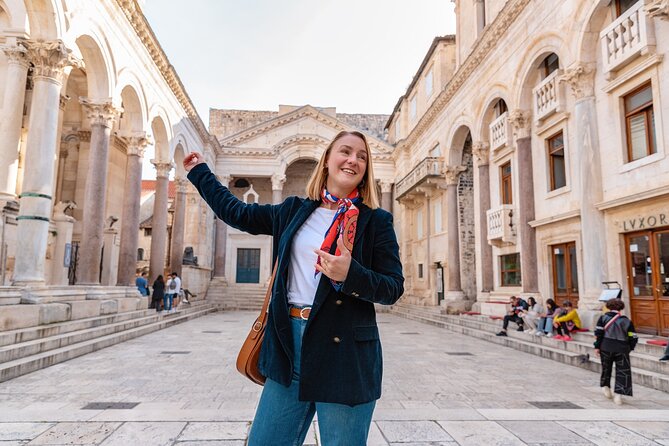
- Small group, max 10 people for better questions and a calmer walk through the Palace area
- Josipa’s art-history approach links Roman design to medieval and modern Split life
- Photo stops built into the route, including the Vestibulum area and tight spots like Let Me Pass
- No paid-site entry inside museums, but you still get the big-picture stories on site
- Avoiding crowd pressure, with guidance that helps you move through Old Town more comfortably
Meet at Strossmayer Park, where water sets the Split story in motion
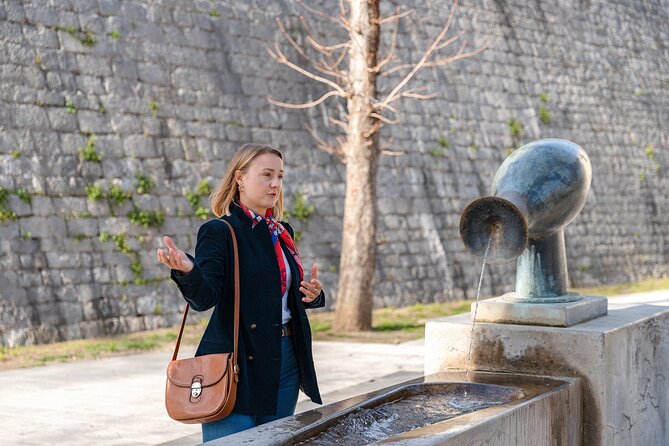
Your tour starts at Strossmayerova Fountain in Strossmayer Park, locally called Đardin. You’ll meet near the central fountain, and that’s not an accident. The opening theme is water, because it’s the lifeline that helped keep Diocletian’s Palace functioning for more than 17 centuries.
This first stop matters because it gives you a frame for the whole walk. When you understand how water supported life in a Roman complex, the gates, streets, and even the atmosphere changes you’ll see later start to make sense. You stop, listen, and then you move on with a purpose.
Practical tip: if it’s hot, this is a good moment to grab water and sunscreen before you get into the Palace maze. The route keeps you mostly outdoors, and the tour runs rain or shine.
More walking tours of Split:
- Split: Old Town and Diocletian Palace Walking Tour
★ 4.9 · 4,727 reviews - Walking Tour of Split and Diocletian’s Palace
★ 5.0 · 2,588 reviews - Krka Waterfalls tour with Trogir Walking tour and Krka panoramic boat cruise
★ 5.0 · 1,659 reviews
Tower 2 and the Golden Gate, the fast way to understand the Palace layout
After the park, you shift into a different kind of time travel. Tower 2 of Diocletian’s palace is your early “orientation” stop. It’s not the prettiest photo scene, and that’s part of the point. This is where your guide helps you grasp what makes Split feel unique worldwide: a Roman imperial residence that never really stopped being used.
Then you move to the Golden Gate, the northern entrance to Diocletian’s Palace. It was one of four entry points, so you learn to read the Palace like a map. From here, the route follows the main Roman street axis, Cardo, running north to south, toward the Peristyle.
If you only see Split once, this is the smartest chunk to do early. Your brain needs a landmark or two to stop feeling lost. With this part of the tour, you get the sense of direction, the street logic, and the “big geometry” of the site.
Gregory of Nin’s statue and the toe-rubbing lore locals keep alive
Before you enter the Palace through the Golden or northern gate area, you’ll pause at the statue of Grgur Ninski, also known as Gregory of Nin. It’s a striking 7-meter bronze figure made by Croatian sculptor Ivan Mestrovic.
Yes, you can rub the toe for good luck. But the better part is the story around how the monument became part of daily popular culture. This stop turns the Palace from a purely Roman artifact into something that belongs to Split today.
It’s also a nice breather. You get a clear view of the statue, a chance to ask questions, and then you step into the Palace streets with a little more local context in your head.
Cardo Maximus to the hidden garden approach, then the Iron and Silver gates
Once inside, you walk along Dioklecijanova, which is Cardo Maximus, the principal north-south street of the ancient complex. Even if you’ve seen Roman columns in textbooks, the scale here feels different because the street still frames real movement in the Old Town.
Along the way, your guide leads you toward a hidden garden inside the Palace. This is one of those moments where the architecture stops being “ruins” and starts behaving like a lived-in space. You’re not just seeing stone. You’re seeing how the design creates pockets, pauses, and views.
Next comes the Iron Gate, a short stop with a memorable detail. You’ll hear why it was considered the city’s platinum gate throughout its history. It’s a small detour, but it gives you a taste of how gates in this complex were not all equal. Each threshold had meaning.
Then the route takes you toward the eastern side at the Eastern (Silver) Gate. It’s a quick detour, but it carries a secret you’ll learn on site. This is a pattern in the tour: a short walk, a concentrated story, then back into the flow.
Same stretch of the Dalmatian coast, a different kind of day:
- Split: Krka Waterfalls Trip with Boat Cruise and Swimming
★ 4.8 · 10,519 reviews - From Split: Krka Waterfalls, Food & Wine Tasting Tour
★ 5.0 · 9,326 reviews - Blue cave, Mamma Mia and Hvar, 5 islands speedboat tour
★ 5.0 · 7,150 reviews - From Split: Krka Waterfalls, Food & Wine Tasting Tour
★ 4.9 · 6,598 reviews
The Peristyle and the Robert Adam connection, plus Cathedral context without entry
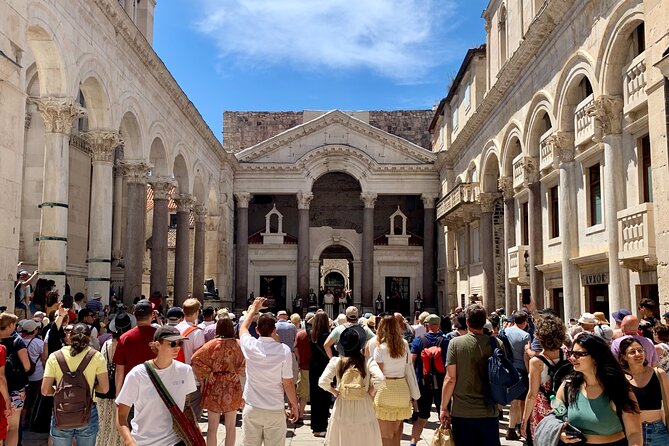
As you approach the Peristyle of Diocletian’s Palace, the grandeur clicks into place. You’ll stroll along Decumanus, the main east-west axis, and the Peristyle is where the Palace suddenly feels like a monument built for ceremonies and power.
This is also where a major Western architecture reference enters the story. In the 18th century, the Scottish architect Robert Adam listed it among the most beautiful European monuments. Your guide uses that kind of reference to show how this site carried value far beyond Roman times, and why it has attracted attention for centuries.
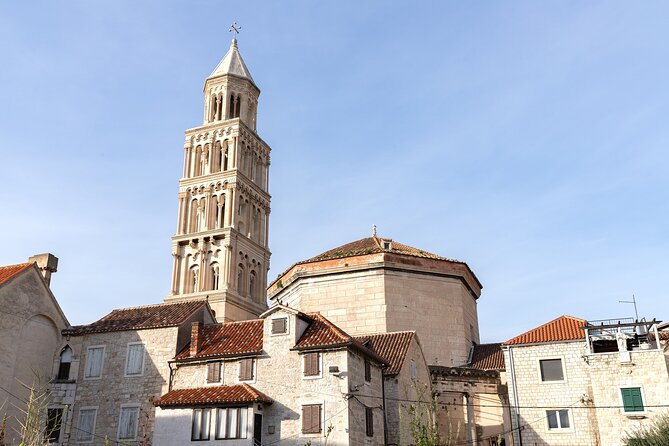
Then, while you’re on the Peristyle, you get Cathedral of Saint Domnius context. It began as the Roman emperor’s mausoleum and later became a Christian cathedral. Your guide shares the key historical arc, but the tour does not include entry because the Cathedral is a paid site. That’s an important point. You’ll leave with understanding, but not access to everything behind ticketed doors.
If you’re deciding between doing this tour first or saving everything for later, this is why it’s a good early choice. Seeing the Cathedral from the right vantage points and getting the story before you choose whether to buy a ticket helps you make better decisions.
Let Me Pass Street and Vestibulum photo stops that feel strangely personal
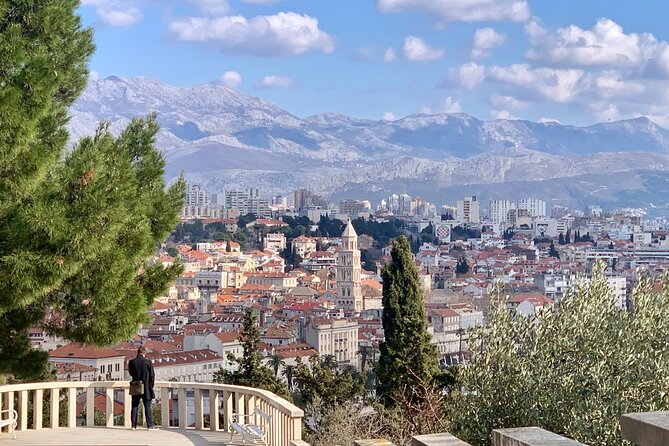
Next, you’ll reach Let Me Pass, or Pusti me da prodjem. This is the famous narrow stretch of street that measures less than 10 meters in length and about 57 centimeters wide. It’s known as one of the narrowest streets in the world, but the tour frames it with local memory, not just trivia.
You’ll also learn that Split citizens honor it with a public monument in another location in the city. So it’s funny and specific, but it also shows how locals “map” their own legends into the built environment.
From there, you head to the Vestibulum of Diocletian’s Palace. This area once served as an entry point to the emperor’s quarters and it’s now one of the most popular open-air photo spots. You can pause, take pictures, and if conditions line up, you might even catch klapa singing. Your guide explains why acoustics here make it such a natural sounding place for group singing.
Even if you do not hear music, the stop works because it helps you notice how the Palace spaces shape sound and movement.
Diocletian’s substructures shortcut to Riva, the mood change you’ll feel
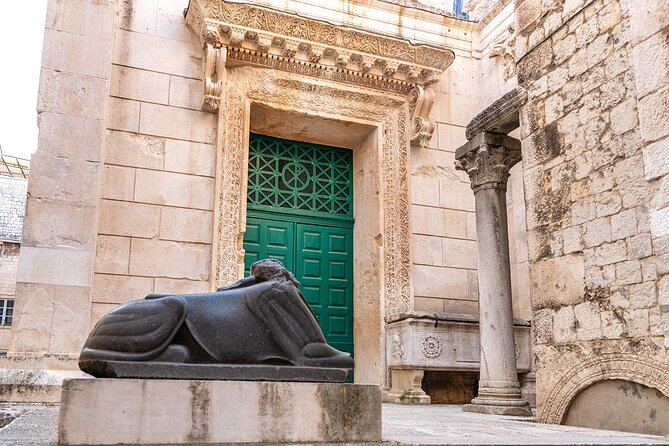
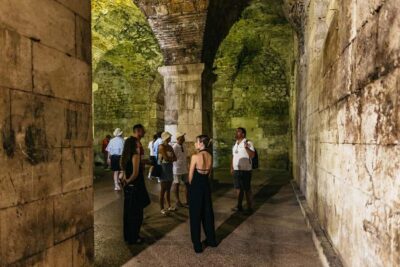
After the photo stops, you take a shortcut through the Diocletian Palace substructures. This is not a full exploration of the area. The tour does not include going through all substructures, due to additional admission fees and time constraints. But you still get the most valuable part: a shift in atmosphere.
Your route takes you from the brighter, more monumental space near the Peristyle into quieter, darker substructures. Then you emerge back out onto the Riva waterfront. That “inside to undercity to sea” transition is one of the best ways to understand this Palace complex, because Roman architecture often used layers of space for different functions and different moods.
If substructures are a priority for you, your guide can share how to arrange a separate guided visit. But even without extra entry, this tour gives you the essential orientation so you’re not facing a maze alone.
Finishing at Riva Harbor, then the Old Town model for a smart next-day plan
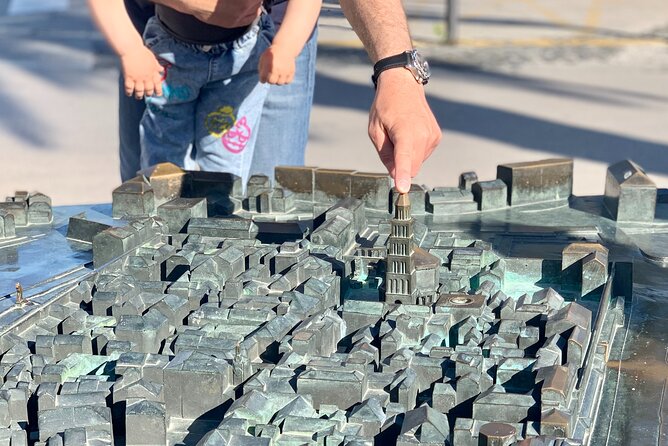
Your final stretch includes Riva Harbor, which works as a meeting place, a promenade, and a square. You’ll stroll along part of it to reach the Fruit Square area.
Then you end at the seaside location of a large model of Split’s Old Town layout, Maketa Grada Splita. This final stop is a powerful way to lock in everything you just saw. You review the city’s topography and how the Palace connects to the streets beyond.
Josipa also recaps the experience and shares her best tips for further exploration. This matters, because Split’s Old Town can feel like a beautiful puzzle. When you have a guide’s city logic in your head, you’ll navigate faster and you’ll waste less time wandering.
Price and value, what you get for about $30
At $30.23 per person for roughly 1 hour 40 minutes to 2 hours, this tour is priced like a thoughtful, high-impact intro. You are paying for expertise plus structure, not for entry fees. And that’s the key value: it does not rely on paid-site access to deliver.
You also get two practical advantages baked in. The group is small, max 10, which keeps the experience conversational. And it’s offered in English, with a mobile ticket format.
One more angle: this tour is often booked ahead, with an average booking time of 25 days in advance. If you want a calmer start away from the biggest cruise crowds, it helps to grab a morning slot if you can.
Who should book this Split art historian walking tour
This is a great fit if you want to understand Diocletian’s Palace as a real place, not a checklist. It’s also ideal for people who like architecture, city layout, and the way stories attach to specific corners.
It’s less ideal if you need fully step-free movement, since there are several unavoidable steps. And if you were hoping for museum-style indoor time, the tour keeps things outdoors and does not enter paid museums or the Cathedral.
Should you book this walking tour?
I’d book it if you want the fast route to comprehension. You’ll learn how the Palace works spatially, why key gates matter, and how Split’s modern culture uses Roman structures as daily backdrops. The route also ends with a clear orientation point, the Old Town model, so you’re not stuck guessing what to do next.
I’d skip it or at least think twice if you need guaranteed access inside paid sites, or if stairs and uneven ground will limit you. For most people, though, this is one of the best ways to start a Split visit with your eyes open.
FAQ
How long is the walking tour in Split?
It runs about 1 hour 40 minutes to 2 hours.
Where does the tour start and end?
It starts at Strossmayerova Fountain, Ul. kralja Tomislava 12, 21000 Split. It ends by the bronze model of Split Old Town on the Riva waterfront, near Obala Hrvatskog narodnog preporoda 23, 21000 Split.
Does the tour include entry to paid sites or museums?
No. The tour does not enter any museums or paid sites. You also will not enter the Cathedral of Saint Domnius, and the Palace substructures are not explored in their entirety because that would require additional admission.
What language is the tour offered in?
The tour is offered in English.
What’s the weather plan?
The tour takes place rain or shine.
Can I bring a dog or a service animal?
Service animals are allowed. For bringing a pet, the tour is pet-friendly but you should contact before booking so the guide can make sure everyone is comfortable.
Fresh options around Split
- Small-Group Communist Tour of Split – Boutique group tour★ 5.0 · 7 reviews
- Controversies behind Split and Croatia-Anthropologist guide★ 5.0 · 59 reviews
- Split City Tour By Electric Rickshaw┃Riva Ride★ 5.0 · 50 reviews
- Coffee, storytelling & walk – The best private tour of Split★ 5.0 · 46 reviews
- Chill Private Walking Tour of Diocletian’s Palace★ 5.0 · 35 reviews
- Canyoning basic on Cetina river from Omiš★ 5.0 · 66 reviews
- River Rafting from Split- Cliff Jumping- Cave Visit★ 5.0 · 90 reviews
- Private Split City Walking Tour – Spanish Guide★ 4.5 · 12 reviews
Old Town Walking Tours, compared.
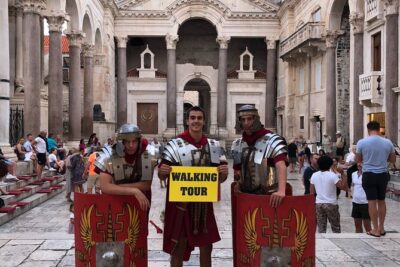
Walking Tour of Split and Diocletian’s Palace
Read our review →
Krka Waterfalls tour with Trogir Walking tour and Krka panoramic boat cruise
Read our review →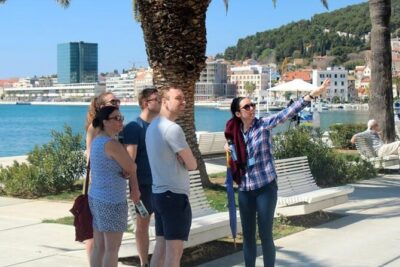
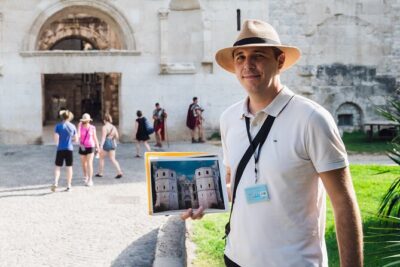
Walking Tour of Split with a ‘Magister’ of History
Read our review →
Plitvice Lakes: Guided Walking Tour with Train and Boat Ride
Read our review →
Diocletian Palace & Old Town Guided Walking Tour
Read our review →Browse the lists this tour appears in