
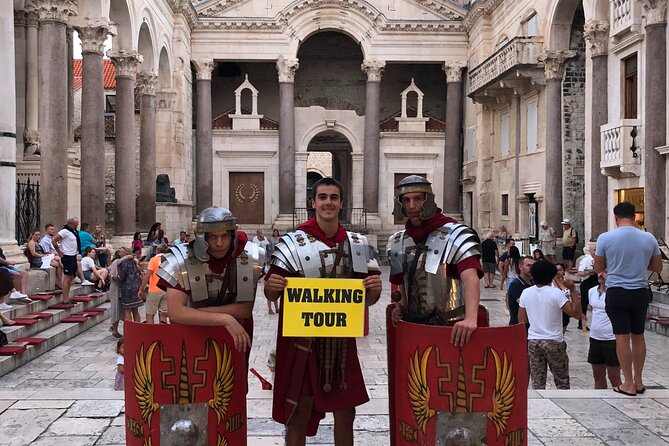
Reviewed · DIOCLETIAN'S PALACE TOURS
Walking Tour of Split and Diocletian’s Palace
What makes this Split walking tour interesting is that it takes you straight into Diocletian’s Palace, the UNESCO World Heritage core that later became the heart of the modern city. You get a guided loop that links the palace’s major spaces to everyday Split landmarks, so the place stops feeling like random stone and starts making sense.
What I like most is (1) the chance to start with the palace’s Peristyle as your orientation point, then keep walking outward to the big showpieces. (2) the small group size, which usually means you can actually hear what’s going on and ask a question without shouting over your own postcard idea.
One drawback to plan for is sound. On busy days, multiple tours can overlap, and there are no headsets, so you may have trouble hearing every word unless you stay near the guide.
Key things to know before you go
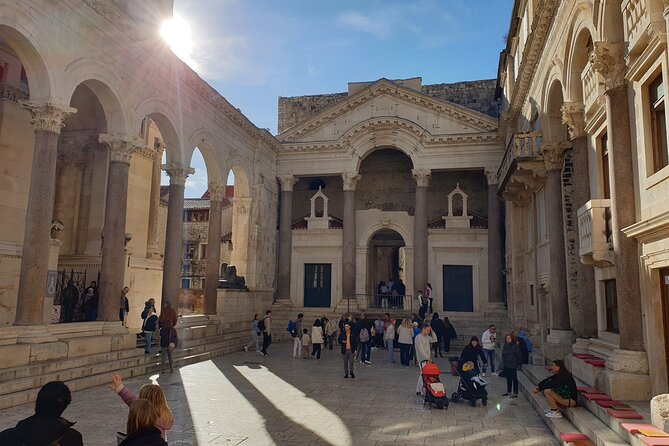
- UNESCO inside the city: You walk the living center of Diocletian’s Palace, not just an isolated ruin.
- Peristyle first: The tour starts at the palace’s main square, so you build a map in your head fast.
- Cultural stops beyond Roman walls: You also pass landmarks tied to Dalmatian, Venetian, Jewish, and Croatian literary history.
- Golden Gate plus Gregory of Nin: You get the story behind a statue that matters for language and identity.
- Substructures without the museum push: You see the palace’s lower spaces, but skip the paid museum portion.
- Small group max 20: Better attention, but still expect crowds around the palace.
Diocletian’s Palace makes Split click

Split can feel like a place you either rush through or get stuck in, staring at stone and wondering what you are looking at. This tour is built for the second option, minus the confusion. You’re shown how the palace’s layout turned into streets, squares, and views you see every day.
Because the Peristyle sits at the center, the guide can explain how everything connects. That matters, since Diocletian’s Palace is huge and easy to misread if you wander on your own. You’ll also be walking in the English-speaking comfort zone, with a group limited to 20 people, which helps a lot when you are surrounded by other tours.
As a value move, you do not spend your time hunting for the right spot. You get a planned route through the palace’s most meaningful areas and a few key city landmarks that help the palace feel like part of real Split life, not just a ticketed attraction.
More time inside Diocletian's Palace:
- Split: Old Town and Diocletian Palace Walking Tour
★ 4.9 · 4,727 reviews - Split & Diocletian’s Palace Walking Tour
★ 5.0 · 1,125 reviews - Split: Diocletian Palace & Old Town Guided Walking Tour
★ 4.7 · 882 reviews
Starting at Peristil ulica: the Peristyle orientation moment
Your walk begins at Peristil ulica in Split, and the first stop is the Peristyle of Diocletian’s Palace. This is the central square where you can reach almost everything else within the palace complex. The guide uses it like a chalkboard, explaining the layout so the rest of your walk has direction.
If you are the type who likes to get your bearings fast, this is the right start. You’ll see how the palace spaces link together, and you’ll start recognizing features before you reach them. That makes the later stops feel less like random highlights and more like a single story with chapters.
There is also a practical side: this first stop is listed as about 15 minutes, and it does not require an admission ticket. So even if you arrive slightly jet-lagged, you still get a quick payoff without feeling like you already missed half the tour.
Vestibulum and palace substructures: learning the layers under the surface
After the Peristyle, you head to the Vestibulum of Diocletian’s Palace, where you learn about the emperor’s setting and history. One detail that can make this stop fun is the possibility of traditional Dalmatian singing, depending on timing and the guide’s storytelling. Even if that part is subtle, the point is clear: you’re not just looking at architecture, you’re hearing how people once moved through it.
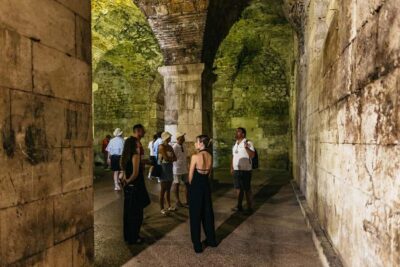
Next comes the Diocletian Palace Substructures. This is where the tour starts to feel like real archaeology, even though you’re still on a city walk. You’ll pass through the palace’s lower spaces and learn how they were built and how their function changed over time.
Important practical note: this stop is about 10 minutes, and the tour does not visit the museum part of the substructures. Admission for the museum section is not included. So come with the expectation that you get the guided orientation through the substructure areas, and if you want the paid museum exhibits later, you can add them on your own schedule.
Golden Gate plus Gregory of Nin: a landmark with meaning
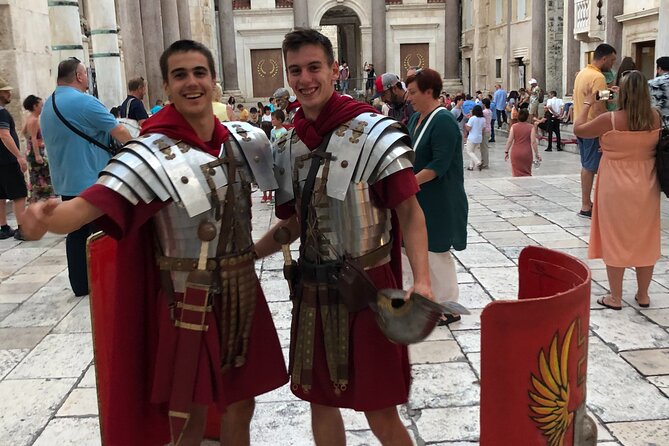
The Golden Gate is the palace’s main entrance, and the guide uses it to connect Roman-era design to later Croatian identity. You’ll learn about why the entrance matters and what you are looking at when you see the statue of Gregory of Nin.
This part is more than a photo stop. Gregory of Nin is tied to history and language, which makes the statue feel less like a random monument and more like a cultural bookmark. In a short tour, these are the moments that make you remember the place, because you understand why it exists beyond the postcard.
This stop runs about 10 minutes, and it is listed as admission free. That’s a nice combination of time and value: you’re spending a focused chunk of the tour on something central, without additional ticket friction.
More walking tours of Split:
- Krka Waterfalls tour with Trogir Walking tour and Krka panoramic boat cruise
★ 5.0 · 1,659 reviews - Walking Tour of Split with a ‘Magister’ of History
★ 5.0 · 1,122 reviews - Split Walking Tour with Professor of History
★ 5.0 · 926 reviews - From Split: Krka Waterfalls Cruise & Trogir Walking Tour
★ 4.7 · 681 reviews
Riva Harbor and the bronze model: seeing Split’s big picture
Then you shift to Riva Harbor, and the story expands beyond the palace walls. You’ll see a bronze model of Diocletian’s Palace, which is one of those tools that makes a complex site easier to grasp. Instead of only learning in two dimensions, you can compare what you just walked with what the model shows.
From there, the guide brings you into the history of Split’s Riva promenade. This is useful for anyone who thinks the old city ends when the tour ends. You’ll start to understand why Riva feels like the center of modern Split, even though the palace was built centuries earlier.
This is a 15-minute stop and listed as admission free. It gives you breathing room too. If you’ve been thinking in palace geometry for a while, the model and promenade story help reset your brain.
Fruit’s Square and Marko Marulić: Venetian walls and Croatian literature

Next is Fruit’s Square (Trg Brace Radic). This is where the tour links the palace to the wider historic city fabric. You’ll learn about a 15th-century Venetian citadel and how that defensive and civic structure shaped the area around you.
Then you get the Croatian literature connection. You’ll also hear about Marko Marulić, described here as the father of Croatian literature. That might sound like a history tidbit, but it’s exactly the kind of local detail that turns a landmark into something personal.
This stop is about 10 minutes and is listed as admission free. It’s also a good moment to ask a question if you have one, since it’s not centered on squeezing into a specific entrance or corridor.
Passing the Split Synagogue: what you do see matters
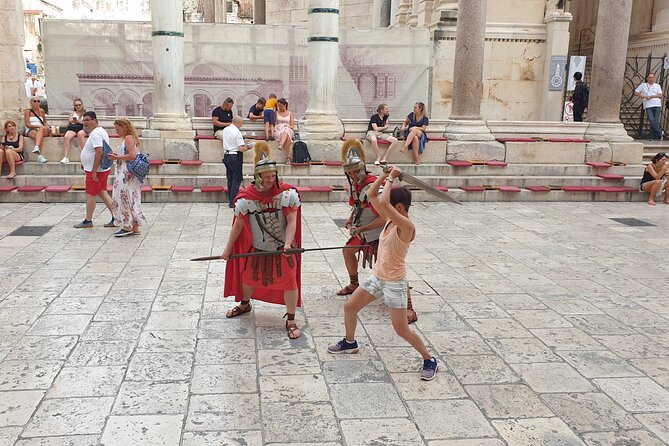
The tour also includes a pass-by of the Split Synagogue, a 16th-century site. This part is listed as admission not included, which usually means you’ll see it from the outside or from a spot where the guide can contextualize it without entering paid areas.
Even with a pass-by, this can be worthwhile, because it expands the story of Split beyond just Roman and Venetian layers. The guide explains the history of the Jewish people in Split, giving you another thread to tie into what you’ve already learned.
It’s about 10 minutes, and that short time can still change your perception. Split is famous for its palace walls, but it’s also a place where multiple communities left marks you can notice once you know what to look for.
Timing, group size, and why 90 minutes is a smart length
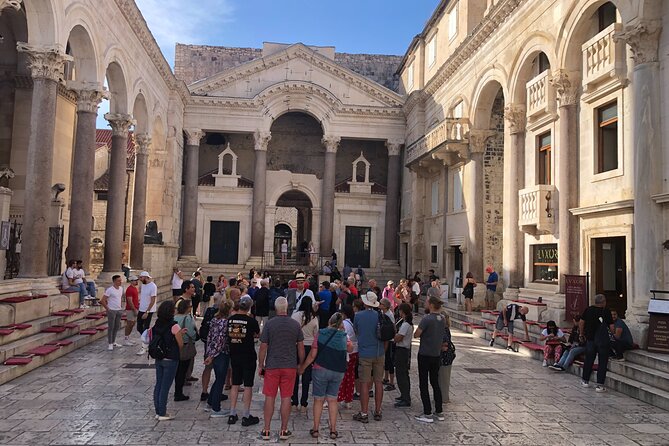
The tour runs about 1 hour 30 minutes. That length is a sweet spot for Diocletian’s Palace. Longer tours can be great, but this one is designed to help you get oriented early, then decide what to explore in depth later.
The group is capped at 20 people, and the tour notes small-group attention. In practice, that matters most around the tighter palace spaces, where listening from far back can be frustrating. When you stand close, you get the story beats clearly enough to make the palace map stick.
You can also choose among different tour times, which helps if you are juggling a cruise stop, a bus ride, or a beach afternoon. Start early enough in your Split day and this tour becomes your planning tool. You’ll leave knowing which lanes, gates, and viewpoints are the ones you will want to return to.
How the tour’s price turns into value
The price is listed at $48.37 per person for about 90 minutes. That’s not the cheapest way to walk around, but it is often a fair deal when you factor in what you are actually buying: an organized route through major palace sections plus a guide who connects architecture to history and local culture.
Also, note what is and is not included. The tour includes the guided walk, and it does not include admission tickets. Some stops are listed as admission free, while parts tied to paid areas are not included. In other words, you are not paying extra just to stand in a line for a museum room. You are paying for guided interpretation of spaces you would struggle to decode on your own.
If you already planned to visit paid sections like museum components later, you can treat this as your fast-track orientation. Then you pick your add-ons with less guesswork and less backtracking.
Practical tips to avoid the common annoyances
First, the palace can get crowded fast. Several guides and tour groups can overlap, so sound might be an issue. Best move: pick a spot near the front of your group and try to stay there. If you wander to the side for photos, you might miss key explanations.
Second, expect uneven stone and stairs. The tour is not recommended for people with issues with high steps. Even if you are mobile, pace yourself and use railings when available. The palace is beautiful, but it is also old city terrain.
Third, the starting point can catch people off guard. If you are new to Split, arrive a few minutes early so you are not rushing while trying to locate Peristil ulica. Once the tour starts, the first stop sets the direction for everything else.
Finally, keep your expectations aligned with the tour length. This is not a museum marathon. It is an overview with smart stops, plus a few cultural layers that broaden your perspective quickly.
Should you book this Split and Diocletian’s Palace walking tour?
Book it if you want a tight, guided orientation to Diocletian’s Palace without spending hours figuring out what goes where. This is especially good when you have limited time in Split, because it helps you see the key spaces and understand the bigger story behind them.
Skip it or consider a different format if you are sensitive to hearing in crowds or need a fully accessible route without stairs. Also, if you strongly prefer paid museum time inside, this walk leaves the museum portion out, so you would likely add another activity after.
For most people who want the palace to make sense on day one, this is a strong choice. You’ll walk away with a mental map, a handful of memorable landmarks, and enough context to explore the rest of Split with confidence.
FAQ
How long is the walking tour of Split and Diocletian’s Palace?
It lasts about 1 hour 30 minutes.
What does the tour cost?
The price is $48.37 per person.
Is the tour guided in English?
Yes, it is offered in English.
Are admission tickets included?
No. The tour does not include admission tickets, and it does not visit paid sections like the museum part of the substructures.
How many people are in the group?
The tour has a maximum of 20 travelers.
Where does the tour start and end?
It starts at Peristil ulica, 21000, Split, Croatia, and ends back at the same meeting point.
Fresh options around Split
- Small-Group Communist Tour of Split – Boutique group tour★ 5.0 · 7 reviews
- Controversies behind Split and Croatia-Anthropologist guide★ 5.0 · 59 reviews
- Split City Tour By Electric Rickshaw┃Riva Ride★ 5.0 · 50 reviews
- Coffee, storytelling & walk – The best private tour of Split★ 5.0 · 46 reviews
- Chill Private Walking Tour of Diocletian’s Palace★ 5.0 · 35 reviews
- Canyoning basic on Cetina river from Omiš★ 5.0 · 66 reviews
- River Rafting from Split- Cliff Jumping- Cave Visit★ 5.0 · 90 reviews
- Private Split City Walking Tour – Spanish Guide★ 4.5 · 12 reviews
Diocletian's Palace Tours, compared.
Diocletian Palace & Old Town Guided Walking Tour
Read our review →
Game of Thrones Tour with Diocletian’s Palace Cellar
Read our review →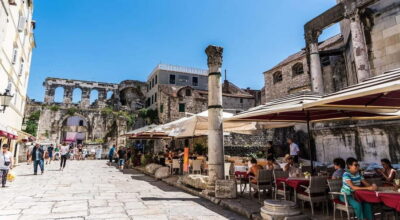
Diocletian’s Palace and Old Town SMALL GROUP Walking Tour
Read our review →
PRIVATE Walking Tour of Diocletian’s Palace & Old Town
Read our review →

Browse the lists this tour appears in