
Reviewed · OLD TOWN WALKING TOURS
Split: Walking tour of Split with a ‘Magister’ of History
Split is one of those rare places where history is not behind glass. It’s right under your feet, inside the same stone walls people use every day. What makes this walking tour interesting is the way it turns Diocletian’s Palace into a time machine, explained by Toni Šare, a local historian with a Master’s degree in history and a former teacher.
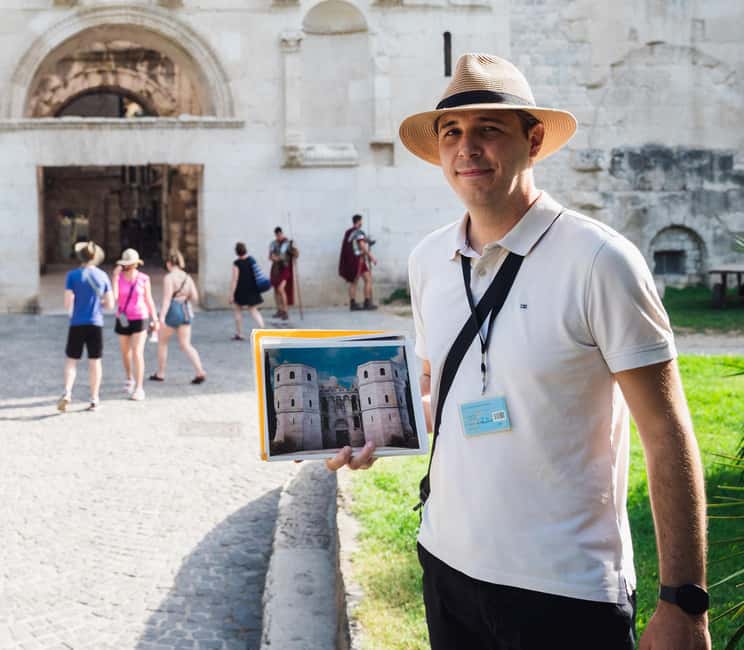
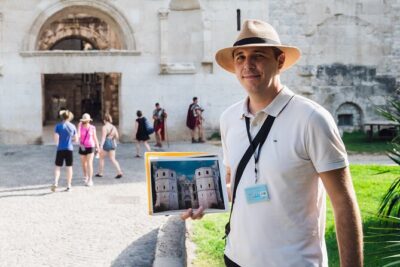
I particularly love the 3D reconstructions. They help your eyes stop guessing and start seeing what the palace looked like at key moments. I also like the pace and teaching style, with lots of pauses for questions so you are not stuck passively listening.
One drawback to consider: it runs rain or shine and it is not set up for wheelchair users, so you’ll want good walking shoes and the patience for uneven old-stone surfaces.
5 key things you will notice fast
- A teacher’s approach to palace walls: Toni explains the layers step by step, not as a list of dates.
- 3D reconstructions that make ruins readable: you’ll repeatedly get visual anchors for what you are looking at.
- Q and A encouraged, not squeezed out: there are built-in chances to ask and clarify.
- Roman core to medieval and Venetian changes: you see how Split grew outward from the palace center.
- Local, lifelong perspective: Toni was born and lives in Split, so modern references feel grounded.
Diocletian’s Palace is the shortcut to 2,000 years in Split
If you only learn one thing about Split, make it this: the city’s “old town” is not just historic. It is built on top of the original Roman megaproject that became a neighborhood over centuries. Diocletian’s Palace is the anchor. Once you understand that, the rest of the city starts lining up in your head.
This tour makes that idea practical. You do not just look at scattered columns and call it a day. You walk through the palace core and its surviving structures, then you follow the trail of how the spaces were repurposed over time. Roman, medieval, Venetian, and the present are all visible, and Toni connects the dots as you go.
And because Toni is a trained history teacher, the explanations feel like a class that still leaves room for curiosity. You’re not being herded. You’re being guided.
More walking tours of Split:
- Split: Old Town and Diocletian Palace Walking Tour
★ 4.9 · 4,727 reviews - Walking Tour of Split and Diocletian’s Palace
★ 5.0 · 2,588 reviews - Krka Waterfalls tour with Trogir Walking tour and Krka panoramic boat cruise
★ 5.0 · 1,659 reviews
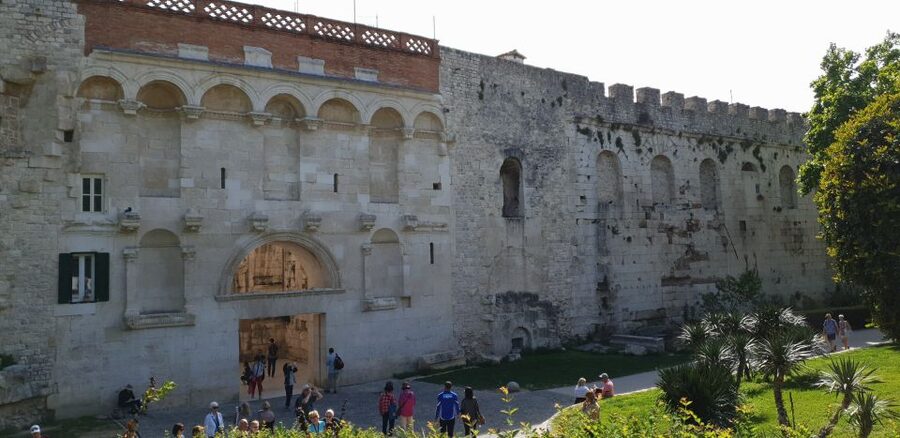
Meet Toni Šare at the Bronze Gate, and start with the southern seaside entrance
You meet at Obala Hrvatskog narodnog preporoda 22, at the Bronze Gate, which many people also call the Brass Gate. This matters because it is the southern seaside entrance from the Promenade (Riva) into the palace area. In other words, you start by orienting yourself to the geography of Split.
The first stretch is short, just a guided introduction right at the gate area. Then you move into the palace world.
I like how the meeting point sets the tone. You are not starting deep in the crowds with no bearings. You begin near the seafront, so the palace feels connected to real city life from minute one.
Bronze Gate to Diocletian’s Cellars: the first layer, the first clues
From the Bronze Gate you pass into the palace complex and head toward Diocletian’s Cellars. This portion is where the story gets less abstract.
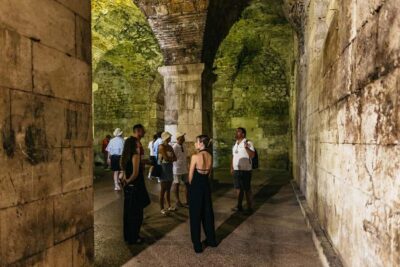
Cellars and basement spaces are not always what visitors rush to see, but they change how you understand the palace. Toni uses this stage to show that these weren’t just decorative ruins. They were part of an operating system, tied to how the palace was built and how people later moved through and used the structures.
You also get a key pattern for the whole tour: Toni pauses at important spots, gives you context, then checks in by encouraging questions. That “stop and ask” rhythm is one reason this feels like real learning, not just sightseeing.
Diocletian’s Palace center tour: the palace as origin, the palace as city
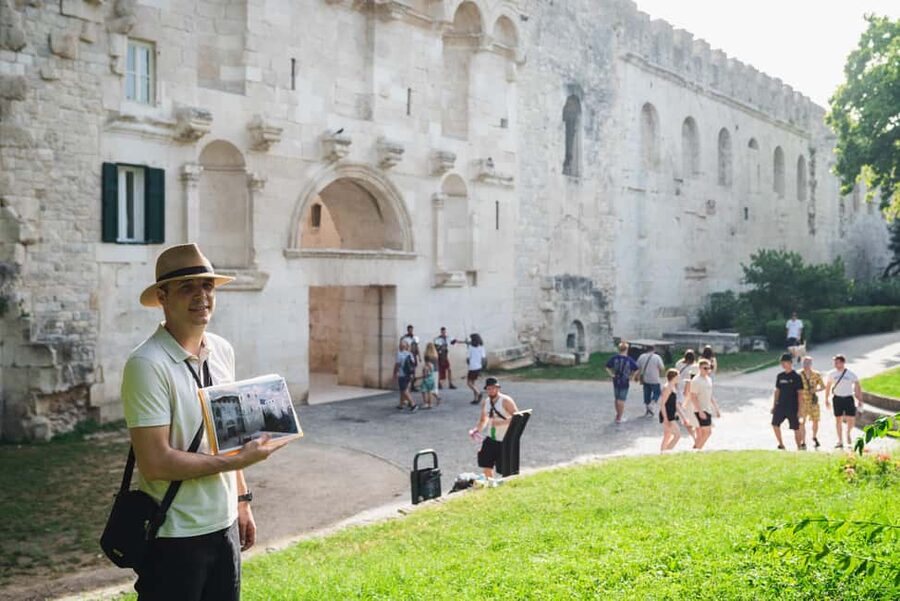
The main segment takes place inside the palace area, including a guided walk and sightseeing through the heart of the complex. This is where you really grasp why locals still think of Split as growing from this Roman core.
You go through the Bronze Gate access area and reach the Basement Halls, where the tour briefly pauses for questions. Even if you already recognize Diocletian’s Palace from photos, this is the part where the scale clicks. The stonework looks deliberately engineered, not accidental.
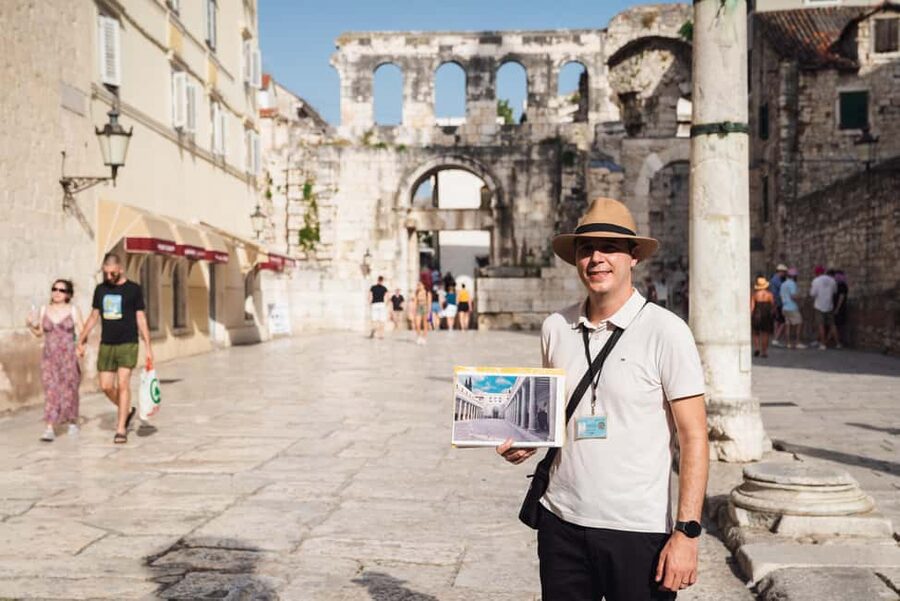
Then you move into the Peristyle area, which is a phenomenally preserved square. This is a “look up and then look around” stop. It is open enough that your brain can map the rooms and corridors back to their likely original layout. And it’s the kind of space where Toni’s visuals become super useful.
A few more Split days worth comparing
- Walking Tour of Split with a ‘Magister’ of History
★ 5.0 · 1,122 reviews - Split Walking Tour with Professor of History
★ 5.0 · 926 reviews - Split: History and Heritage Walking Tour
★ 4.9 · 650 reviews - Split History and Gastro Small-Group Tour with Food and Drinks
★ 5.0 · 375 reviews
Peristyle and the iconic markers: Jupiter’s Temple and Diocletian’s story in stone
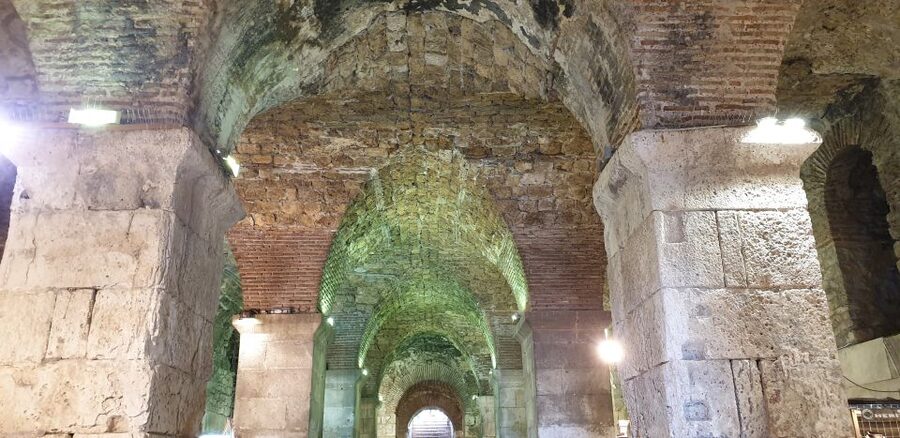
In the Peristyle, several big names show up in the palace layout. You’ll be able to see structures such as the Mausoleum of Diocletian, the Temple of Jupiter, and the Vestibule (all within the broader palace setting you are walking through).
Here’s why that matters for you: when the guide points out these landmarks in context, you stop treating them as separate sights. You start seeing how power and ritual, household life, and later reuse all shared the same footprint.
You’ll also pass by the Cathedral of Saint Domnius. It is one of the most recognizable continuities in the city, and Toni’s framing helps you see it as a transformation rather than a totally separate chapter.
Near the north wall, you can spot the iconic statue of Bishop Gregory of Nin. It’s one of those things that can feel random until you learn what it represents in the public memory of Split.
Vestibule and Triklinij: the rooms where you understand Roman daily life
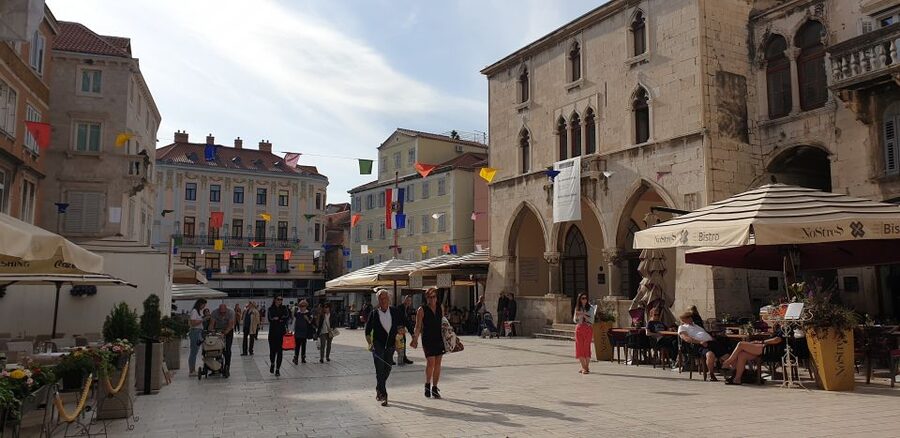
After Peristyle, the tour moves through smaller but meaningful palace zones, including the Vestibul and the Triklinij. These stops are brief, but they do work.
The Vestibule helps you connect entrances and movement, how people would have passed through key transitions. The Triklinij brings your attention to the idea of space for social and dining rhythms.
Even in a 110-minute format, Toni makes sure you do not miss the “how it was used” angle. That is usually the difference between a tour where you take pictures and a tour where you actually come away thinking differently when you walk around on your own.
Silver Gate to Golden Gate: leave the Roman core and watch the city expand
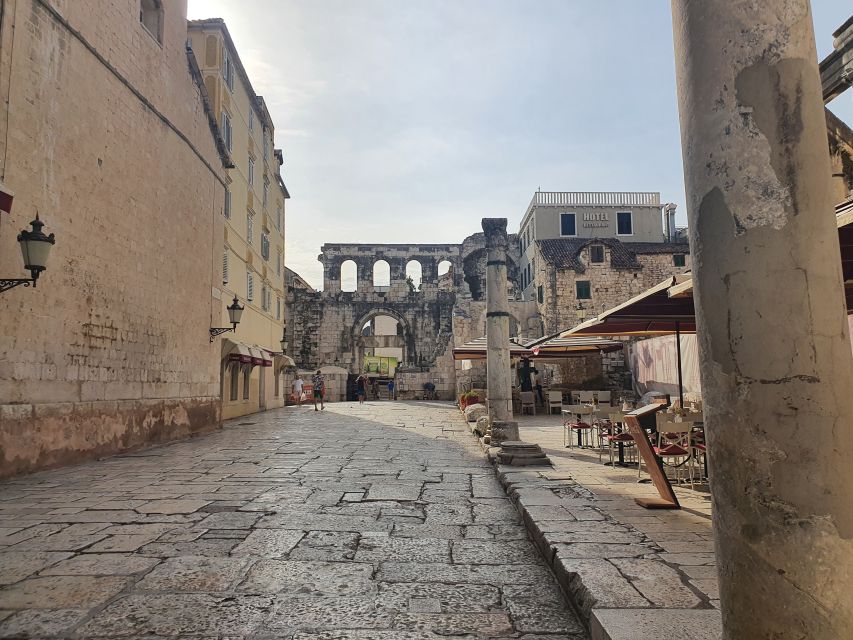
Near the later portion of the walk, you pass through the Silver Gate area and then head toward the Golden Gate. This is not just “more gates, more photos.” It is the built-in transition from the palace as origin to the city beyond it.
At the Golden Gate area, the experience reaches its end point. You’ll also get direction to explore the remnants of Split’s richer medieval and Venetian heritage that sit around and beyond the palace quarter.
I like tours that end with a clear mental model. This one does that. By the time you hit the Golden Gate, you can start spotting changes in the architecture and streetscape without needing a guide next to you.
3D reconstructions and printed visuals: why they work so well here
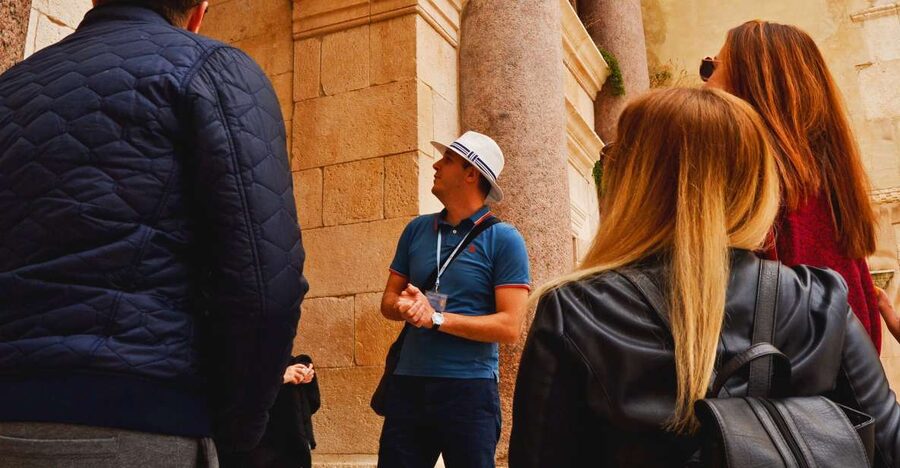
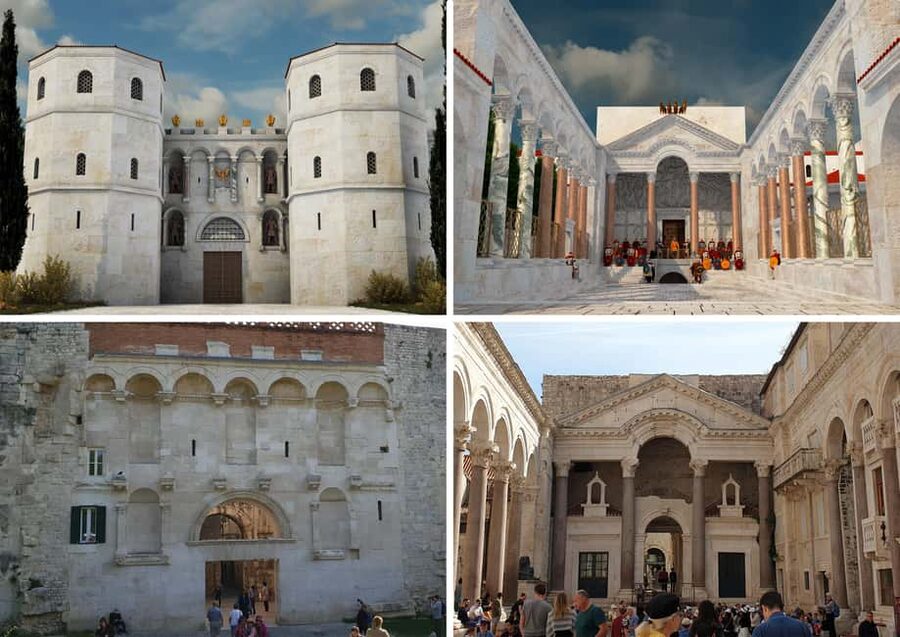
Diocletian’s Palace can be tricky because a lot of what you see is partial. Walls remain, but the full shape of rooms and roofs might be gone. That is where the tour’s visual teaching approach becomes a real advantage.
Toni uses 3D reconstructions to show how iconic structures likely looked in earlier forms. He also uses visuals that help you compare “then and now,” including reconstructions that show the palace’s original appearance. That combination matters because your eyes naturally want to fill missing pieces. The renderings help you fill them in the right way.
If you’ve ever walked through ruins and felt like you were staring at clues without a key, this is the key.
Pace, Q and A, and how long 110 minutes can actually feel
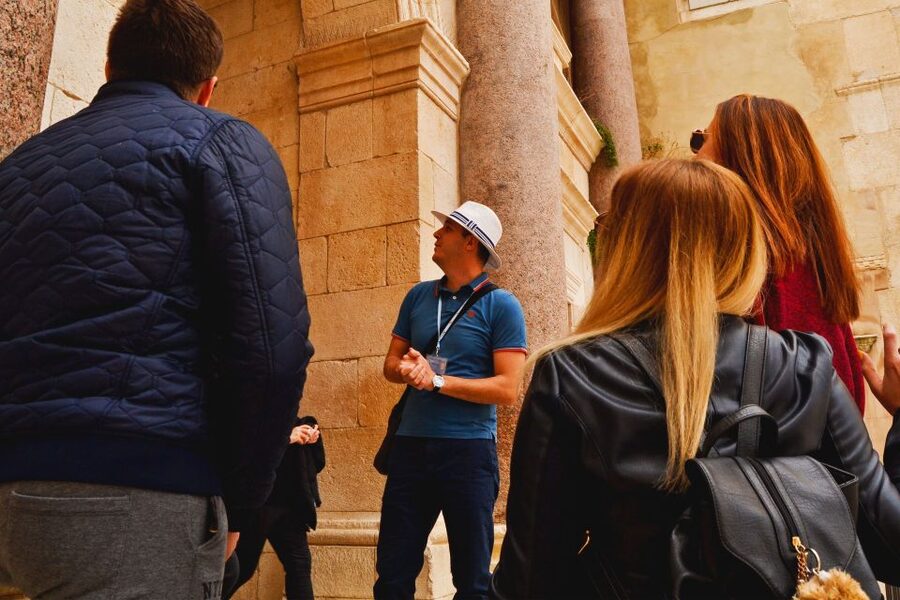
The tour lasts 110 minutes, and that is a sweet spot if you want real context but still want time to roam on your own later. You are not trapped for half a day. You’re guided through the palace core and key transitions with enough stops to make sense.
I also like that the format builds in Q and A moments, including during the basement pause and at other key points. Toni encourages questions rather than treating them like interruptions. That keeps the tour from becoming one-way storytelling.
One practical point from how Toni teaches: the pace includes time to manage sun and crowd pressure when possible. If you can, choose the first time slot available. Start earlier and you’ll spend less of your time navigating late-arriving crush.
Price and value: what $33 buys you in Split terms
At $33 per person for 110 minutes, this is not a budget “quick facts” add-on. It’s priced more like a focused, teaching-driven experience.
Here’s the value logic for you:
- You get a Master’s degree in history and teaching background, not just a friendly storyteller.
- You get 3D reconstructions included, which can be the difference between confusing ruins and understandable spaces.
- You are walking the most intense historic zone in Split, the palace quarter, so you benefit most when the guide helps your eyes read what is there.
If your goal is to take photos and move on, there are cheaper options. If your goal is to truly understand why Split looks the way it does, this price is easier to justify.
Who should book this walking tour in Split?
This tour is a great fit if you:
- Want more than Roman dates, you want how the palace spaces worked and changed.
- Like asking questions and want answers tied to what you’re standing near.
- Appreciate local perspective, especially from someone born and living in Split their whole life.
- Enjoy visual learning, since the reconstructions and printed visuals help you “see” the vanished parts.
It may not be your best match if:
- You struggle with long walks on uneven old surfaces.
- You need wheelchair accessibility, since the tour is not suitable for wheelchair users.
- You are over 95 years old, since the tour is noted as not suitable for people beyond that age range.
What to bring, and how to enjoy it rain or shine
The tour runs rain or shine, so plan for wet stone. Bring drinks, because you’ll likely want water during the 110 minutes.
I also recommend:
- Wear shoes with grip. Palace stones can be slick.
- Bring a light layer if it’s windy by the Riva.
- If crowds are a concern, pick an earlier start time when you can.
Toni’s style includes managing where you stand and when you move, but your own comfort choices matter too.
Should you book this Split walking tour?
Yes, if you want Diocletian’s Palace to make sense in real time. This tour is built for people who like context, visuals, and questions. Toni Šare brings a history degree, a former teacher’s structure, and a local’s life-long view of Split, and the payoff is that you leave with a map in your head, not just a camera roll.
Skip it only if you need wheel-friendly routing, or if a short, simple highlights walk is all you’re after. For most visitors who care about how Split formed, this is one of the most efficient ways to get it right in about an hour and a half.
FAQ
Where does the tour meet?
It meets at the Bronze Gate (sometimes called the Brass Gate) of Diocletian’s Palace, at Obala Hrvatskog narodnog preporoda 22.
How long is the walking tour?
The tour duration is 110 minutes.
Is the tour offered in English?
Yes, it is an English live guided tour.
Does the tour include paid museum or ticketed sites?
No. The tour does not enter paid sites or museums, and it notes that entering Diocletian’s Palace does not require admission.
What is the weather policy?
The tour runs rain or shine.
Is the tour suitable for wheelchair users or very elderly visitors?
No. It is not suitable for wheelchair users, and it is noted as not suitable for people over 95 years old.
Fresh options around Split
- Small-Group Communist Tour of Split – Boutique group tour★ 5.0 · 7 reviews
- Controversies behind Split and Croatia-Anthropologist guide★ 5.0 · 59 reviews
- Split City Tour By Electric Rickshaw┃Riva Ride★ 5.0 · 50 reviews
- Coffee, storytelling & walk – The best private tour of Split★ 5.0 · 46 reviews
- Chill Private Walking Tour of Diocletian’s Palace★ 5.0 · 35 reviews
- Canyoning basic on Cetina river from Omiš★ 5.0 · 66 reviews
- River Rafting from Split- Cliff Jumping- Cave Visit★ 5.0 · 90 reviews
- Private Split City Walking Tour – Spanish Guide★ 4.5 · 12 reviews
Old Town Walking Tours, compared.
Walking Tour of Split and Diocletian’s Palace
Read our review →
Krka Waterfalls tour with Trogir Walking tour and Krka panoramic boat cruise
Read our review →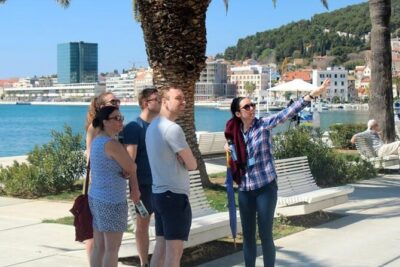
Walking Tour of Split with a ‘Magister’ of History
Read our review →
Plitvice Lakes: Guided Walking Tour with Train and Boat Ride
Read our review →
Diocletian Palace & Old Town Guided Walking Tour
Read our review →Browse the lists this tour appears in