
Reviewed · OLD TOWN WALKING TOURS
Split highlights – Evening walking tour
Split at night has that slow, glowing feel that day tours rarely catch. This evening walk is a smart way to connect the dots inside Diocletian’s Palace and then finish with a view over Split.
I especially like the small group size and the fact that you’re guided by a licensed local who can answer your questions on the spot. And I really enjoy the mix of “big monument” moments and human street-level stops, like where klapa singing can carry through the palace corridors.
One thing to plan for: the palace core can get busy in the evening, so you may need to move with the group and accept that you will not have every stone to yourself.
Key things to know before you go
- 7:00 pm start keeps the light soft and the streets calmer than midday.
- Max 8 people means more back-and-forth with your English-speaking guide.
- Diocletian’s Palace highlights in sequence, from the Golden Gate to the Peristyle.
- Real-world context, including local culture references like football talk around Pjaca.
- Some optional admissions, with the Cathedral of Saint Domnius not included in the tour price.
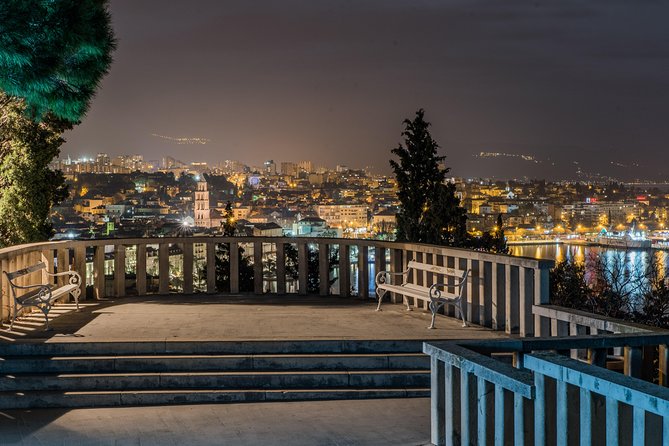
- Finish with a Marjan viewpoint, a practical way to understand where Split spreads out.
Why Diocletian’s Palace at Night Works So Well
This tour is interesting because it uses timing as part of the experience. A 7:00 pm start gives you cooler air for walking and nicer lighting for stone and mosaics, especially in the palace area. It also helps you avoid the worst daytime crush, since many people are off having dinner by the time you’re moving through the historic core.
I also like that the route is designed to teach the layout, not just drop you at landmarks. You’ll see how the palace gates, the Peristyle square, and the main religious sites relate to each other, and then you’ll connect that to modern Split streets.
There’s one practical catch. The evening palace zone is popular, so even with a small group, expect some crowding near the top sights.
More walking tours of Split:
- Split: Old Town and Diocletian Palace Walking Tour
★ 4.9 · 4,727 reviews - Walking Tour of Split and Diocletian’s Palace
★ 5.0 · 2,588 reviews - Krka Waterfalls tour with Trogir Walking tour and Krka panoramic boat cruise
★ 5.0 · 1,659 reviews
Golden Gate First: Where the Tour Sets the Scene
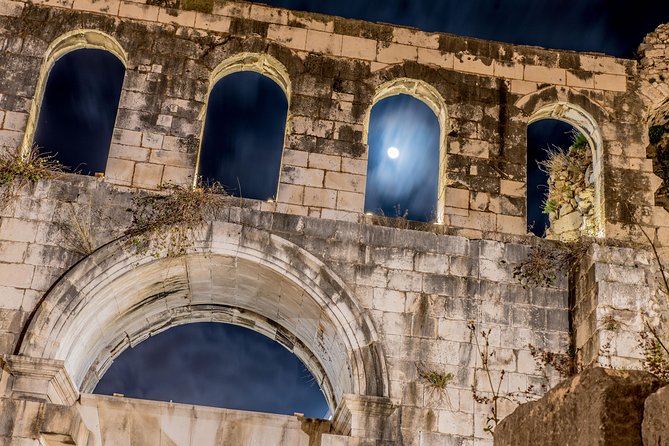
You start at the Golden Gate, on Dioklecijanova 7. It’s a strong opening because it’s both dramatic and easy to understand. You get the idea of how Emperor Diocletian entered the palace area for the first time after retirement, and why that gateway matters to the whole layout.
A fun detail here is the statue of Croatian bishop Grgur overlooking the gates. The guide points it out as a lucky charm for passengers, which is exactly the kind of local touch that makes the place feel lived-in, not like a museum set.
This is also a good checkpoint for you as a first-time visitor. If you know where you are at the start, the palace route later feels clearer instead of confusing.
Peristyle of Diocletian’s Palace: The Palace’s Main Square
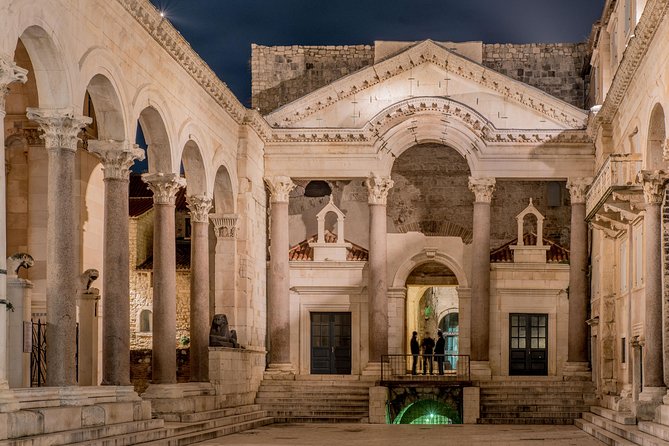
Next comes the Peristyle, described as the geographical and spiritual center of the palace. This stop matters because it’s the “hub” that helps you understand how everything connects. Even if you only have a short amount of time, the Peristyle gives you a sense of scale and authority.
You also get an extra layer of wow from a 3500-year-old sphinx that’s guarding the area. That kind of ancient artifact detail can be jarring in the best way, because it changes how you interpret the palace stones around it.
The Peristyle area can feel busy, especially in peak evenings. Your guide will help you time your photos and keep moving so you don’t get stuck watching people shuffle past the same view.
Cathedral of Saint Domnius: Romanesque Bell Tower Focus
At the Cathedral of Saint Domnius, you’re stepping into the oldest building in the world that still functions as a cathedral site. It’s also tied to the story of Diocletian, since it was once the Roman Emperor’s mausoleum.
This is the stop where you should check your expectations about access. The cathedral itself is not included in the tour price, and the Romanesque bell tower is part of what you may want to view separately. If you care about going inside or paying for that extra access, plan to add the cost on your own.
Even without extra admissions, the exterior setting still gives you a strong sense of why this spot anchors the entire palace religious complex.
A few more Split days worth comparing
- Split: Illuminated Evening Guided Kayaking Tour
★ 4.8 · 1,622 reviews - Split: Stand Up Paddleboard Night Glow Tour
★ 4.9 · 916 reviews - Split: Sunset Boat Party with Live DJs and Blue Lagoon Swim
★ 4.5 · 638 reviews - Split: Klis Sunset Sightseeing Bus Tour
★ 4.4 · 494 reviews
Vestibulum of Diocletian’s Palace: Hear Klapa in the Halls
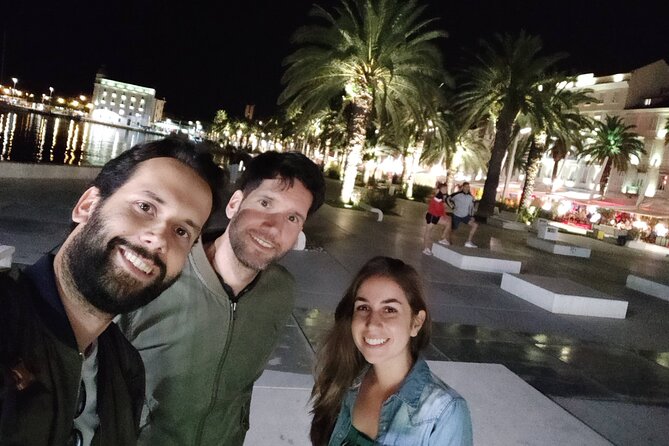
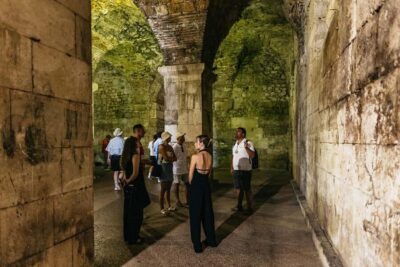
The Vestibulum is a highlight for a simple reason. It’s not just about seeing, it’s about hearing. The tour route goes through a striking round hallway where local klapa singing can carry, turning architecture into atmosphere.
This stop can feel surprising if you expected an all-monument march. The Vestibulum becomes a reminder that Split is still a working city, not a frozen stage set.
In terms of pacing, this works well because it breaks up the heavier palace square moments with something more intimate. You get a brief window to notice details and then keep moving before the crowds thicken further.
Pjaca and Prokurative: Two Squares, Two Kinds of Social Energy
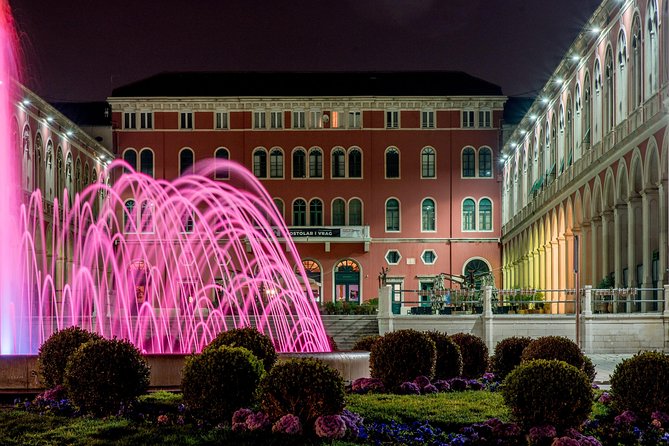
After the palace interior stops, the tour shifts to city life. Pjaca is the central stage of Split’s everyday rhythm, where people rest, meet, and watch what’s happening. The guide also points out how locals discuss big topics, including football, which gives you a quick read on what daily culture feels like here.
Then you head to Prokurative, also known as Republic Square. The reference to Venice St Mark’s Square helps you picture the style, especially with its open layout and the way the south side frames views toward the harbor and the Riva promenade.
What I like about this section is that it teaches you how to move through Split after your tour ends. If you understand where the main squares are and how they connect to the waterfront, your next days of exploring become easier.
Riva Harbor: Split’s Living Room
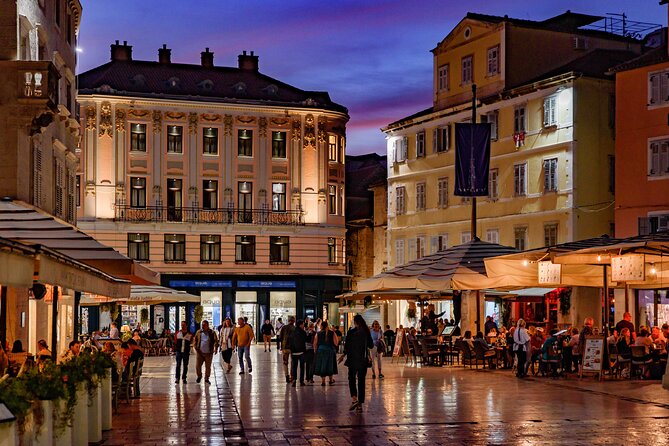
Next is the Riva promenade. If you’ve seen Split’s waterfront in photos, this is the “main stage” strip in real life. It’s the city’s living room, the place people use daily, and a natural spot for the evening energy to build.
Your guide frames it as the most important public place in Split, with a sense of it being where the city performs itself. Even if you don’t stop long to shop or snack, walking the Riva after the palace stops makes the city feel like one connected story.
This also helps you reset your sense of direction. After moving through narrow palace passages, the open promenade makes it easier to remember where you are.
Prva Vidilica Na Marjanu: End With a View That Makes Sense
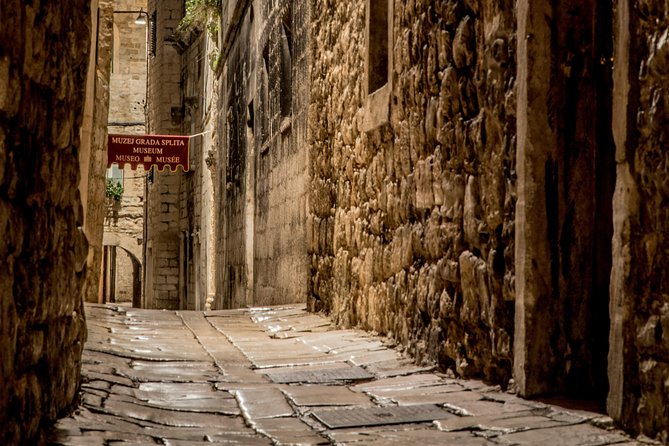
The final piece is the Prva Vidilica na Marjanu viewpoint. The idea is simple and practical: you walk about 15 minutes from the old town area to a terrace where you can take in the whole spread of Split.
This is the kind of ending that makes your entire evening click. From the viewpoint, the palace layout, the squares, and the waterfront all become part of the same map in your head. You stop seeing random landmarks and start understanding geography.
If the weather isn’t perfect, consider bringing a light layer. Evening air near viewpoints can feel cooler, and you’ll want to stay comfortable for the final stretch.
Price and Value: What You Get for $39.74
At $39.74 per person, this tour is priced like a serious walking experience, not a quick photo loop. For the money, you get an English speaking licensed local guide, a route that takes you through multiple major stops, and a group size capped at 8 people.
That small group limit is not just a comfort upgrade. It means you can ask follow-up questions when something sparks your curiosity, whether it’s about Diocletian’s palace planning or how modern Split uses these same public spaces.
Also, the way admissions are handled is a real-world factor for your budget. Many stops are free in terms of admission tickets, but the Cathedral of Saint Domnius is not included. If you’re planning to pay for additional access there, factor that into your total.
Duration is listed at about 1 hour 30 minutes to 2 hours, which is a good length for an evening. You get enough time to feel oriented, without burning an entire night.
Timing, Crowds, and How to Make It Easy on Yourself
The 7:00 pm start is a smart choice. You still get daylight for details, but you also get evening atmosphere. It’s a great time to beat jet lag too, because you can do one core activity and then relax afterward with fewer decisions.
Crowds are the only real tradeoff. The palace can get busy during the evening, and you’ll likely be moving through tighter spaces with other people. Your best move is to keep your pace steady and let the guide manage stops and photo moments.
Bring water, wear comfortable shoes, and keep your phone charged. The tour runs through areas where you might want to cross-check streets afterward for self-guided exploring.
Should You Book This Evening Split Walk?
I’d book this if you want a fast, organized way to understand Split’s main historic core and then end with a viewpoint. It’s especially helpful if it’s your first day in town, because it gives you the layout of Diocletian’s Palace and the logic of the squares and waterfront.
Skip it or switch plans if you know you only want to do paid museum-style interiors, since the Cathedral of Saint Domnius has extra admission not included. And if you hate any crowding at all, you may find the palace zone a bit intense in the evening.
If you do go, one more tip. Aim to ask questions early. Guides like Bosko Papic, Pavle, and Luka are singled out for being Split natives who can turn the stones into stories, and they’re also known for sharing practical restaurant tips and day-to-day insight.
FAQ
How long is the Split evening walking tour?
The tour lasts about 1 hour 30 minutes to 2 hours.
What time does the tour start?
The start time is 7:00 pm.
Where does the tour start?
It starts at Golden Gate, Dioklecijanova 7, 21000 Split, Croatia.
Where does the tour end?
It ends at Vodoskok, Trg Franje Tuđmana, 21000 Split, Croatia, in front of the fountain at the beginning of the Riva promenade.
Is the tour offered in English?
Yes, it is offered in English.
How big is the group?
The maximum group size is 8 travelers.
Is there a mobile ticket?
Yes, the tour uses a mobile ticket.
Are admission tickets included for all stops?
Many stops have admission ticket free, but the Cathedral of Saint Domnius admission is not included.
What kind of weather does the tour require?
The tour requires good weather. If it is canceled due to poor weather, you are offered a different date or a full refund.
Can I cancel for free?
Yes. You can cancel for a full refund up to 24 hours in advance of the experience start time.
Fresh options around Split
- Walking Tour Split★ 4.7 · 61 reviews
- Unique vintage Tomos moped tour Split – Back to the ’80s★ 4.8 · 17 reviews
- Essential Diocletian’s Palace Tour for First-Time Visitors★ 4.8 · 19 reviews
- Split: Trogir Open Top Bus Trip + Free Split Walking Tour★ 4.1 · 17 reviews
- Ranch 22 Podstrana, ” Horse riding 12 km from SPLIT “★ 4.5 · 79 reviews
- Zinfandel Wine Tasting & Storytelling with Dalmatian Food★ 5.0 · 20 reviews
- 1 st Waterbike Safari in the World★ 5.0 · 23 reviews
- Full-Day Quad and Wild Horses Safari in Livno from Split★ 5.0 · 12 reviews
Old Town Walking Tours, compared.
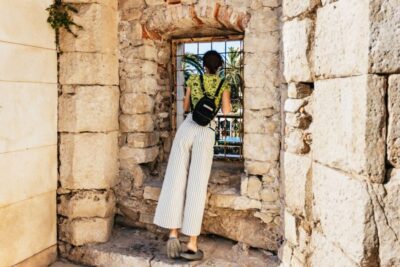
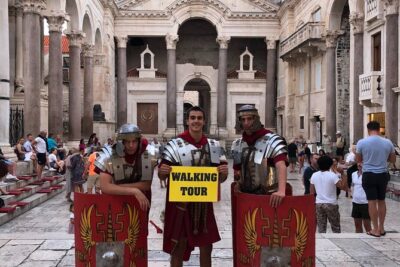
Walking Tour of Split and Diocletian’s Palace
Read our review →
Krka Waterfalls tour with Trogir Walking tour and Krka panoramic boat cruise
Read our review →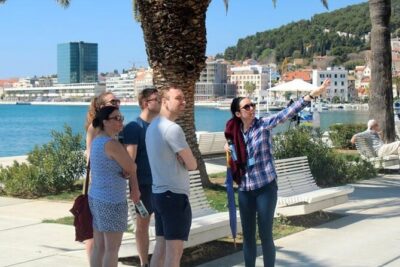
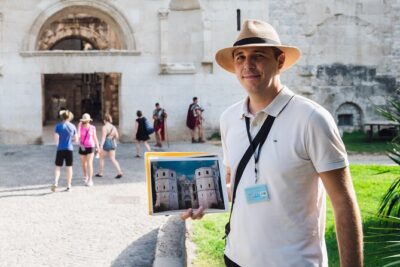
Walking Tour of Split with a ‘Magister’ of History
Read our review →
Plitvice Lakes: Guided Walking Tour with Train and Boat Ride
Read our review →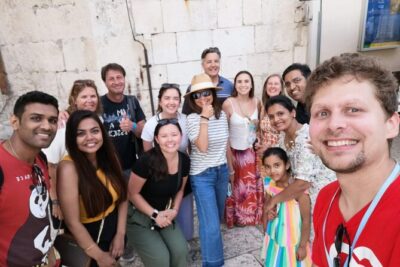
Diocletian Palace & Old Town Guided Walking Tour
Read our review →Browse the lists this tour appears in