
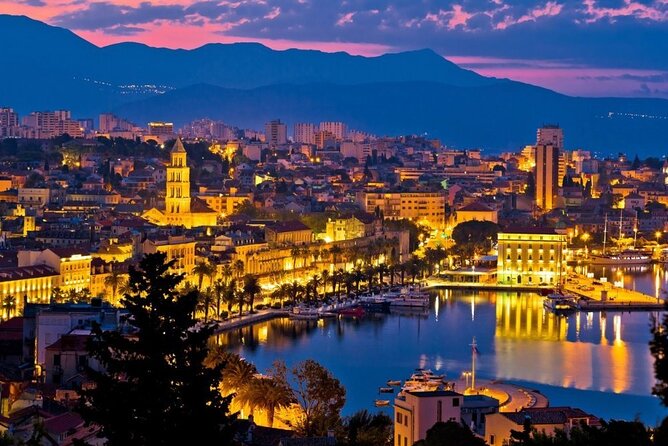
Reviewed · OLD TOWN WALKING TOURS
Private Split Walking tour with a Photo session
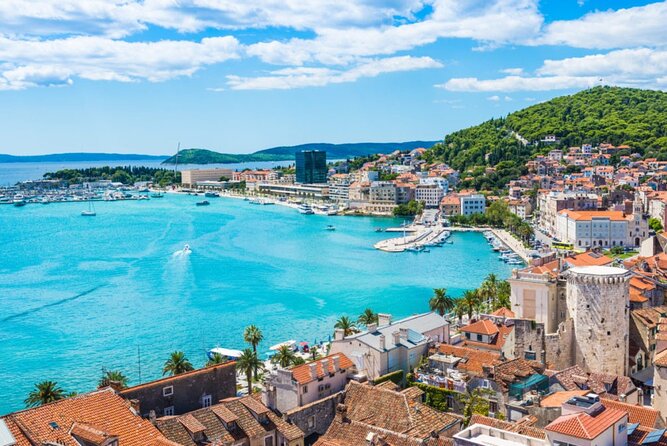
Split is the kind of place where you can start walking and immediately feel like you’re in the middle of the story. This private walking tour is interesting because it combines a photo session with a guided loop through the best-known Roman and medieval corners, without rushing you.
I like two things a lot. I love the start at Riva promenade, Split’s everyday waterfront that locals treat like a shared living room. And I also like the setup for the photo work, with a live guide plus professional lifestyle photographer Ivan Gudić so you’re not just snapping pictures, you’re getting guided framing in real locations.
One consideration: you do need to plan for paid cathedral entry for Saint Domnius (and the related temple and crypt), and the tour requires good weather to run smoothly.
Key things to know before you go
- Private pace for your group, so you can slow down for photos, details, or questions.
- Riva promenade start and finish, easy to orient yourself in Split’s Old Town area.
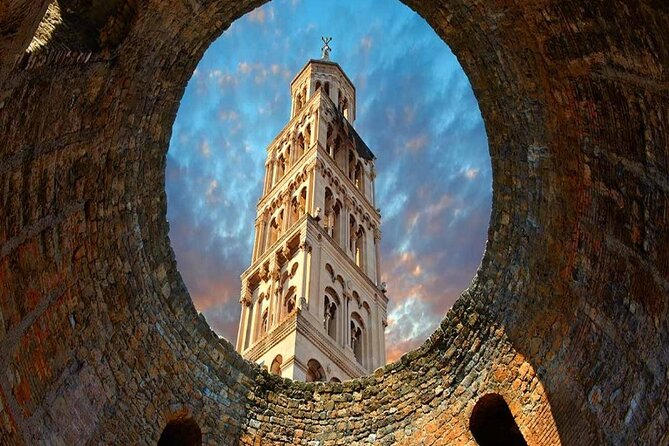
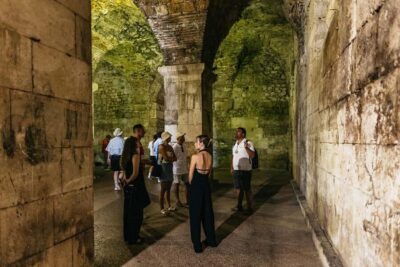
- Diocletian’s Palace stops are short but meaningful, including the Vestibule with impressive acoustics.
- Saint Domnius is ticketed, with entry tied to the Temple of Jupiter and the Crypt of St. Lucy.
- Professional lifestyle photographer Ivan Gudić handles the photo session as part of the experience.
- Mobile ticket and English are included, with near public transportation and service animals allowed.
Why this Split photo walking tour feels better than a checklist
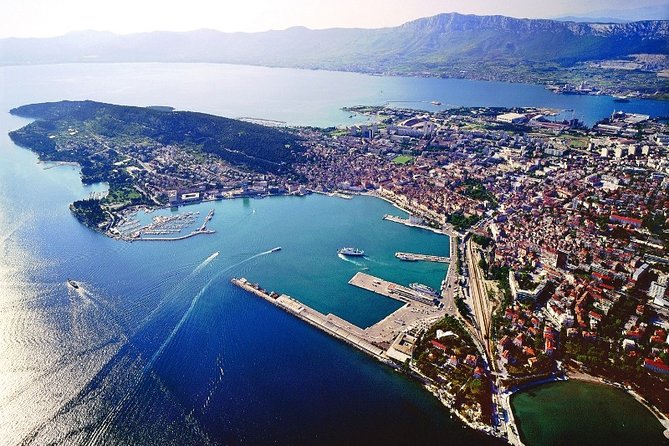
A lot of Split tours feel like a sprint with stoplights. This one is built around a simple idea: walk the major highlights at a pace that feels human. The total time is about 2 hours 30 minutes, and then you’re done early enough to keep the rest of your day open.
That matters if you like taking photos when the light is right, not when the guide yells, Go, go, go. It also matters if you want to ask questions as you go, because private usually means less waiting, less crowd herding, and more back-and-forth.
What I especially like is the combination of a real “city stage” start at Riva and the heavy hitters around Diocletian’s Palace. You get the waterfront atmosphere first, then the stone-and-history architecture. It’s a good order for getting your bearings fast, before you disappear into the palace world.
More walking tours of Split:
- Split: Old Town and Diocletian Palace Walking Tour
★ 4.9 · 4,727 reviews - Walking Tour of Split and Diocletian’s Palace
★ 5.0 · 2,588 reviews - Krka Waterfalls tour with Trogir Walking tour and Krka panoramic boat cruise
★ 5.0 · 1,659 reviews
Price and value: what $300.73 per person really covers
The price is $300.73 per person for a private experience lasting about 2.5 hours, with a live guide and a private professional lifestyle photographer included. That’s the big value driver here. You are paying for two roles in one experience: someone who can explain what you’re seeing, and someone who can help you document it well.
The other part to plan for is the one paid stop that isn’t bundled. Entry to Saint Domnius Cathedral costs 25 Croatian kuna, about 3.5 euros, and that ticket includes access to the Temple of Jupiter and the Crypt of St. Lucy. So you should budget a small add-on for that segment, depending on your exact timing and what the group decides to enter.
One more value angle: since the tour ends back at the meeting point, you’re not paying for a long, tiring transfer. You’re also buying time, not just sights. If your priority is having a guided photo outcome in prime locations, this is the kind of tour that can be worth it even if you skip some optional shopping and keep lunch simple.
Finding your way: meeting at Riva promenade and the local vibe
The meeting point is Obala Hrvatskog narodnog preporoda in Split, and the experience ends back at the meeting spot. If you’ve never been to Split, that “come back to where you started” setup is underrated. It reduces stress, and it makes it easier to continue exploring afterward.
Your first stop is Riva Harbor and the Riva promenade, which is described as Split’s most important public space. It’s not just a pretty strip along the sea. Locals use it like a shared living room for concerts and events all year, including New Year, Christmas, City Day, and Carnival. Even if you’re only there for a short visit, that context helps you understand why the promenade feels central to everyday life.
You’ll start near a bronze model of Split at the very beginning of Riva. That makes the start practical. It gives you a recognizable landmark to orient around before you move inland into the palace complex.
If you want photos that look like Split, not just like travel snapshots, this opening segment helps because you’re already in a signature environment: the waterfront, the promenade width, and all those casual seating spots around coffee shops and restaurants.
Riva Harbor to Diocletian’s Palace: getting the Roman layout right

Once you’re past the sea-front orientation, the tour shifts into one of the world’s best-preserved Roman complexes. The next stop is the Palazzo di Diocleziano, part of Diocletian’s Palace. This isn’t taught as random ruins. It’s explained as a combined palace and fort: a luxury villa and a military camp (castrum) in one rectangular structure.
The palace layout is broken into four parts, with two main streets. The southern section is linked with the Emperor’s apartment and governmental and religious ceremonies, while the north section is associated with the imperial guard and everyday military functions like servants and storage.
This matters because if you understand the palace was designed with both power and logistics in mind, you stop seeing it as only scenic stone walls. You start reading it like a plan. Even at a glance, you can tell the palace was built to organize movement.
Architecturally, you also get the key reference points: a roughly rectangular complex measuring about 215 by 180 meters, and four large towers at the corners. Doors on each side and small towers along the walls make the exterior feel like a map.
A few more Split days worth comparing
- Private rafting on Cetina river with caving & cliff jumping,free photos & videos
★ 5.0 · 66 reviews - Private Vacation Photography Experience in Split, Croatia
★ 5.0 · 47 reviews - Split Private Tour with Professional Photos
★ 5.0 · 16 reviews - Split: Photographer for your holidays!
★ 4.8 · 14 reviews
The Vestibule stop: acoustics, mosaic, and how sound matters
From the outside, the palace areas you see may look geometric and solid. The Vestibulum is different. It’s described as leaving a monumental impression even now, because the design changes depending on where you stand.
From the outside it reads as rectangular, but inside it follows a circular ground plan. The stop highlights features like semicircular niches with statues and a cupola with colorful, glittery mosaic. There’s also a sense of layered time because Marko Marulić is said to have witnessed something in the 16th century in a manuscript.
One detail I’d pay attention to: the Vestibule was originally an entry point into the residential part of the palace, but it was also used for living more than half a century ago, with poultry kept there and gardens cultivated. That’s a reminder that buildings like this did not just freeze in Roman time. They kept serving people long after the empire changed.
Your guide also points you toward one of the most memorable “do it, don’t just look” moments: the acoustics. The description notes how groups singing traditional dalmatian a capella songs can sound amazing there. Even if your visit doesn’t include a singing group, standing in a space made for sound can help you understand why that detail matters.
Saint Domnius Cathedral: what to expect and what you pay for

The cathedral stop is the one place where you should expect a ticketed interior. Saint Domnius Cathedral is set into the oldest building of the area, linked with the Mausoleum of Emperor Diocletian. Inside, you’re meant to see how ancient pagan, medieval Christian, and modern heritage all overlap.
The important practical detail is the entry fee: 25 Croatian kuna (around 3.5 euros). That ticket also includes the Temple of Jupiter and the Crypt of St. Lucy. If your group is deciding whether to enter, this bundle makes the decision easier, because you are not only paying for a single room.
The cathedral is primarily a place of liturgy today, with long continuity reflected in Sunday mass and the renewed splendor of the procession on St. Domnius’s day, Split’s patron saint day. So the feel inside is not just tourist museum mode. It’s an active religious site with ceremonies tied to the calendar.
A specific highlight to look for is the cathedral gates carved in walnut by Andrija Buvina from Split. That’s the kind of detail that pays off when you have a guide talking you toward it instead of you wandering and hoping to notice.
Time allowance is about 15 minutes here, so don’t plan on reading every plaque. Plan on capturing the main architectural idea and the carvings, then stepping out for photos in the surrounding palace space.
Grgur Ninski and the story of language in Croatia
Next comes Grgur Ninski, a statue outside the Golden Gate area, one of the principal Roman gates into Diocletian’s Palace. This stop is about more than a name. It connects a medieval bishop, Gregory of Nin, to the push for using Croatian language in Catholic services.
The story goes like this: Gregory of Nin is remembered for defying the Catholic church in Rome and insisting national Croatian language be used in services throughout Croatia, instead of Latin. The implication is that people could understand what was being said, and that change helped Christianity grow stronger across the region.
The statue itself is also significant because it was crafted by Croatian sculptor Ivan Meštrović in 1929 to commemorate one thousand years since Gregory defended Croatian culture historically. That makes the statue feel both medieval-themed and 20th-century memorial.
And yes, there’s a famous tradition connected to the statue. The description says it is said that rubbing the big toe grants you your wish. You can treat that as playful, not sacred, but it’s a fun thing to do in a stop that’s otherwise focused on ideas.
Time here is about 10 minutes, so it’s a quick reset from interior spaces to open-air symbols.
Narodni Trg, Fruit’s Square, and Prokurative: where the city performs

After the palace complex, the tour shifts to squares. This is where Split becomes less about stone architecture and more about daily rhythms.
First is Narodni Trg, also known as Pjaca. This square has a long timeline starting in the 13th century as St. Lawrence’s Square, and it became the first inhabited part of Split outside the Diocletian Palace, leaning to the western wall. It served as a central stage for city authority and noble families, and later it became the everyday social center with bars, restaurants, and shops.
A fun way to approach this stop is to look at it like a “stage.” The tour description frames every building on Pjaca as having a story. You won’t have time to read them all, but you will start to see how the square evolved from civic power to public hangout.
Then comes Fruit’s Square, Trg Brace Radic. It may be smaller, but it has landmarks that pack in personality. There’s an octagonal Venetian tower leftover from a former fortress built in the 15th century for defense of a small town. Opposite is a palace with a Baroque facade, one of the best examples of that style in Dalmatia. In front stands a monument to Marko Marulić, tied to Croatian literature and philosophy, with the sculptor again being Ivan Meštrović.
Finally, the tour reaches Prokurative, also called Republic Square. The description compares it visually to Venice’s St. Mark’s Square, with Republic Square west of Riva and named after neo-Renaissance colonnades surrounding the space on three sides. The buildings here were influenced by Italian tradition, and the square became a stage for cultural events, including a pop music festival, and everyday local dining.
If you’re the kind of traveler who likes photos that feel like you’re in the real city, not just in front of famous ruins, these square stops are the payoff.
The photo session with Ivan Gudić: how to get better results in real places
Your tour includes a private professional lifestyle photographer, Ivan Gudić. That’s the headline if your goal is better photos, not just more photos.
The best part is that the photo session happens as part of the walking loop, meaning you’re not standing in one generic place waiting for good light. You’ll be moving through visually strong zones: waterfront scenes at Riva, stone geometry around Diocletian’s Palace, and open squares that give you space to frame people against architecture.
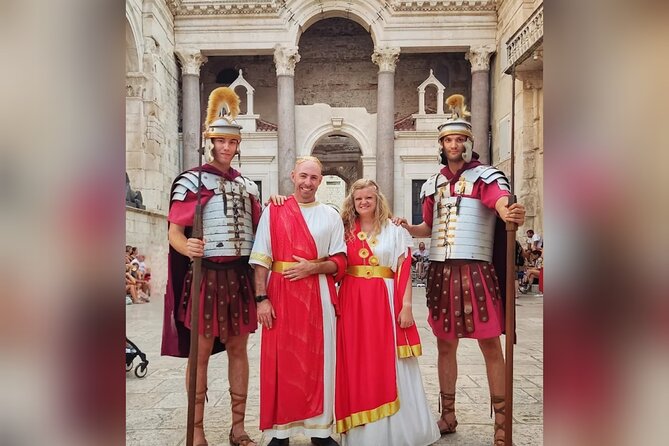
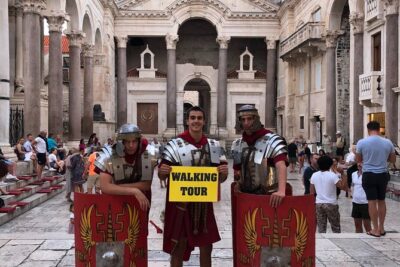
In past experiences, the photographer has offered fun Roman-themed photo options, including Roman-style outfits. If that happens during your date, consider it as a playful way to connect the visuals to the stories the guide is telling.
Practical advice: wear comfortable shoes you can walk in without thinking. Photo time is easy to ruin if your feet start complaining. Also, think about simple outfit choices with clean colors. You want your clothing to complement the pale stone and warm tones around the palace, not fight with them.
And because this is private, you have more flexibility to take the extra shot that actually looks like you, not the one you snapped just to finish.
Timing it for an easy rest of your day
One reason this tour works well is that you are done in about 2.5 hours and the rest of the day is free. Since the tour ends back near the meeting point at Riva, it’s easy to drop straight into the kind of casual wandering Split does best.
Use that free time for two things: long lunch pacing and unscripted exploration. Riva has plenty of coffee shops and restaurants, so you can keep things low-effort and still feel like you’re in the center of town. Then, if you still have energy, you can go back into the Old Town grid to follow your own curiosities.
If you’ve got a dinner reservation or a sunset plan, having the tour finish early helps your schedule breathe. You are not locked into a long itinerary or a heavy transfer.
Who should book this private Split photo walking tour
This is a strong fit if:
- You want the headline highlights of Split, especially Diocletian’s Palace, without doing a full-day grind.
- Photos are a priority, and you like the idea of a professional guiding how you look and where you stand.
- Your group values a private pace, meaning questions and stops can happen without slowing down a crowd.
- You want a mix of atmosphere, Roman layout details, and city-square vibes.
You might skip it if:
- You’re on a tight budget and don’t want to add the Saint Domnius Cathedral fee.
- You strongly dislike weather-dependent activities, since the experience requires good weather to run.
Should you book it or choose something else?
If you want a guided walk that also takes your photos seriously, this is an easy yes. The combination of a live guide and professional photographer Ivan Gudić gives you two kinds of value: understanding what you see and capturing it well.
Book it if you are excited by Riva’s local energy and you want to step into Diocletian’s Palace with explanations that make the layout click. Just plan for the Saint Domnius ticket cost, and keep your schedule flexible enough to handle good weather requirements. If those boxes work for you, you’ll end the tour with real photos and better context than a simple highlight stroll.
FAQ
Where does the tour start?
It starts at Obala Hrvatskog narodnog preporoda, 21000, Split, Croatia, and it ends back at the same meeting point.
How long is the private Split walking tour with a photo session?
The duration is about 2 hours 30 minutes.
Is the tour offered in English?
Yes, the tour is offered in English.
What’s included in the price?
The tour includes a live guide and a private professional lifestyle photographer, Ivan Gudić.
Is entry to Saint Domnius Cathedral included?
No. Admission to Saint Domnius Cathedral is 25 Croatian kuna (about 3.5 euros), and that same ticket includes the Temple of Jupiter and the Crypt of St. Lucy.
Is this a private tour?
Yes. It is private, meaning only your group will participate.
Do I get a mobile ticket?
Yes. The tour includes a mobile ticket.
What if the weather is bad?
The experience requires good weather. If it’s canceled due to poor weather, you’ll be offered a different date or a full refund.
Can I cancel for a full refund?
Yes. You can cancel up to 24 hours in advance of the experience for a full refund.
Fresh options around Split
- Walking Tour Split★ 4.7 · 61 reviews
- Unique vintage Tomos moped tour Split – Back to the ’80s★ 4.8 · 17 reviews
- Essential Diocletian’s Palace Tour for First-Time Visitors★ 4.8 · 19 reviews
- Split: Trogir Open Top Bus Trip + Free Split Walking Tour★ 4.1 · 17 reviews
- Ranch 22 Podstrana, ” Horse riding 12 km from SPLIT “★ 4.5 · 79 reviews
- Zinfandel Wine Tasting & Storytelling with Dalmatian Food★ 5.0 · 20 reviews
- 1 st Waterbike Safari in the World★ 5.0 · 23 reviews
- Full-Day Quad and Wild Horses Safari in Livno from Split★ 5.0 · 12 reviews
Old Town Walking Tours, compared.
Walking Tour of Split and Diocletian’s Palace
Read our review →
Krka Waterfalls tour with Trogir Walking tour and Krka panoramic boat cruise
Read our review →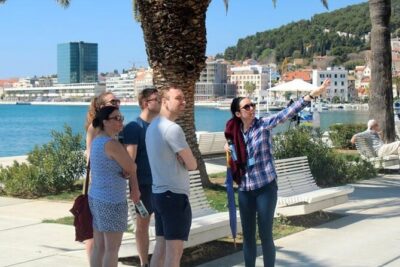
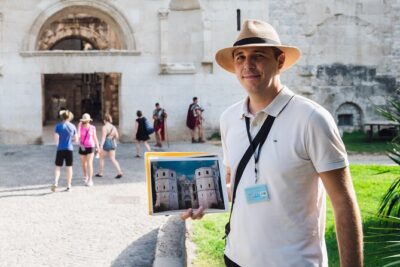
Walking Tour of Split with a ‘Magister’ of History
Read our review →
Plitvice Lakes: Guided Walking Tour with Train and Boat Ride
Read our review →
Diocletian Palace & Old Town Guided Walking Tour
Read our review →Browse the lists this tour appears in