
Reviewed · DIOCLETIAN'S PALACE TOURS
Jewish Heritage & Diocletian’s Palace Private Split Tour
Split’s streets are built on layers. This private tour is interesting because you connect Diocletian’s Palace with the lived Jewish story of the city, from Roman-era evidence to a synagogue that people still visit today.
Two things I really like: the chance to see menorah carvings in the palace substructures, and the time inside the synagogue with a community member who shares what the Jewish presence in Split has meant over time, including stories you will not get from guidebooks alone. Guides like Jelena Vrancic and Emil (based on past experiences) also tend to keep the tone friendly and human, not stiff.
One possible drawback: you do a good chunk of walking through compact old-town streets and around the palace complex, so if mobility is limited, plan on going slow and ask the guide to adjust the route and pace.
Jewish Heritage Meets Roman Power in Split Old Town
Split is one of those places where the city center is the museum. Diocletian’s Palace is the big reason you feel that instantly, with its walls, corridors, and substructures shaping how the old town works today.
What makes this tour feel more than sightseeing is the pairing. You are not just bouncing between landmarks. You are learning how different communities used the same physical space, how centuries overlapped, and how the Jewish presence in this region is written into places you might otherwise walk past.
It is also a private format, so your questions can steer the tour. If you care about Roman history, you can focus there. If the Jewish story is your main interest, you will spend real time on that too, including a synagogue visit and a local Jewish cemetery.
Key Stops That Matter Most on This Private Tour
- Diocletian’s Palace substructures and the menorahs carvings tied to Jewish presence since early centuries
- Split synagogue visit plus a conversation with a community member, such as Albert in previous tours
- Jewish ghetto walk to connect the streets you see with the people who lived there
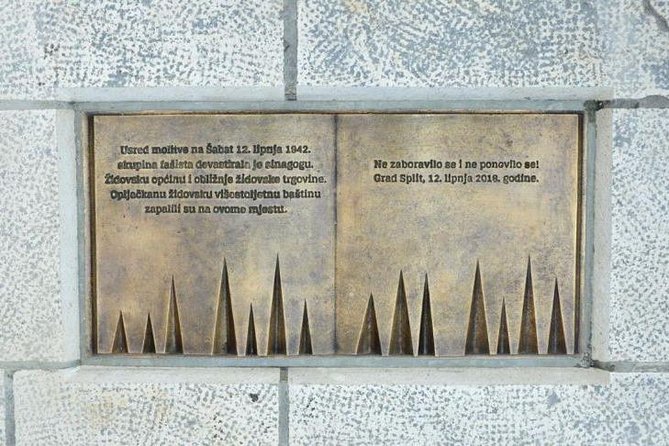
- Memorial plaque at Narodni Trg marking the destruction of synagogue items and archives on 12 June 1942
- Old-town squares and promenades like Riva, Prokurative, and Marmontova for context and pace
More time inside Diocletian's Palace:
- Split: Old Town and Diocletian Palace Walking Tour
★ 4.9 · 4,727 reviews - Walking Tour of Split and Diocletian’s Palace
★ 5.0 · 2,588 reviews - Split & Diocletian’s Palace Walking Tour
★ 5.0 · 1,125 reviews
Starting in the Palace Substructures: Menorahs in the Basements
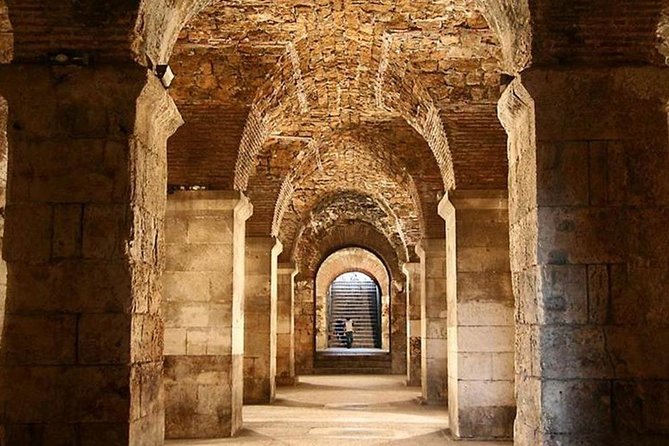
The tour’s first major moment happens under Diocletian’s Palace. You start with the palace substructures, where you get your bearings on how Split’s core was shaped.
This is where the Jewish story becomes tangible. You will be pointed to menorahs carvings in the basements of the palace. That detail matters because it connects the Jewish community of Split to the earlier centuries of Roman rule, rather than treating the Jewish story as something that arrived later.
You also get the broader timeline the tour uses to make sense of what you are seeing. The Jewish community of Split is described as one of the oldest in Europe, with archaeological findings in nearby Salona indicating Jews lived there with the Romans, likely between the 2nd and 3rd century AD. Later, when people from Salona fled after attacks, some settled into Diocletian’s Palace, sharing the same escape and resettlement pressures as other locals.
Value for you: this is not just a cool photo stop. It gives you a frame so the palace stops feeling like anonymous ruins. You start understanding why the city layout and the human stories overlap.
Practical tip: these substructures can be darker and more enclosed than the bright open squares above. Wear shoes with solid grip and keep an eye on footing when you turn corners or step down.
Quick Palace Orientation: Vestibule, Peristyle, and Grgur Ninski
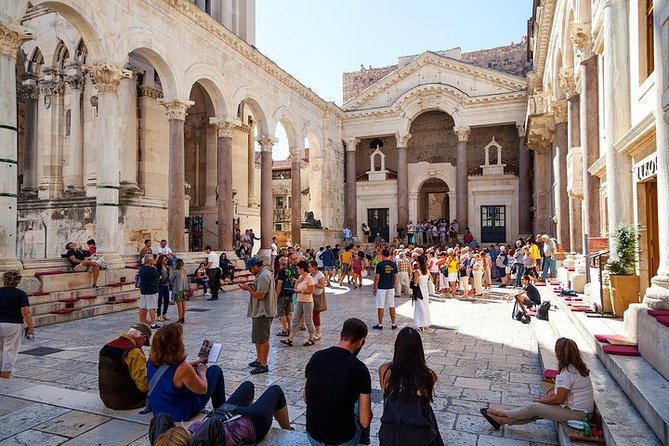
After the substructures, the pacing shifts to help you connect the underground to the public spaces. You get a look at the vestibule, described as a former foyer of the palace, and then you move toward the peristyle, the main Roman square inside the palace.
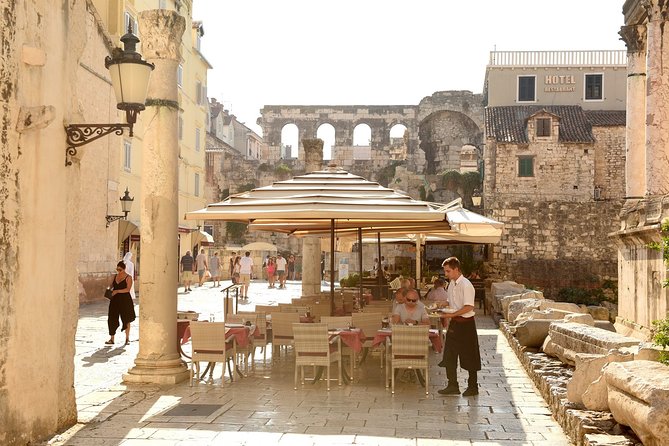
The peristyle stop is short but meaningful. You learn about how the square functioned historically and how it functions now. You also see the columns brought from different parts of the empire when the palace was built in 305 AD. That detail reinforces a key point about Diocletian’s Palace: it was not built only with local materials and local ideas. It was assembled from the wider Roman world.
Then the tour adds a human-scale moment with a stop at the statue of Grgur Ninski. You will learn about Bishop Grgur Ninski and see the statue that sits as a landmark in the flow of old-town sightseeing.
Possible drawback: because these orientation stops are brief, you should treat them as a map-making exercise. If you want slow time to read every plaque or stare at every column, this tour might feel like you are moving quickly in the palace portions. The upside is that the time saved goes to the synagogue visit, which is the emotional center of the tour.
Walking the Jewish Ghetto to Split Synagogue
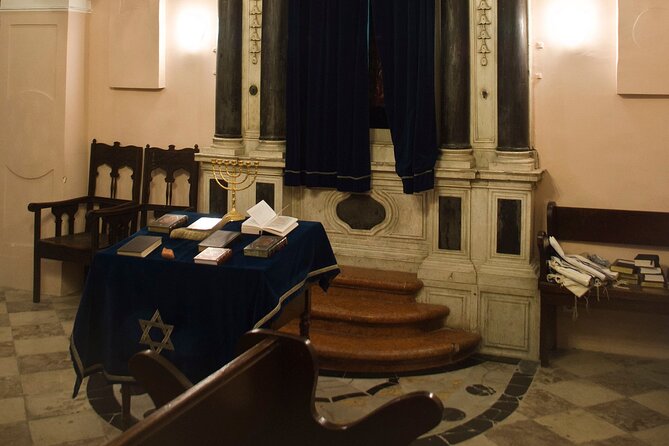
The heart of the experience is the synagogue visit and the walk through the Jewish ghetto area. This part is where you stop seeing the old town as only Roman. You start seeing it as a place shaped by everyday life, faith, and community continuity.
You are guided through the Jewish ghetto, with explanations that connect the streets to the longer arc of Jewish presence in Split. This walk matters because it is where you practice the skill of seeing a neighborhood as more than architecture.
Then you visit the synagogue. The guide will bring you in and you will meet a member of the Jewish community who shares stories connected to Jewish life in Split. In past experiences, people have met Albert, the synagogue representative who helps share the space and educate visitors.
Two details I think are especially valuable for you here:
- You get context from someone connected to the community, not just from a script.
- You see the synagogue as an active place of memory and identity, not only as a monument.
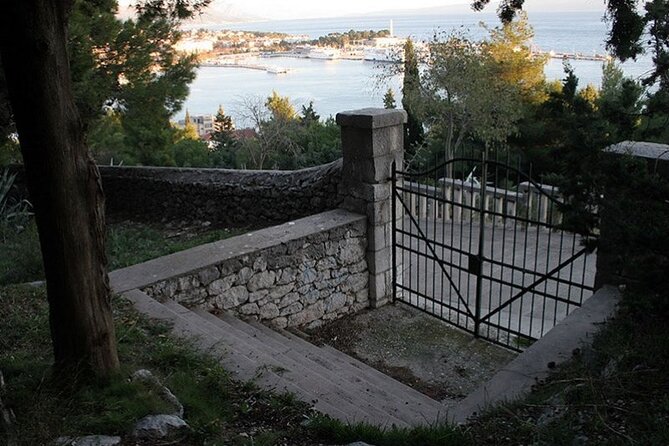
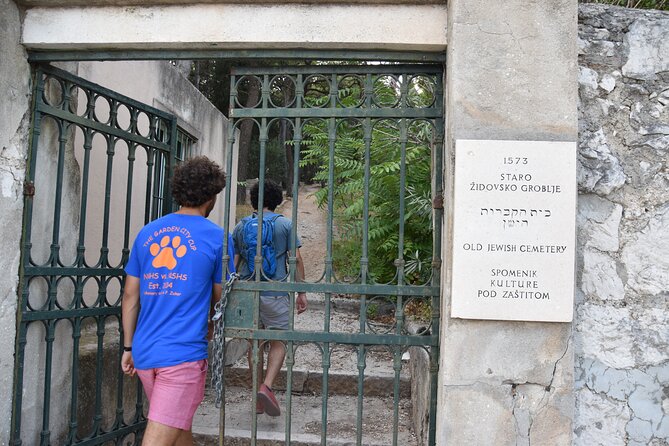
Also, the tour highlights include a visit connected to the local Jewish cemetery. Even if you view it as a bonus stop rather than the main event, it adds a “time” dimension. You are not only looking at buildings and carvings. You are seeing how heritage is remembered across generations.
Practical tip: synagogue visits can be quiet and more formal than street walking. Bring your most respectful, slow-down-at-the-door mode. If you have questions, write them down while you are walking, so you remember them when the moment arrives.
A few more Split days worth comparing
- Walking Tour of Split with a ‘Magister’ of History
★ 5.0 · 1,122 reviews - Split Walking Tour with Professor of History
★ 5.0 · 926 reviews - Split: History and Heritage Walking Tour
★ 4.9 · 650 reviews - Split History and Gastro Small-Group Tour with Food and Drinks
★ 5.0 · 375 reviews
Narodni Trg Memorial: Why the Old Town Has Hard Dates
Not every stop here is scenic. At Narodni Trg, you learn about a bronze plaque placed on the square in memory of the destruction of precious items and archives from the synagogue on 12 June 1942.
That date stops the tour from floating in general history. It gives you a specific point on the timeline, tied to local community materials and what was lost. You also notice the setting, because this is one of the city’s key public squares, with Venetian-style architecture that frames the square around you.
This is also a moment where the tour does something smart: it pairs learning with environment. The old town looks beautiful, and that contrast helps you understand why remembering is necessary. You are not just studying an event in theory. You are seeing it in the place where daily life still happens.
If you are the kind of person who likes your history precise and grounded, this stop will likely feel important rather than rushed.
Riva, Prokurative, and Marmontova: Getting the Split Pace
After the heavier Jewish heritage moments, the tour brings you back into the rhythm of modern Split. You move through several central spots that locals treat like living rooms.
Riva Harbor is the most popular waterfront area, described as a pedestrian heaven full of cafés and restaurants. Your guide will explain what makes the city tick right now, not only what it used to be.
Then you go to Prokurative, also known as Republic Square. The tour frames it with a Venice-like feel, referencing the arches found on neo-Renaissance buildings around the square. You will also be told about why people often connect the name Prokurative to what they see there.
Finally, you walk along Marmontova Ulica, a promenade where locals and visitors mingle. There is also mention of the fish market off the street, a good reminder that old-town glamour in Split sits right next to real daily commerce.
Why this matters: it helps you build a practical understanding of the city layout. When you finish the tour, you are not wandering. You know where to go for coffee, for a stroll, and for a meal.
One consideration: these stops are not long. They are designed to keep the route coherent with the palace and heritage sites. If you want full time for photos and shopping, plan to follow up on your own.
The Value Question: Is $187.05 Worth It?
At $187.05 per person for a private tour lasting about 2 hours 30 minutes, the price is not the bargain bucket. This is paying for access, time, and a guide who can connect details across locations.
Here is why I think it can still be good value:
- Private format means you get an actual conversation. You are not stuck with a group that moves on autopilot.
- The synagogue element adds real weight. Meeting a community member, including people like Albert, is the kind of access that usually costs more in time and coordination.
- The tour includes the fee for Diocletian’s Palace substructures, so you are not doing extra ticket math for that first big segment.
What could make it feel pricey: if you only want the palace highlights and do not care much about Jewish heritage, then you might not feel the return. But if you want both Roman Split and Jewish Split in one guided arc, the pricing can make sense because the tour is doing two specialized themes, not one.
My advice: compare your priorities. If you already plan to visit the palace on your own and just want a quick add-on for the synagogue, this might be overkill. If you want the story-thread connecting carving to neighborhood to memorial plaque, this format is the right tool.
Who This Private Tour Fits Best
This experience works especially well if you:
- want a focused guide route in a compact old town
- care about Jewish heritage in Croatia, not just general European Jewish landmarks
- like explanations that tie a specific place to a specific period
It is also a smart choice for families or mixed-age groups because it can be paced. Past experiences mention guides adjusting when someone had ambulation problems, and shifting the timing when weather turned rainy. That flexibility is part of why the private format matters.
On the “easy to join” side: it is offered in English, it is described as near public transportation, and service animals are allowed. The tour length is short enough for a half-day feel, not an all-day commitment.
If you hate walking, do not ignore that reality. You will cover multiple stops in old streets and around the palace complex. You can still do it, but go in expecting a lot of steps.
Final Call: Should You Book This Split Jewish Heritage Tour?
I would book this tour if your ideal day in Split includes both the Roman masterwork under your feet and the community story that runs through the old town streets.
Skip it if you only want broad scenery and quick photos. This tour earns its time through interpretation, especially around the palace substructures and the synagogue conversation.
If you are on a first visit to Split, this is also a good way to get your bearings fast. You start in the palace core, you walk through the Jewish ghetto area, and you end in the places where you will naturally spend your free time, like Riva and Prokurative.
FAQ
How long is the Jewish Heritage & Diocletian’s Palace private tour?
The tour is approximately 2 hours 30 minutes.
Is this tour private, and is it in English?
Yes, it is a private tour, and it is offered in English.
What does the tour include for Jewish sites?
It includes a visit to the synagogue and time walking through the Jewish ghetto area, and it also highlights a local Jewish cemetery visit.
Is entry included for Diocletian’s Palace substructures?
Yes. The fee for the Diocletian’s Palace substructures is included, and the admission ticket for that stop is included.
What is the meeting point in Split?
The meeting point is Obala Hrvatskog narodnog preporoda 23, 21000, Split, Croatia, by the bronze map of the city at the main waterfront called Riva. The guide returns you to the same meeting point at the end.
Do you offer pickup?
Pickup is offered. For cruise ship guests, you are met at the port once you get off the ship. The start time is on request, and the tour also states that pickup can be arranged for apartments located in the Old Town of Split.
Are meals and drinks included?
No. Meals and beverages are not included.
Can I cancel for a full refund?
Yes. You can cancel up to 24 hours in advance for a full refund.
Fresh options around Split
- Walking Tour Split★ 4.7 · 61 reviews
- Unique vintage Tomos moped tour Split – Back to the ’80s★ 4.8 · 17 reviews
- Essential Diocletian’s Palace Tour for First-Time Visitors★ 4.8 · 19 reviews
- Split: Trogir Open Top Bus Trip + Free Split Walking Tour★ 4.1 · 17 reviews
- Ranch 22 Podstrana, ” Horse riding 12 km from SPLIT “★ 4.5 · 79 reviews
- Zinfandel Wine Tasting & Storytelling with Dalmatian Food★ 5.0 · 20 reviews
- 1 st Waterbike Safari in the World★ 5.0 · 23 reviews
- Full-Day Quad and Wild Horses Safari in Livno from Split★ 5.0 · 12 reviews
Diocletian's Palace Tours, compared.
Walking Tour of Split and Diocletian’s Palace
Read our review →
Diocletian Palace & Old Town Guided Walking Tour
Read our review →
Game of Thrones Tour with Diocletian’s Palace Cellar
Read our review →
Diocletian’s Palace and Old Town SMALL GROUP Walking Tour
Read our review →
PRIVATE Walking Tour of Diocletian’s Palace & Old Town
Read our review →
Browse the lists this tour appears in