
Reviewed · DIOCLETIAN'S PALACE TOURS
Chill Private Walking Tour of Diocletian’s Palace
Diocletian’s Palace in Split is one of those rare places where Roman stone still shapes the street plan today. You’re not just looking at ruins, you’re walking through a city that grew on top of a former emperor’s home.
I love how this private format keeps the pace human, and I really like that the guide uses 3D reconstructions to show what key spaces looked like centuries ago. One thing to consider: several stops have optional interior tickets, and if you add all the interiors the tour can run closer to the longer end of the 1 hour 30 minutes to 2 hours window.
Key reasons this tour works so well
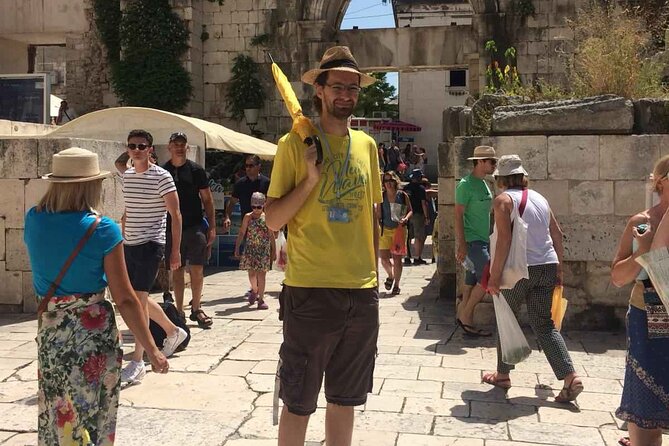
- Private, not packed, so you can ask questions and slow down where you care most
- Mili’s clear storytelling, with humor and practical explanations that make the palace feel readable
- 3D reconstructions that connect today’s walls to the way the palace likely functioned
- Optional add-ons for interiors (substructures museum, cathedral, Temple of Jupiter) if you want more depth
- A finish outside the Golden Gate near Grgur Ninski, where the big picture finally clicks
A Roman palace that still runs the city
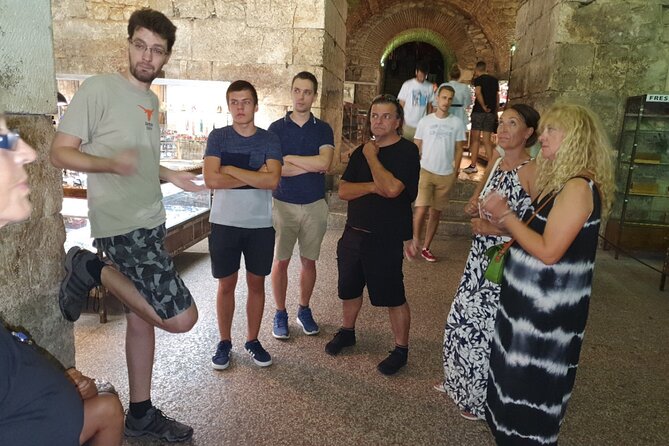
When you start Diocletian’s Palace, you quickly realize it’s not a museum you walk through. It’s the old foundation layer of Split. Houses, alleys, and landmarks sit inside the palace walls, so every turn feels like you’re reading a plan that never fully stopped being used.
That is why a guided walk matters. The palace is huge, and without context it’s easy to see impressive stone without understanding what it meant. With the right guide, you learn what to look at, what to ignore, and how the Roman layout changed as centuries passed.
More time inside Diocletian's Palace:
- Split: Old Town and Diocletian Palace Walking Tour
★ 4.9 · 4,727 reviews - Walking Tour of Split and Diocletian’s Palace
★ 5.0 · 2,588 reviews - Split & Diocletian’s Palace Walking Tour
★ 5.0 · 1,125 reviews
Private guiding with Mili and his 3D reconstructions
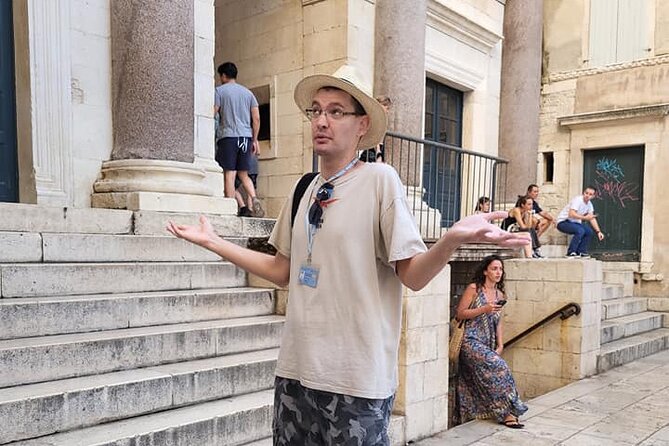
This is a private walking tour for your group, up to 15 people, led by an experienced guide named Mili. The reviews I paid attention to were consistent on one thing: Mili is friendly, communicates well, and explains history in a way that actually sticks.
My favorite part is the use of 3D reconstructions. Standing in a real doorway or courtyard, you can suddenly picture how spaces worked when Diocletian’s Palace was a functioning palace complex, not just a set of surviving walls. It also helps you connect the Roman pieces to later religious reuse, which is a major theme here.
And yes, Mili brings in pop-culture context too. If you’re a Game of Thrones fan, you might enjoy the way he points out what the palace does for TV-style imagination. Non-fans still get plenty, because the real goal is the layered history of the building itself.
Price and timing, what the value really comes down to
The price is $107.84 per group (up to 15). For a private tour, that often means you can split the cost if you’re traveling with friends or family, and you get far more interaction than you’d get with a larger group.
The tour runs about 1 hour 30 minutes to 2 hours. That is a realistic pace for the palace, especially when you include explanations at each major landmark. Timing also depends on optional interiors: the substructures museum can add about 20 minutes, and entering the cathedral or Temple of Jupiter can add about 10 minutes each.
Start at the Eastern (Silver) Gate, then learn the palace map fast
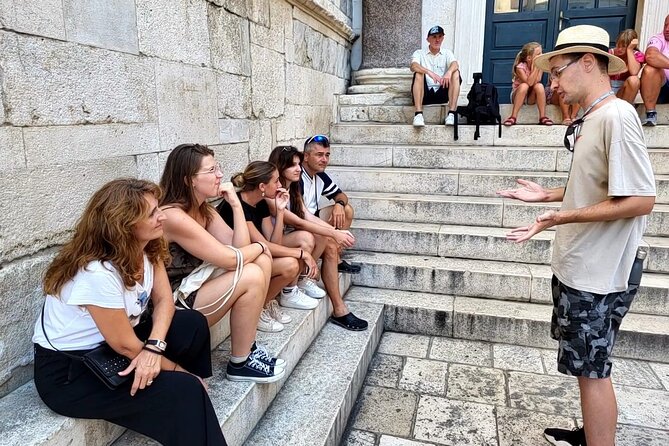
You meet at the Eastern (Silver) Gate, Poljana kraljice Jelene 5, 21000 Split. This is a smart starting point because it gets you inside the palace zone early, while you’re still building the mental map.
From the start, the guide frames Diocletian’s palace as more than one building. It’s a whole system: defenses, worship spaces, and daily-life areas all arranged inside walls. You’ll walk away with a clearer sense of where you are and why the layout makes sense.
More walking tours of Split:
- Krka Waterfalls tour with Trogir Walking tour and Krka panoramic boat cruise
★ 5.0 · 1,659 reviews - Walking Tour of Split with a ‘Magister’ of History
★ 5.0 · 1,122 reviews - Split Walking Tour with Professor of History
★ 5.0 · 926 reviews - Split: Diocletian Palace & Old Town Guided Walking Tour
★ 4.7 · 882 reviews
Stop 1: The Peristyle, where Diocletian’s power feels close
Your first major stop is the Peristyle of Diocletian’s Palace. This is a great opener because it puts you in the palace’s core ceremonial space.
You’ll learn the history of Diocletian and how this palace came to be, then you’ll connect the setting to the man who commissioned it. This is also the moment when many people start to see the palace as a designed stage, not random stone in a city square.
Practical note: you’ll spend about 20 minutes here, and that time is well used for orientation and big-picture context.
Stop 2: Diocletian Palace substructures, the story under your feet
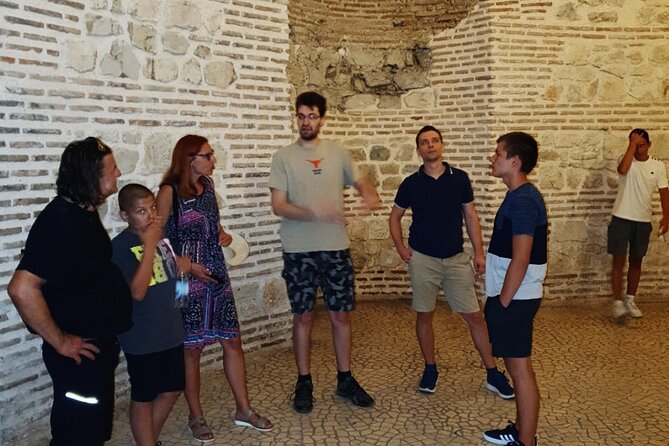
Next you move into the substructures area, where the focus shifts from what you can see easily to what the palace hid or supported. You’ll go through the free part first and learn about the palace’s architecture and history.
There’s a clear optional choice here. If you want more, you can buy tickets for the museum part of the substructures, and the guide will continue through the rest, adding around 20 minutes to the tour.
If you’re short on time, the free portion is still worth it because it gives you the palace logic. If you love architectural details, the museum add-on can be a good way to keep momentum and see more of the underground layers.
Stop 3: Cathedral of Saint Domnius, a Roman tomb reborn
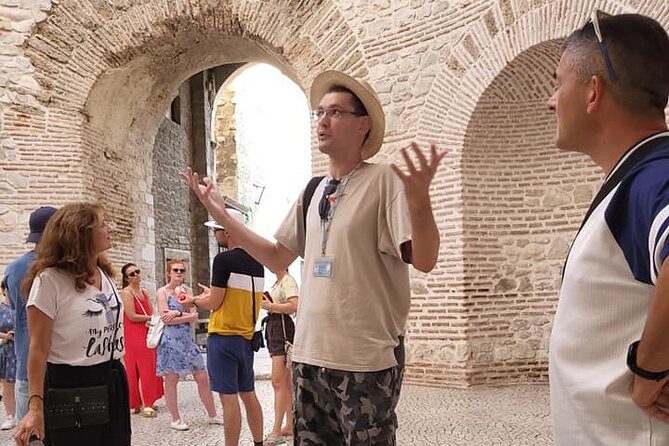
The Cathedral of Saint Domnius is one of the best-preserved Roman structures built as part of Diocletian’s Palace. The key idea you’ll hear is reuse: later Christianity adapted older Roman space instead of wiping it out.
At this stop, you’ll learn how a Roman tomb was converted into a Christian cathedral. If you have a cathedral ticket, you can also go inside, which adds about 10 more minutes.
What I like about this stop is the direct comparison feeling. Outside, you see Roman structure. Inside, you see later religious function layered onto earlier form. It’s one of the cleanest ways to understand how time changed the palace without erasing it.
Stop 4: Temple of Jupiter, Roman religion repurposed
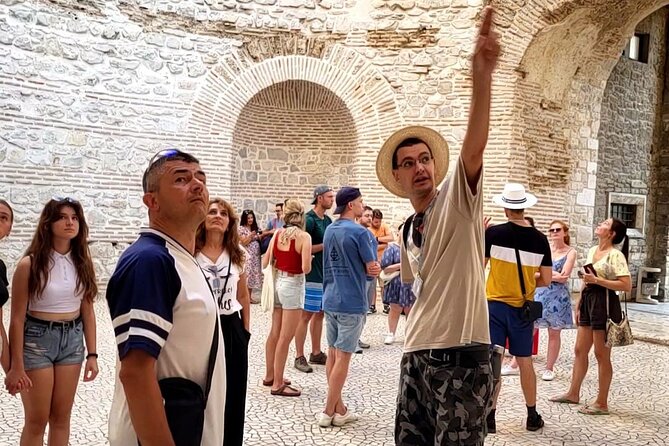
The Temple of Jupiter is another major survival. It’s tied to the palace’s chief deity, and it has also been repurposed by the church.
Here, the tour balance is simple: you’ll get the important story outside, and if you have a ticket you can see the small interior, again adding about 10 minutes.
This stop works well if you pay attention to what changes and what doesn’t. The guide helps you notice the differences in purpose, not just the impressive stonework. That’s what keeps the visit from turning into pure sightseeing.
Stop 5: Triklinij, a partial reconstruction that teaches you to imagine
The south eastern corner of the palace is mostly gone, but there’s a partial reconstruction that gives you an accurate impression of how Diocletian might have lived there.
This is the Triklinij stop. Even without perfect survival, the layout and reconstruction help you picture how this part of the palace functioned.
I appreciate this stop because it trains your eye. You start learning how the palace was built to work as a system, including spaces for living and daily routine. You also get practice in seeing how architects tried to recreate what was lost.
Stop 6: Papalićeva ulica, walking the north half of the palace
Next comes Papalićeva ulica, a palace alleyway where you’ll learn a few interesting facts as you head through the north half of the palace.
This part is shorter, around 15 minutes, but it’s valuable because it turns the palace from major monuments into lived space. When you walk an alley, you understand the scale and how people moved. That’s often hard to grasp from postcards or quick photos.
If you like small details, this is a good place to listen closely. Alleyways can look similar, but with the guide’s framing, they become part of the palace’s logic.
Stop 7: Fruit’s Square (Trg Brace Radic), old palace walls meet newer Croatia
Outside the palace you’ll reach Fruit’s Square, also called Trg Brace Radic. This stop adds a different kind of context: how later Croatian history plays out in a space originally designed as a Roman environment.
You’ll also see how the palace is integrated into newer buildings, and how it still exists in that mixed state today. This is one of the most practical lessons of the tour because it explains why Diocletian’s Palace feels like a city layer, not a fenced-off relic.
Spend a moment looking around before you move on. You’ll likely notice how the palace perimeter influences streets and what kind of modern life squeezed in around it.
Stop 8: The Golden Gate, fortifications and the change over time
Near the end you reach the Golden Gate, also the northern gate of the palace. This is a strong stop to bring it all together, because gates are where you feel the defensive purpose.
You’ll learn about palace fortifications and how they changed from their construction to the present day. The guide’s job here is to connect stone features you might otherwise overlook, like wall thickness and positioning, to the security needs of the original design.
This stop is about 10 minutes, but it often becomes a quick mental reset. You’ll leave feeling like you understand why the palace was built where it was and how it was meant to hold pressure.
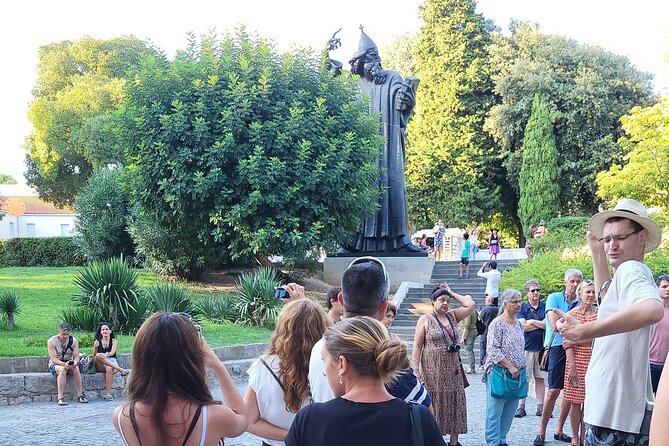
Stop 9: Grgur Ninski Statue, wrap-up with the bishop and Croatia’s story
Your final stop is outside the northern gate near the bronze statue of Grgur Ninski. This is where the tour consolidates what you learned about Roman construction and then broadens into Croatia’s longer timeline.
It’s a nice way to end, because you don’t just finish at another monument. You finish with a sense of how the palace sits inside a bigger story of the region.
Plan for about 15 minutes here. You’ll likely find the stop works best if you ask one or two questions. The guide can tie earlier sites to the broader summary in a way that feels natural.
What to watch for during the walk
To get the most out of this tour, I’d focus on three things as you go:
- Look for reuse. Cathedral and temple stories are not only about what existed, but what later communities chose to adapt.
- Track layout clues. Gates, ceremonial spaces like the Peristyle, and alleyways like Papalićeva ulica all tell you how the palace functioned day to day.
- Use the 3D moments. When the guide shows what a space likely looked like, match it to the angles and boundaries you see in front of you.
Also, if you’re traveling on a warm day, consider timing your walk for later in the day. This kind of route is easier when you’re not rushing to beat the heat.
Weather, tickets inside, and other practical notes
This experience requires good weather. If it’s canceled due to poor weather, you’ll be offered a different date or a full refund.
Interiors are optional. That means you can keep the pace comfortable and still learn the big story, then add depth only where you care most. The substructures museum can add about 20 minutes, and cathedral or Temple of Jupiter interiors can add about 10 minutes each.
You’ll receive a mobile ticket, and the tour is offered in English. The meeting point is near public transportation, and service animals are allowed.
If you want the smootherest experience, go in knowing you’re doing a walking history lesson inside an active city space. Good shoes help.
Should you book this private tour of Diocletian’s Palace?
Book it if you want more than a quick scan of famous buildings. The private format and Mili’s approach with 3D reconstructions make the palace easier to understand, especially when the story shifts from Roman power to Christian reuse and later Croatian layers.
I’d also book it if you like asking questions. This tour seems built for conversation, not just lectures. If you’re the type who looks at architecture and wonders how it worked, you’ll probably enjoy every stop more.
Skip it if you only want a very fast highlights walk. The route is intentionally paced with explanations and includes optional interiors that can extend your time. If you have only a few minutes and you’re comfortable piecing things together on your own, a shorter self-guided approach might fit better.
FAQ
How long is the Chill Private Walking Tour of Diocletian’s Palace?
It runs about 1 hour 30 minutes to 2 hours, depending on how many optional interiors you choose to add.
How much does the tour cost?
The price is $107.84 per group, up to 15 people.
Is this a private tour?
Yes. It is a private tour/activity, so only your group participates.
Where do we meet and where does the tour end?
You start at the Eastern (Silver) Gate, Poljana kraljice Jelene 5, Split, Croatia, and the tour ends outside the northern gate by the bronze statue of Grgur Ninski at Dioklecijanova 7, Split, Croatia.
What stops are included in the tour?
The tour covers the Peristyle, Diocletian Palace substructures, the Cathedral of Saint Domnius, the Temple of Jupiter, Triklinij, Papalićeva ulica, Fruit’s Square (Trg Brace Radic), the Golden Gate, and finishes near the Grgur Ninski Statue.
Are any interior visits included?
Some interiors are optional. You can add visits for the museum part of the substructures, the cathedral interior (Cathedral of Saint Domnius), and the Temple of Jupiter interior if you have the relevant tickets.
Is the tour offered in English?
Yes, the tour is offered in English.
Do you receive a mobile ticket?
Yes, the tour includes a mobile ticket.
Is service animals access allowed?
Yes, service animals are allowed.
What happens if the weather is poor?
This experience requires good weather. If it’s canceled due to poor weather, you’ll be offered a different date or a full refund.
Fresh options around Split
- Small-Group Communist Tour of Split – Boutique group tour★ 5.0 · 7 reviews
- Controversies behind Split and Croatia-Anthropologist guide★ 5.0 · 59 reviews
- Split City Tour By Electric Rickshaw┃Riva Ride★ 5.0 · 50 reviews
- Coffee, storytelling & walk – The best private tour of Split★ 5.0 · 46 reviews
- Canyoning basic on Cetina river from Omiš★ 5.0 · 66 reviews
- River Rafting from Split- Cliff Jumping- Cave Visit★ 5.0 · 90 reviews
- Private Split City Walking Tour – Spanish Guide★ 4.5 · 12 reviews
- Classic Tuk Tuk City Tour Split★ 5.0 · 80 reviews
Diocletian's Palace Tours, compared.
Walking Tour of Split and Diocletian’s Palace
Read our review →
Diocletian Palace & Old Town Guided Walking Tour
Read our review →
Game of Thrones Tour with Diocletian’s Palace Cellar
Read our review →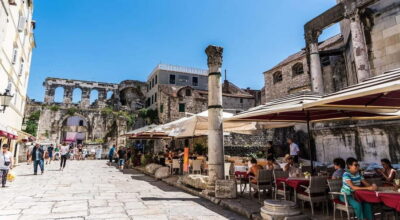
Diocletian’s Palace and Old Town SMALL GROUP Walking Tour
Read our review →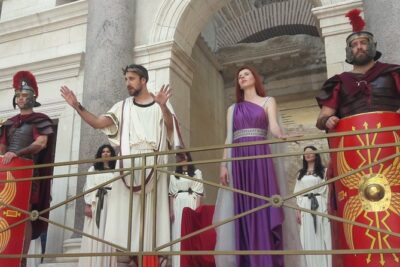
PRIVATE Walking Tour of Diocletian’s Palace & Old Town
Read our review →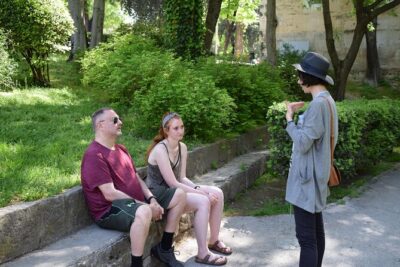
Browse the lists this tour appears in