

Reviewed · OLD TOWN WALKING TOURS
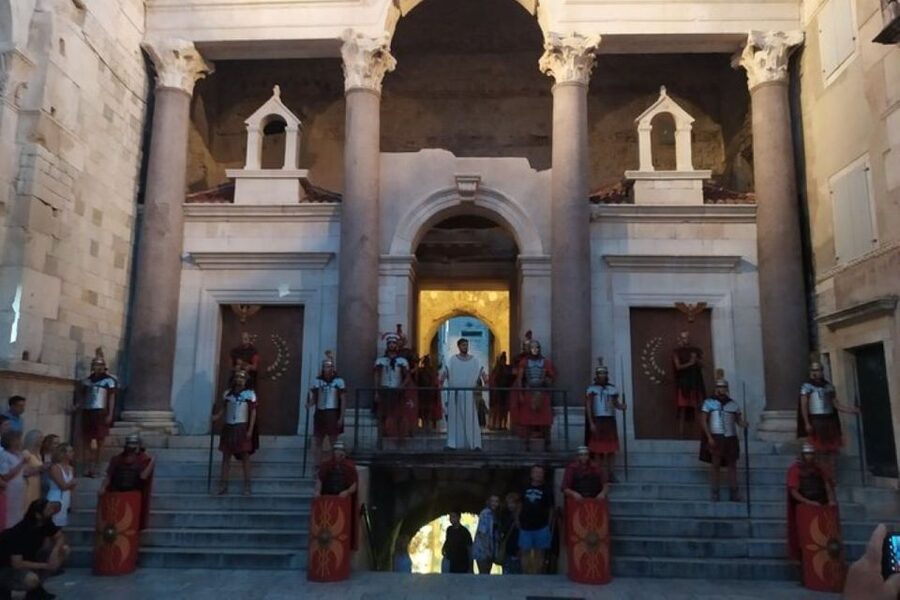
Experience Split History Walking Tour With Local Historian
Split is one of those places where the past is not behind glass. Diocletian’s Palace is literally your street level, and this tour helps you read it. I love the See, Hear and Feel style with clear explanations that connect Roman planning to how Split life continued for centuries, and I also love the small size, max 12 people, which keeps questions easy. One consideration: the route is part-palace and part-street walking, so you will want comfortable shoes and you may feel it in your legs after about 2 hours.
I especially liked how the meeting point is chosen on purpose. Starting at the Golden Gate, you get an immediate sense of power and spectacle, then you walk into the palace like you are stepping through time. The tour also brings in everyday topics of locals, not just dates and emperors.
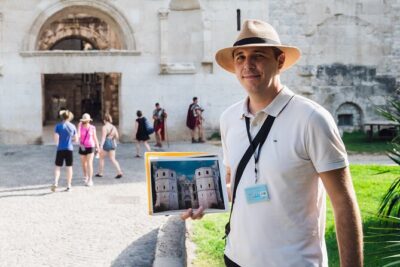
If you are expecting a long museum-style lecture, this is not that. It is a walking tour with short stops, a lively pace, and a lot of visual help like 3D reconstructions in a display book.
Key highlights you should care about
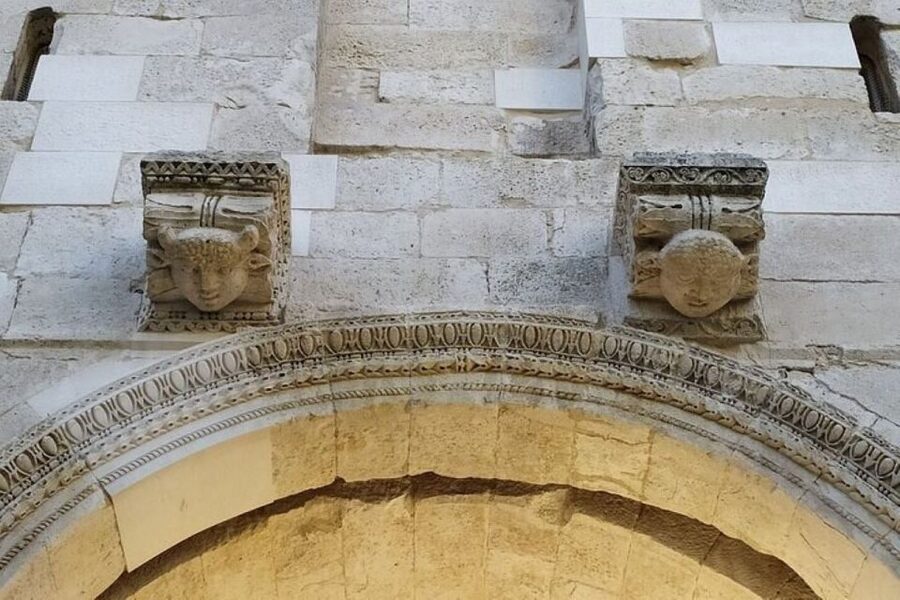
- Golden Gate first, then straight into the story of Gregory of Nin and how the palace was entered
- Diocletian’s Palace, UNESCO site, explained as a living monument that locals kept using over time
- Peristil and Jupiter’s Temple, where you connect monumental space with Roman intent
- 3D reconstruction images, so the palace layout makes sense even when parts are worn down
- Two medieval squares, Fruit Square and People’s Square, each with architecture and long-running street roles
- Narrow passages and small surprises, including the narrowest street, a lost sphinx head, and a secret garden stop
Golden Gate to Gregory of Nin: the tour’s smart time machine
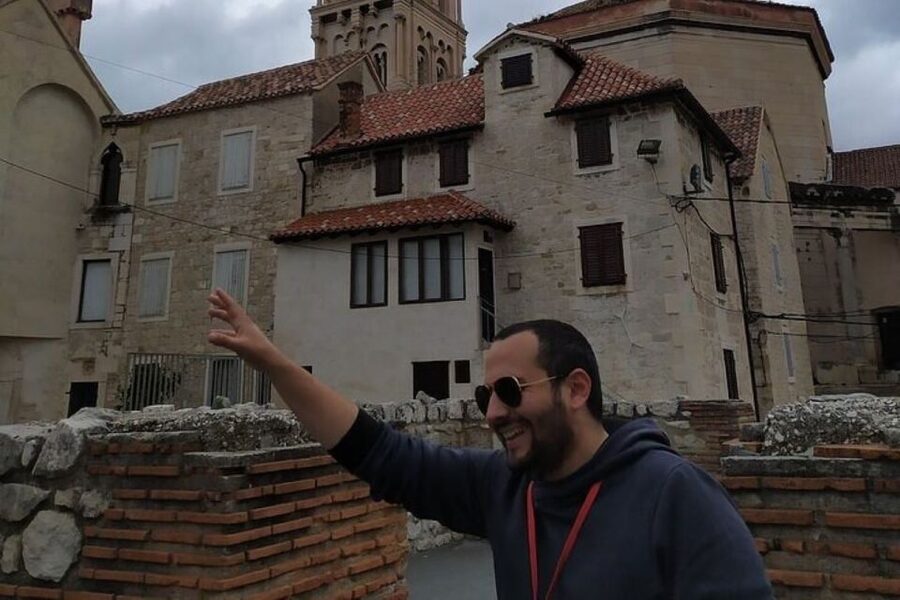
The tour starts at the Golden Gate, the northern entrance of Diocletian’s Palace. This matters because you are not beginning in the middle of the ruins. You start at a place that would have felt official and dramatic, the kind of entry where important people expect to be noticed.
From the start, the guide sets context in plain language: what Split is, why this area matters in Croatia’s story, and how the name and purpose of the Golden Gate connect to Roman power. Then, right nearby, you get the iconic statue of Gregory of Nin and hear who he was and why people still point to that moment in Split.
This is also where the tour’s rhythm becomes clear. The guide uses quick scene-setting, then you walk, look, and listen your way deeper. If you like tours that get you oriented fast, this one does.
What I liked: the start feels like you are getting keys to the city, not just being marched from one site to the next.
Possible drawback: if you are very sensitive to heat, this early open-area moment can feel exposed on sunny days. Bring a hat and plan for water.
More walking tours of Split:
- Split: Old Town and Diocletian Palace Walking Tour
★ 4.9 · 4,727 reviews - Walking Tour of Split and Diocletian’s Palace
★ 5.0 · 2,588 reviews - Krka Waterfalls tour with Trogir Walking tour and Krka panoramic boat cruise
★ 5.0 · 1,659 reviews
Entering Diocletian’s Palace: from Roman empire planning to local reuse
Once you step inside, the palace stops being a big word and starts becoming a map you can understand. Diocletian’s Palace is a UNESCO World Heritage site, and the guide treats it like a structure with jobs, not just impressive stone.
You move through the main palace spaces with a storyteller’s focus on cause and effect. You learn why the palace was built, how it was laid out for an emperor’s world, and how centuries of local life reshaped what the palace became. That Roman-to-medieval connection is the spine of the tour.
Several specific areas get their own attention, including the Peristyle (Peristil), the Mausoleum-Cathedral, Jupiter’s Temple, a Vestibule stop, and the Triclinium plus the Central Substructures (Central Cellars). The guide’s explanations are designed to help you visualize what the palace was doing at the time, then what it became after.
One of the nicest touches is the use of 3D reconstruction images in a display book. When you see a space that is partly ruined or repurposed, the visual helps you understand the original scale and function without guessing.
What I liked: the tour doesn’t just name places. It links them to everyday movement, ceremony, and survival.
For you: if you tend to get overwhelmed by palace layouts, the guide’s approach is built to prevent that.
Peristil square and Jupiter’s Temple: why the center feels so commanding
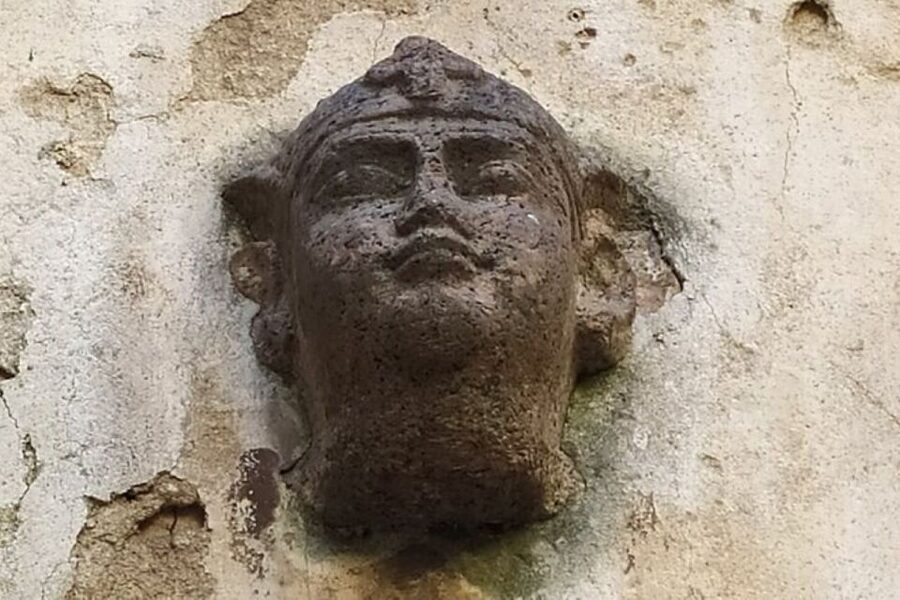
The Peristyle is the palace’s main square, and the guide makes it clear why it had to feel monumental. You stand where big public moments would have unfolded, then you hear stories and legends tied to the space. This is where Roman architecture becomes emotional, not just technical.
Right after, you go toward Jupiter’s Temple. The value here is how the guide explains the meaning of sacred spaces in an imperial setting. Even if you are not religious, you get how these places worked socially. They signaled authority. They organized the mental world of the inhabitants.
If you are someone who likes when guides connect art and architecture to human behavior, you will probably enjoy this section a lot.
Practical consideration: Peristyle is a highlight for photos, so expect it to be busier than quieter side lanes. Plan to go slowly and listen, not just snap quick shots.
The Mausoleum-Cathedral and Vestibule: where power turns into continuity
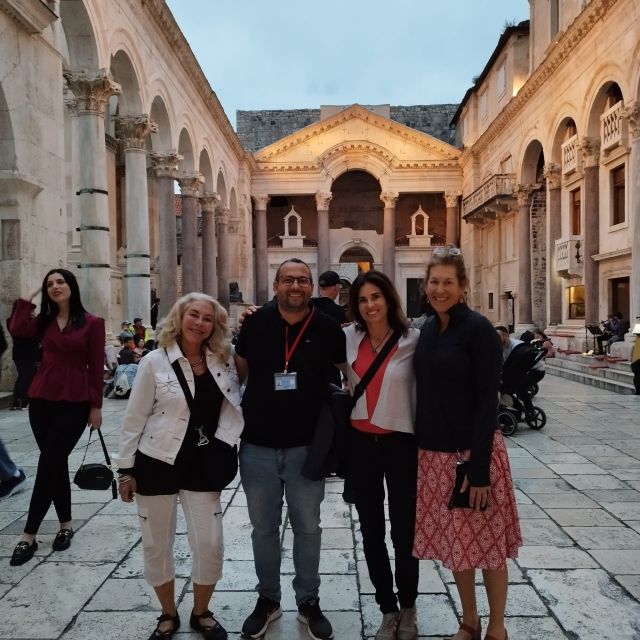
The Cathedral of Saint Domnius (Mausoleum-Cathedral) is one of the palace’s most important transitions. You do not just see a church, you understand it as a continuation of the monumental Roman idea in a new era. The guide walks you through why this is so significant and what it tells you about how Split changed without wiping its past clean.
Then you move to the Vestibule and other palace areas, where details can be easy to miss if you are wandering on your own. Here, the guide’s “See, Hear and Feel” approach really helps. You look at the layout, the proportions, and the placement of spaces, then you get stories that make those shapes feel purposeful.
What I liked: this section gives you the best of both worlds, Roman grandeur plus the reality of later religious and civic reuse.
A few more Split days worth comparing
- Walking Tour of Split with a ‘Magister’ of History
★ 5.0 · 1,122 reviews - Split Walking Tour with Professor of History
★ 5.0 · 926 reviews - Split: History and Heritage Walking Tour
★ 4.9 · 650 reviews - Split History and Gastro Small-Group Tour with Food and Drinks
★ 5.0 · 375 reviews
Central Cellars and Diocletian’s Palace underworld
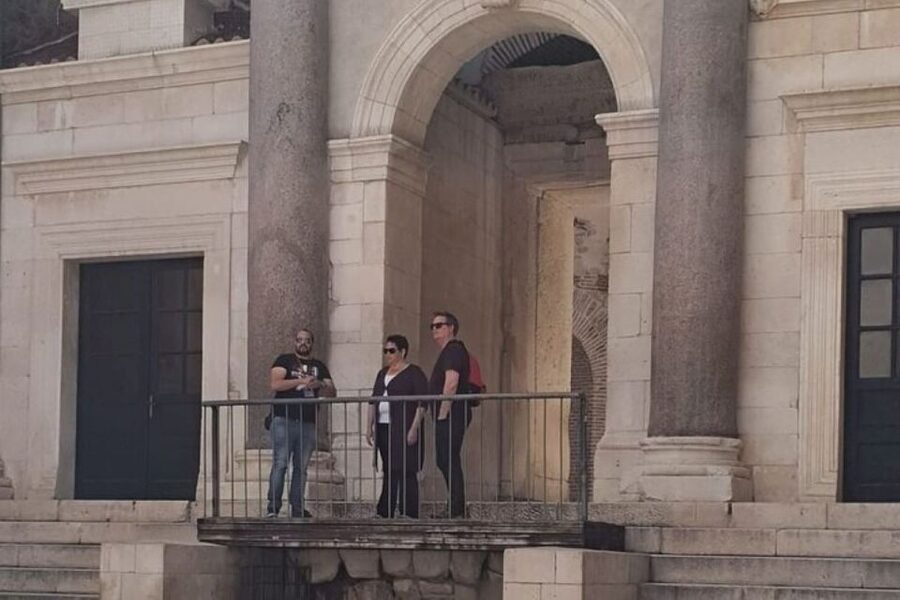
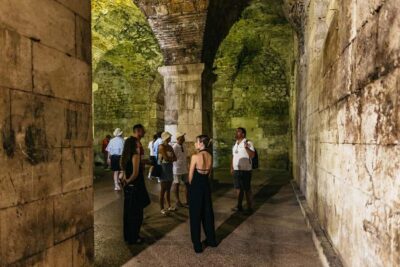
The tour includes a stop at the Diocletian’s Cellars (Central Substructures / Central Cellars). This is a shift in mood. Above, everything feels public and ceremonial. Below, you start thinking about storage, logistics, and the less glamorous side of life in a major complex.
If you like archaeology and “how did this actually work,” this is a strong moment. The guide’s explanations help you connect what you see underfoot to the palace’s larger system. And again, those 3D reconstructions can make the difference between a confusing underpass and a readable structure.
Good to know: the cellars are part of the walking experience, so it is not a long detour that turns the tour into a museum visit. It stays within the 2-hour format.
Riva promenade: the Roman-medieval link you can feel
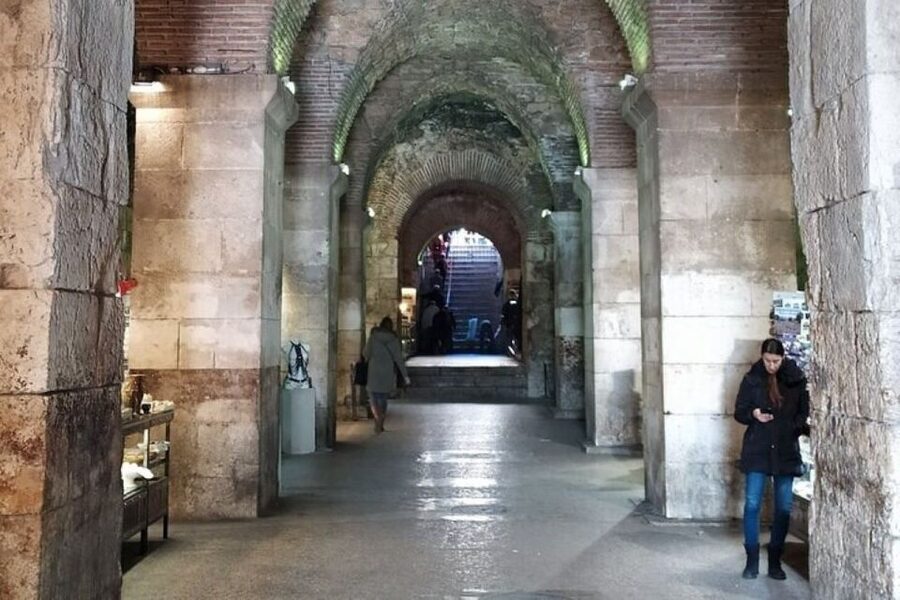
After the palace interiors, you walk toward Riva, the famous promenade. The guide uses this shift to explain how the city’s Roman and medieval chapters connect in real life, not just in theory.
This part is short but useful. You see how the built environment channels movement and social time. Riva is one of those places where you can picture everyday routines. That is exactly the point of the tour here: history stays human.
The guide also brings in everyday topics of locals, so you understand the city as more than monuments. Even if you do not ask questions, it helps you feel how the city works when the tour ends.
Fruit Square and People’s Square: medieval street logic, twice
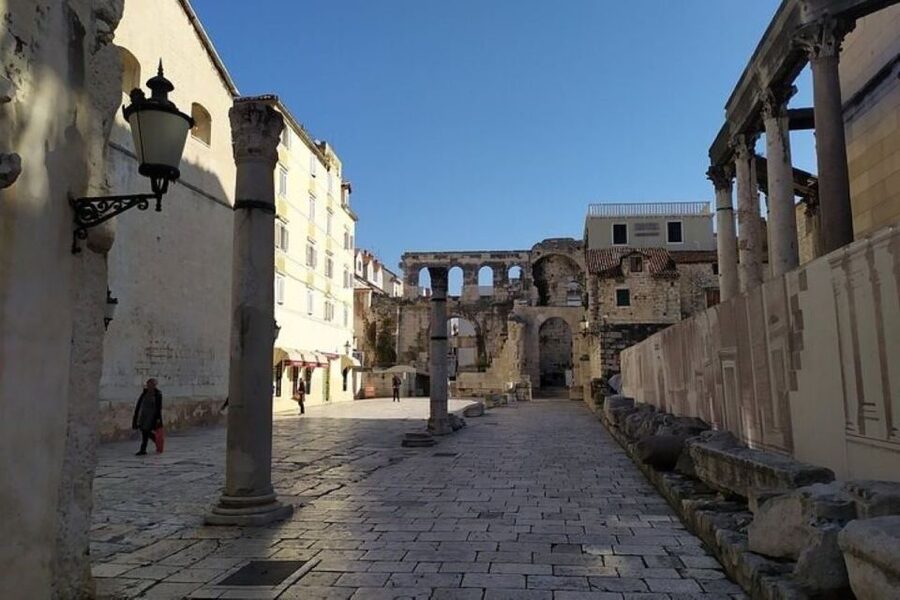
The tour finishes with two medieval squares: Fruit Square and People’s Square.
These stops are not filler. Each square is used to explain how architecture carries history. You look at how space shapes what happens there, then you hear stories about activities and roles the squares played over the centuries.
Fruit Square is often where the city’s everyday functions feel closest to the ground, more trade and daily use than grand ceremony.
People’s Square carries a different energy, tied to civic identity and public life. You start to see Split as a layered city, not a single-era theme park.
When you finish at Narodni trg, you end in a part of town that feels central and practical for continuing your day.
The “secret stop” and the tiny surprises that make it memorable
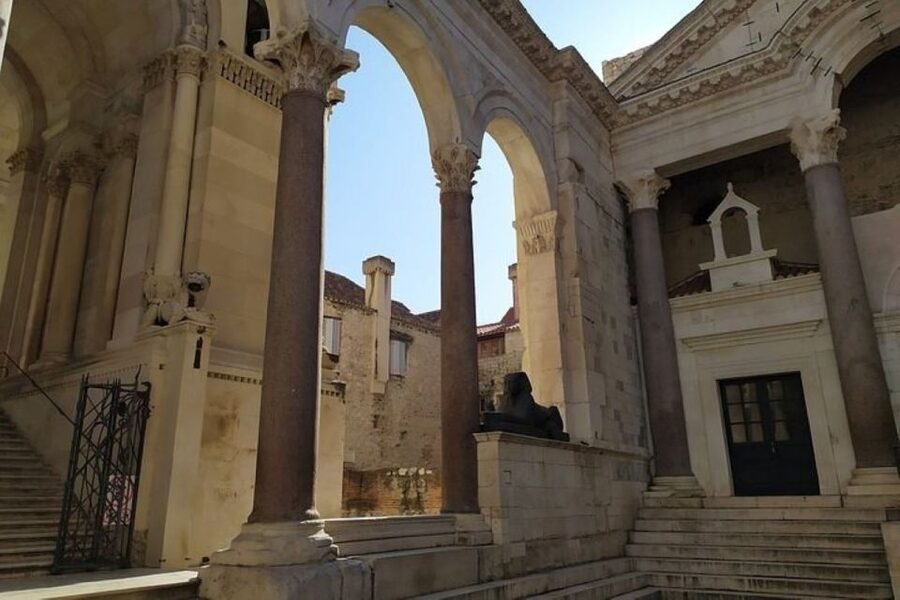
Between the big palace moments, the guide includes a short secret stop plus a very quick pass at a small mystery corner. This is where Split becomes personal.
You might see or hear about the narrowest church, the narrowest street, a lost sphinx head, and a secret garden. These details are the kind of thing you would not reliably find alone without luck or local tips.
The best part is that they are folded into the tour’s larger story. You are not just hunting for oddities. You are learning how a city compresses life, how legends get attached to corners, and how small features can hold big meaning.
Price, time, and group size: what $37 buys you
At $37 per person for 2 hours, this is priced for people who want high value per minute. You get:
- a local professional guide with a master’s degree in history
- a maximum group size of 12 participants, which usually keeps things interactive
- skip the ticket line
- 3D reconstruction images and pictures via a display book
Is it a bargain? For this specific focus on Diocletian’s Palace with a historian, it is fair. It is also not a long walking grind, so you are not paying to wander for hours without explanation.
One pattern you may notice from the experience format: because it is small, you can ask questions and get answers. In one case, a group was only five people, which made it feel much more like a private tour than a crowded group walk.
Who should book this tour
This tour is a great fit if:
- you want a guided read of Diocletian’s Palace, not just sightseeing
- you like legends, but you also like the practical reasons behind how spaces functioned
- you want some local-life context, so the city feels more real
- you enjoy short stops that keep momentum
It is less ideal if:
- you have mobility limitations, because the experience is not suitable for wheelchair users or people with mobility impairments
- you want a slower, fully seated pace, because it is primarily a walking experience
Should you book the Split History Walking Tour?
I think it is worth booking if you are in Split for a short time and want the palace explained in a way that connects Roman intent to later city life. Starting at the Golden Gate, covering major palace spaces like Peristyle, and ending at Fruit Square and People’s Square gives you a complete arc across eras. The small-group format and the guide’s history background also make it easy to ask the questions that pop up when you are staring at stone and wondering what it meant.
If you hate walking or you need fully accessible routes, skip it. Otherwise, bring good shoes, water, and a little patience for the sun, and you will leave with Split feeling readable, not random.
FAQ
Where does the tour start?
The meeting point is at the Golden Gate, the northern gate of Diocletian’s Palace, opposite the statue of Gregory of Nin.
How long is the Split History Walking Tour?
The tour lasts 2 hours.
What is the maximum group size?
The group is limited to a maximum of 12 participants.
What languages is the tour offered in?
The live guide works in English and Croatian.
What is included in the price?
Included are a local professional guide with a master’s degree in history, plus 3D reconstruction images and pictures via a display book. It also includes skip the ticket line.
Are food and drinks included?
No. Food and drinks are not included.
Where does the tour end?
The tour ends at Narodni trg.
What should I bring or wear?
Wear comfortable shoes, and on sunny days bring water and a hat or cap.
Is the tour suitable for wheelchair users or mobility impairments?
No. It is not suitable for people with mobility impairments or wheelchair users.
Fresh options around Split
- Small-Group Communist Tour of Split – Boutique group tour★ 5.0 · 7 reviews
- Controversies behind Split and Croatia-Anthropologist guide★ 5.0 · 59 reviews
- Split City Tour By Electric Rickshaw┃Riva Ride★ 5.0 · 50 reviews
- Coffee, storytelling & walk – The best private tour of Split★ 5.0 · 46 reviews
- Chill Private Walking Tour of Diocletian’s Palace★ 5.0 · 35 reviews
- Canyoning basic on Cetina river from Omiš★ 5.0 · 66 reviews
- River Rafting from Split- Cliff Jumping- Cave Visit★ 5.0 · 90 reviews
- Private Split City Walking Tour – Spanish Guide★ 4.5 · 12 reviews
Old Town Walking Tours, compared.
Walking Tour of Split and Diocletian’s Palace
Read our review →
Krka Waterfalls tour with Trogir Walking tour and Krka panoramic boat cruise
Read our review →
Walking Tour of Split with a ‘Magister’ of History
Read our review →
Plitvice Lakes: Guided Walking Tour with Train and Boat Ride
Read our review →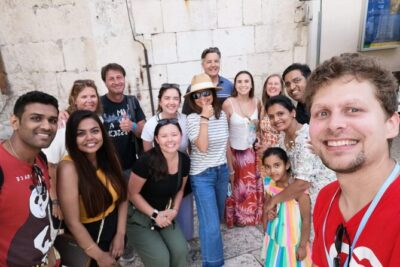
Diocletian Palace & Old Town Guided Walking Tour
Read our review →Browse the lists this tour appears in