
Reviewed · OLD TOWN WALKING TOURS
Split: Private Walking Tour in the Historical Town Center
Split’s historical center is interesting because it is not a museum you walk through. It is a living city built inside and around a Roman palace, where later centuries kept piling on. I especially like how Diocletian’s Palace is paired with the everyday medieval neighborhood inside it, and how the private format lets you ask questions as you go. One consideration: it is not suitable for wheelchair users, since it is a walking tour through uneven historic streets.
In 105 minutes, you get a clean orientation of the whole “compass” of the Old Town. You start at the water on Riva promenade, then work your way through the palace, the religious and public landmarks, and finally end back by the sea. The guide also gives you practical tips so you can explore longer on your own with more confidence.
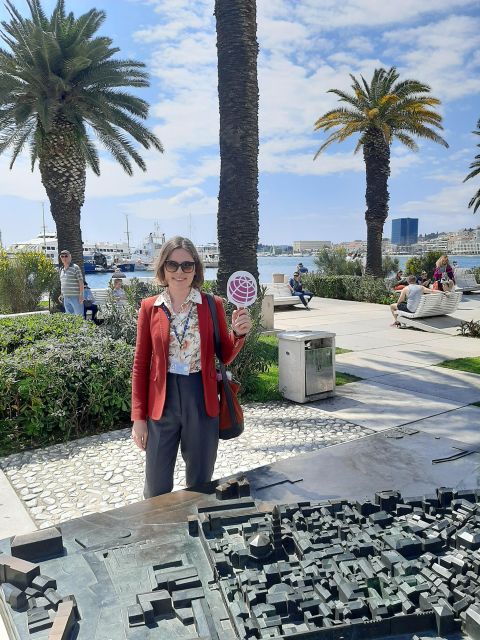
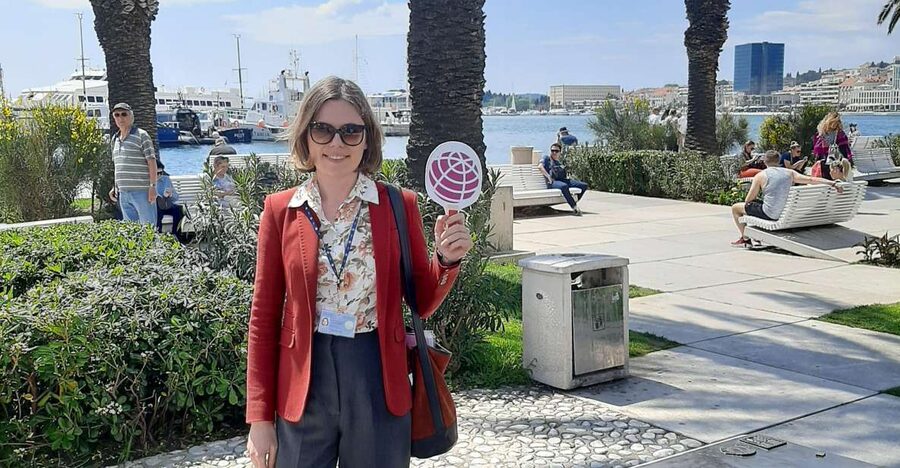
This is led by Sanja, a licensed local guide with a Master’s degree, and the standout is her clear, organized explanations. In French especially, she comes across as precise and thoughtful, and she answers questions in a way that makes the city’s layers click fast.
Key highlights to look for
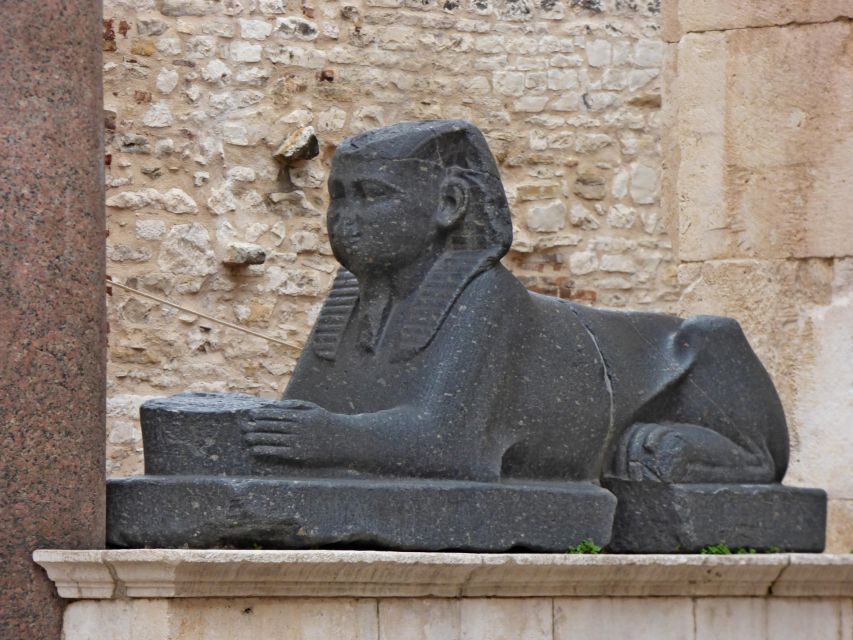
- Diocletian’s Palace, inside the palace and beyond the walls for a “how Split works” overview
- Substructures visit (entrance fee applies) so you see the palace from street level down
- St. Domnius Cathedral and the palace religious story tied to the city’s evolution
- Jupiter’s Temple area and other signature landmarks with smart external viewing
- A walk through major squares including Pjaca, Fruit Square, and Prokurative
- Sanja’s guided storytelling with Q and A that makes first-time visits easier
Why Split’s palace core feels like a time map
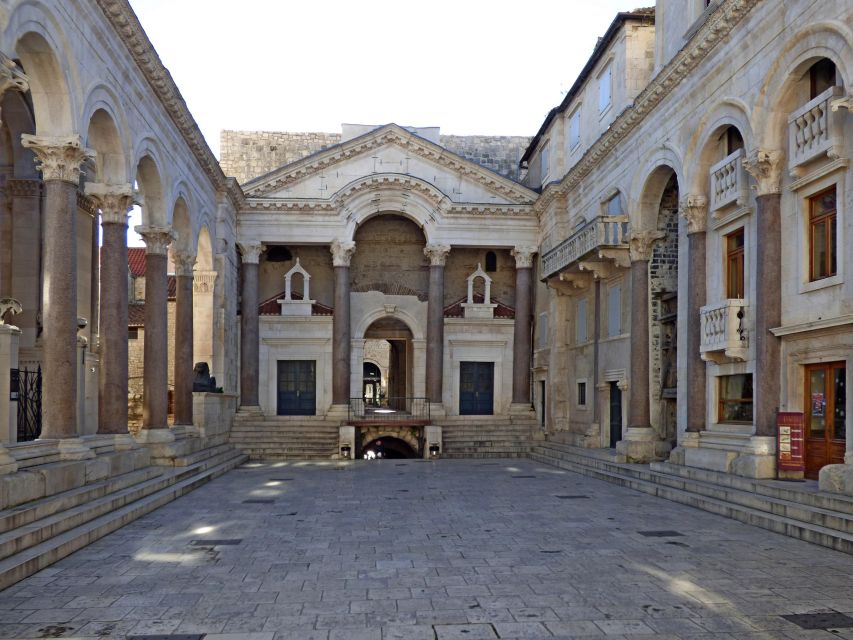
Split is famous for its Roman roots, but the real magic is how the Roman framework kept getting reused. Diocletian’s 4th-century palace was the starting point, then medieval life formed around it, and later rulers left their own fingerprints in streets, squares, and architecture.
What makes this tour work is the order. You start with the palace logic first, then you move outward to the medieval neighborhood, so you stop seeing landmarks as random photos. Instead, you see cause and effect, like how a defensive Roman boundary turned into a city that people built into.
You also get the kind of historical context that helps while you are walking on your own later. It is not just dates. It is who controlled Split at different moments, and what that meant for the way the city functioned day to day.
More walking tours of Split:
- Split: Old Town and Diocletian Palace Walking Tour
★ 4.9 · 4,727 reviews - Walking Tour of Split and Diocletian’s Palace
★ 5.0 · 2,588 reviews - Krka Waterfalls tour with Trogir Walking tour and Krka panoramic boat cruise
★ 5.0 · 1,659 reviews
Starting on Riva promenade, right where Split faces the sea
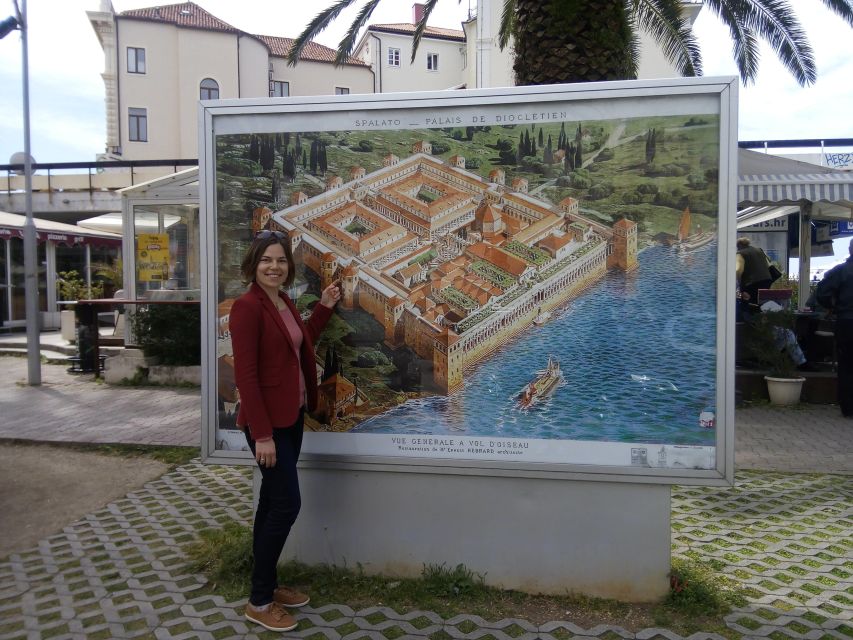
The meeting point is by the bronze model of the historical core on Riva promenade. You will meet in front of the south entrance to Diocletian’s Palace, so it is easy to locate and it makes sense immediately because you are standing at the city’s front door.
This starting setup is a quiet advantage. Instead of beginning deep inside, you begin at the waterfront, so your brain anchors the Old Town’s layout quickly. The tour ends the same way, back at Riva promenade, which helps you feel the walk as a complete loop rather than separate stops.
The guide also leads in English, Italian, French, and Spanish. In a small private group, that language matching matters, since it keeps your focus on the story rather than on figuring out what was said.
Diocletian’s Palace: the Roman shell, the medieval neighborhood, and the big “four gates” idea
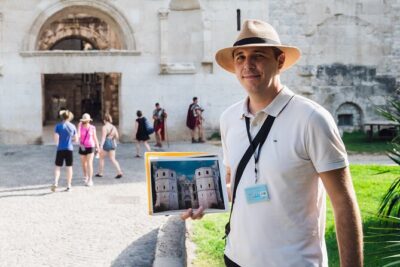
The first major chunk of the tour is Diocletian’s Palace, with the oldest part of Split at its center. You will walk through the palace area and the smaller medieval neighborhood that developed inside it, which is where you start to see the city’s layered identity up close.
Inside, pay attention to how the space is organized. Even if you are not thinking about Roman engineering, you will feel how a large fortified palace became a lived-in town. That shift is one of the reasons Split still feels different from other Croatian old towns, where the medieval period is usually the main act.
You will also cover key palace highlights like Peristil, the main square-like space inside the palace. It is a perfect “pause point” because it lets you catch the overall geometry of the complex, then move onward with a clearer sense of where you are.
Next, you walk the idea of the palace walls and the four gates. This matters more than it sounds. Once you understand where the gates sit, you can better connect the palace interior to the outside city streets you will see later.
St. Domnius Cathedral, the Mausoleum connection, and sacred buildings with a story
From the palace courtyard energy, the tour shifts into the religious centerpiece: the Mausoleum area that is connected with what you know today as St. Domnius’s Cathedral. You will have a guided look as you pass by and spend time sightseeing here, with the guide tying the structure to how the palace was repurposed over time.
This stop is valuable because it shows how a Roman imperial space could transform into a Christian landmark. You do not have to be a theology expert to enjoy it. What you are learning is how architecture can change purpose without disappearing.
You will also spend time oriented around landmark points nearby, so even if you move on later to other churches in Split, you will better recognize how this city’s core developed.
A few more Split days worth comparing
- Walking Tour of Split with a ‘Magister’ of History
★ 5.0 · 1,122 reviews - Split Walking Tour with Professor of History
★ 5.0 · 926 reviews - Split: History and Heritage Walking Tour
★ 4.9 · 650 reviews - Split History and Gastro Small-Group Tour with Food and Drinks
★ 5.0 · 375 reviews
Jupiter’s Temple area: external viewing that still teaches you what to notice
You will see Jupiter’s Temple, also referred to as the Baptistery area. The visit here is external, with no entrance fee required, so it is a lighter stop in terms of tickets and time.
Even so, it is a smart moment to slow down and look. The guide helps you notice details that connect the temple area back to the Roman palace identity, which then makes the rest of the Old Town feel more coherent.
This is one of those “short but useful” experiences. You get enough information to recognize what you are seeing, without burning time on extra ticketed interiors.
Golden Gate and People’s Square: reading the city’s rhythm
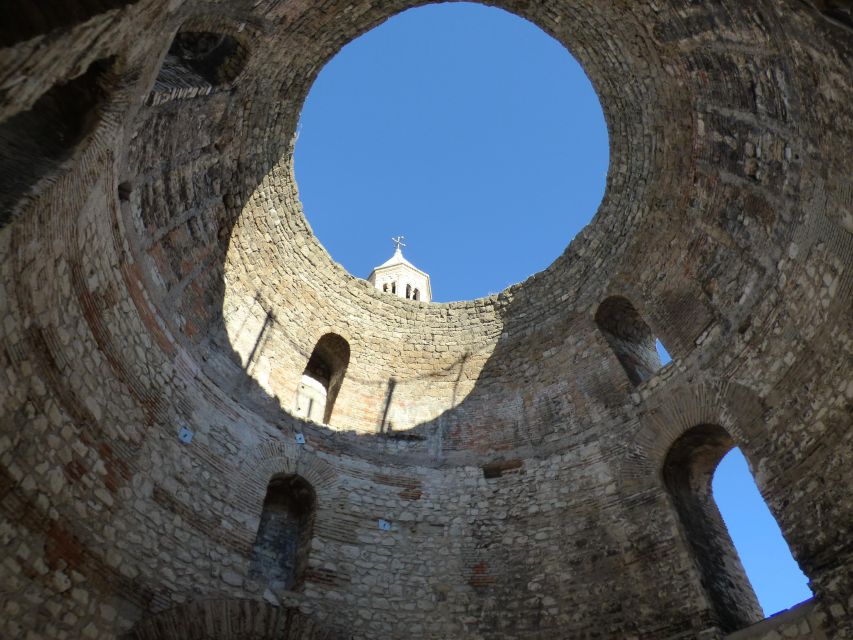
As the tour moves along palace boundaries and key connections outward, you come to the Golden Gate and then on toward People’s Square. These spots help you understand how the city shifted from a controlled, walled world into a public civic landscape.
Golden Gate is especially helpful because it is one of the palace gates tied to the broader layout. When you have that gate in your head, it becomes easier to trace your own route later, including how you might move between waterfront areas and the interior streets.
People’s Square adds a different energy. Instead of focusing on imperial power, you get a feel for civic life, where public gathering spaces became important. If you like to photograph, this is a good stage of the walk because you can stand, look around, and let your sense of place click.
The Substructures (basements) visit, and why it is worth planning for the entrance fee
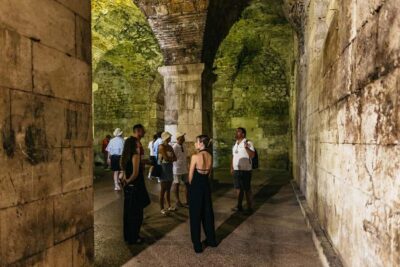
One of the most memorable parts of the tour is the visit to the Substructures level, often described as the basements of Diocletian’s Palace. This is not included in the price, so there is an entrance fee on your end, but the tour includes the guided visit itself.
Why does it matter? Because it flips the usual viewpoint. You see the palace from below street level, which gives you a physical sense of how the palace complex supported life and movement above. It also helps explain why the Old Town’s “street” feeling is shaped the way it is.
If you are the type who likes architecture, this is the stop that makes the Roman elements feel real and structural instead of just decorative. It is also a great place to ask questions, since it connects multiple eras in one space.
Noble houses and a former Jewish ghetto with an active synagogue
The walk includes medieval houses of noble families, plus a small former Jewish ghetto area. The highlight here is that the synagogue is still active, which adds a real-world layer to what can otherwise become a history-only stop.
This part of the tour stands out because it is not presented as a disconnected side story. The guide connects it to how minority communities fit into the city’s changing rules and rhythms. When you walk the streets, you can feel how history is not only in the big monuments, but also in smaller, quieter corners.
Even if you are not religious, seeing an actively used synagogue helps you understand the continuity behind the city’s past.
Outside the palace walls: Pjaca, Fruit Square, Prokurative, and the rule-by-rule story
After the palace area, the tour takes you to the medieval neighborhood built outside the Roman walls. This is where Split starts to feel more like the classic Mediterranean old town you picture, with public squares that function as meeting rooms for the city.
You will visit famous squares including Pjaca, Fruit Square, and Prokurative. The guide ties the story to the socio-political lifestyle under different periods of control, including Venetian, French, Austro-Hungarian, and Yugoslavian rule.
That is the practical payoff. When you are later wandering these squares on your own, you will understand why certain buildings, public spaces, and street patterns feel the way they do. It is not magic. It is layered administration and changing trade and social habits.
This section is also a good time to check your energy. The tour is 105 minutes total, so it is not an all-day march, but you will still be walking for most of it. Plan to keep your pace steady and take short moments in the shade when you can.
Finishing back at Riva: turning a guided loop into a self-guided plan
The tour ends on Riva promenade by the sea, which is exactly the right location to reset. You get a final view of the waterfront, and you can start spotting where you want to go next.
This ending also helps you do something most people struggle with on first days in a new city: building a simple plan. Once you know the palace core and the key squares, you can decide whether to return toward the waterfront for a longer stroll, head deeper into the side streets, or prioritize a ticketed site you want to see at your own speed.
Sanja’s approach is practical here. The best tours do not just show you places. They give you a way to keep exploring after the walking stops.
Price and value: what $153 per group up to 15 really means
The price is $153 per group, up to 15 people, for a private 105-minute walk. In plain terms, you are paying for a licensed local guide, a private group experience, and guided coverage of a lot of the Old Town’s key points in one shot.
Here is the balanced part. The Substructures entrance fee is not included, so your final cost will be a bit higher once you add that ticket. Still, the tour includes the guided basement visit, which is the part many visitors struggle to schedule well or understand without a guide.
If you are visiting Split for the first time, the value is strong because this tour gives you layout knowledge fast. If you already know Split well or you prefer a slower pace with fewer stops, you might feel the schedule is more structured than you want.
Who this private walking tour is best for
This tour is a good fit if you want:
- A first-time orientation of Split’s Old Town, with clear explanations
- A guide-led path through Diocletian’s Palace plus the outside medieval squares
- The ability to ask questions in real time, not just read plaques
It is also a solid choice for small groups who want a private experience without the stress of joining a larger crowd. In one private group example, having only a few people made it easy to hear the guide clearly and follow along.
If your group needs step-free access, this one is not your match because it is not suitable for wheelchair users.
Should you book this tour?
Book it if you want to understand Split quickly, especially how the Roman palace became a medieval city you still walk through today. I’d also book it if you like architecture, public squares, and the way political control shaped daily life.
Skip it only if you already have your own plan that covers these exact areas without needing guidance, or if you know you cannot do a fair amount of walking across old streets and landmarks.
If you do book, I’d arrive with comfortable shoes and keep the rest of your day flexible. This tour is most powerful when you use it as your map, then roam with purpose afterward.
FAQ
Where is the meeting point for the Split private walking tour?
You meet by the bronze model of the historical core of the city on Riva promenade. It is located in front of the south entrance to Diocletian’s Palace.
How long does the tour last?
The tour duration is 105 minutes.
Is this tour private?
Yes, it is a private group walking tour.
What languages are offered?
The live tour guide offers English, Italian, French, and Spanish.
Are the entrance fees included for Diocletian’s Palace Substructures (basements)?
No. Entrance fees to the Substructures are not included.
Is the tour wheelchair accessible?
No. This tour is not suitable for wheelchair users.
Can I get a full refund if I cancel?
Yes. You can cancel up to 24 hours in advance for a full refund.
Fresh options around Split
- Small-Group Communist Tour of Split – Boutique group tour★ 5.0 · 7 reviews
- Controversies behind Split and Croatia-Anthropologist guide★ 5.0 · 59 reviews
- Split City Tour By Electric Rickshaw┃Riva Ride★ 5.0 · 50 reviews
- Coffee, storytelling & walk – The best private tour of Split★ 5.0 · 46 reviews
- Chill Private Walking Tour of Diocletian’s Palace★ 5.0 · 35 reviews
- Canyoning basic on Cetina river from Omiš★ 5.0 · 66 reviews
- River Rafting from Split- Cliff Jumping- Cave Visit★ 5.0 · 90 reviews
- Private Split City Walking Tour – Spanish Guide★ 4.5 · 12 reviews
Old Town Walking Tours, compared.
Walking Tour of Split and Diocletian’s Palace
Read our review →
Krka Waterfalls tour with Trogir Walking tour and Krka panoramic boat cruise
Read our review →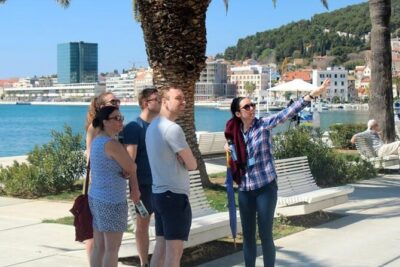
Walking Tour of Split with a ‘Magister’ of History
Read our review →
Plitvice Lakes: Guided Walking Tour with Train and Boat Ride
Read our review →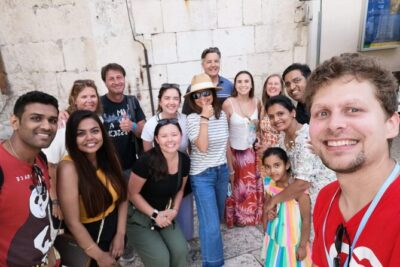
Diocletian Palace & Old Town Guided Walking Tour
Read our review →Browse the lists this tour appears in