
Reviewed · DIOCLETIAN'S PALACE TOURS
Split: Diocletian’s Palace Private walking tour
What makes this tour special is that Diocletian’s Palace is not a dead museum shell. You walk the same ancient spaces where people still live, and that alone makes the history feel close and real. I love the way the route is built around big “Roman power points,” especially the Peristyle and the palace entrance areas that connect you to how Diocletian governed. I also love that you get city-center context fast, so you leave with a stronger sense of where everything sits in Split.
One consideration: some sights can change at the last minute due to events or church services, and the site is partly not wheelchair accessible. The good news is the tour can adapt to participant needs if you tell them in advance.
Key highlights worth planning for
- Peristyle (Diocletian as Jupiter’s son): see why this was a religious and political meeting space
- Split Cathedral origin story: understand how a pagan mausoleum became a Christian landmark
- Vestibule views of power: learn how the grand entrance connected dignitaries to Diocletian’s private quarters
- North Gate, or Porta Aurea: get the significance behind the palace’s most important Roman entry
- Church of St. Martin: spot the small church inside the former guard corridor
Why Diocletian’s Palace feels like a Roman neighborhood
Diocletian’s Palace in Split is one of those rare places where “ancient” still functions. It is a palace you can walk through like a neighborhood: stone corridors, landmark courtyards, and the everyday fact that locals move around here. That changes how you experience the site. Instead of only looking at artifacts behind glass, you are mapping real spaces and understanding why they were arranged the way they were.
This is a private walking tour, and it matters. A guide can slow down at the parts you care about most, whether that is the imperial-religious angle of the Peristyle or the later Christian transformation tied to Split Cathedral. And with a group capped at 10 people, you are less likely to feel rushed or stuck far from the guide.
More time inside Diocletian's Palace:
- Split: Old Town and Diocletian Palace Walking Tour
★ 4.9 · 4,727 reviews - Walking Tour of Split and Diocletian’s Palace
★ 5.0 · 2,588 reviews - Split & Diocletian’s Palace Walking Tour
★ 5.0 · 1,125 reviews
Starting at the bronze model on Riva
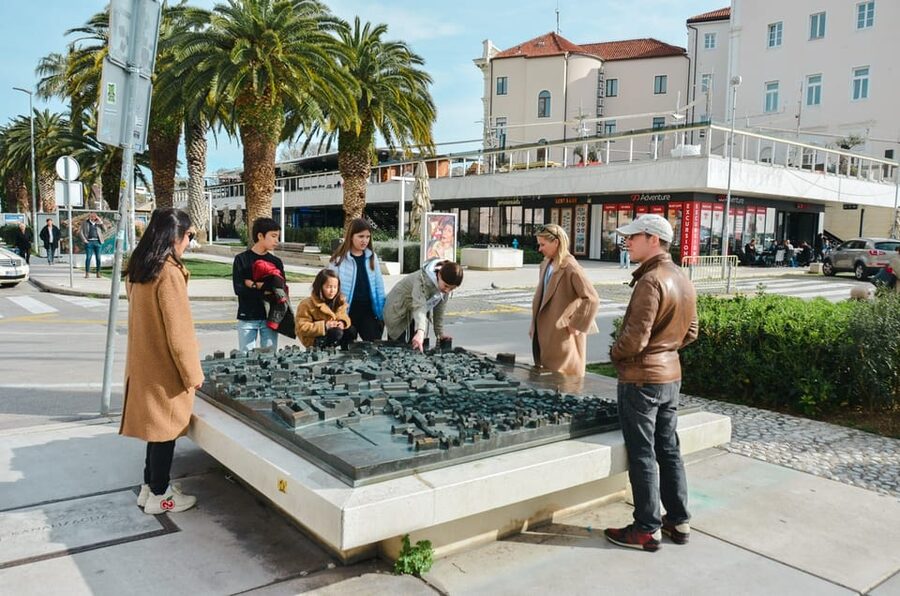
Your tour starts at the bronze model of the city of Split at the eastern end of the promenade, Riva. That detail sounds small, but it is smart. Standing at a city-scale model helps your brain “place” the palace in the bigger Split picture before you get lost in corridors and doorways.
From there, you will be walking into the palace complex, learning the logic of gates, entrances, and ceremonial spaces. If you want one practical takeaway, it is this: you will get a working sense of the city center layout by the time you finish. That makes the rest of your day easier, whether you plan more walking, café stops, or a museum visit nearby.
Peristyle: the meeting place built for worship and rule
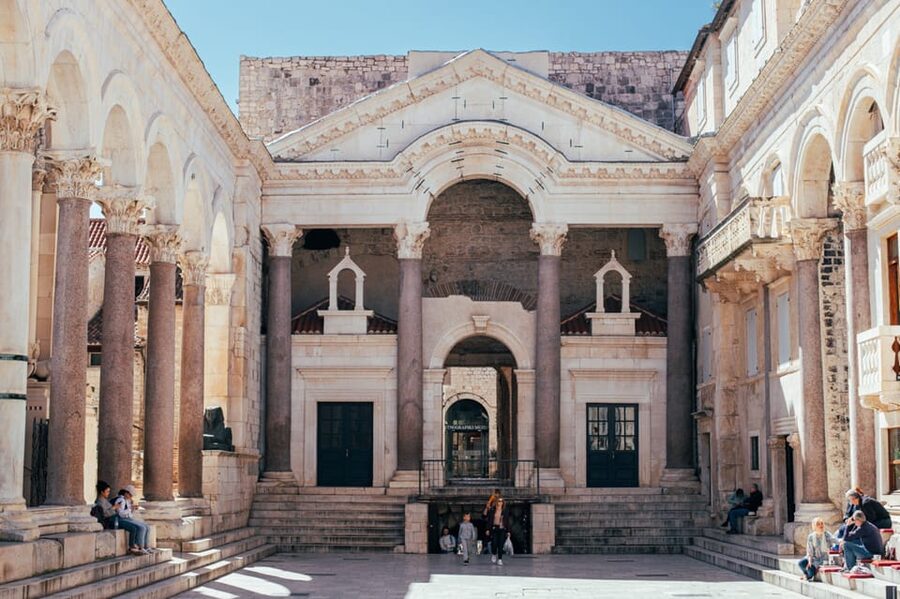
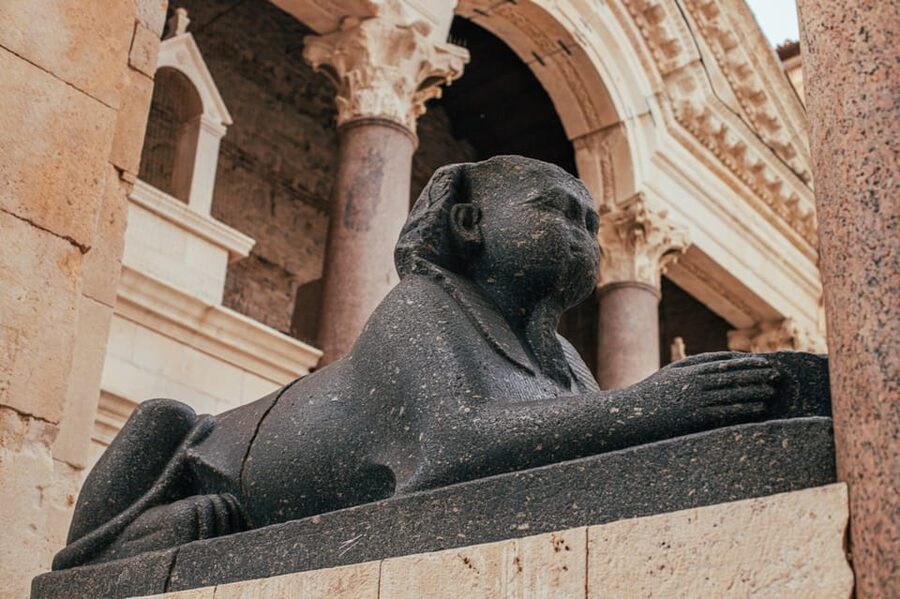
The Peristyle is usually the dramatic heart of Diocletian’s Palace, and this tour gives it the right kind of attention. You are not just looking at columns. You are learning why this space mattered during Diocletian’s era, when he was worshipped as Jupiter’s son.
Think of the Peristyle as a stage. A palace like this was not only for sleeping and administration. It was for communicating power. This is where rulers could appear, where public life intersected with religious symbolism, and where people understood the emperor’s authority as something divine.
When your guide ties architectural layout to that idea, the building stops being a pile of old stone. You start noticing how people would have moved through the space, and why the courtyard design supported ceremonies and gatherings.
Practical tip: the Peristyle area can be a natural “photo anchor.” If you want your best pictures, plan to pause when your guide finishes explaining the symbolism, then take a second look at the space with that context in mind.
Split Cathedral: from mausoleum to cathedral walls
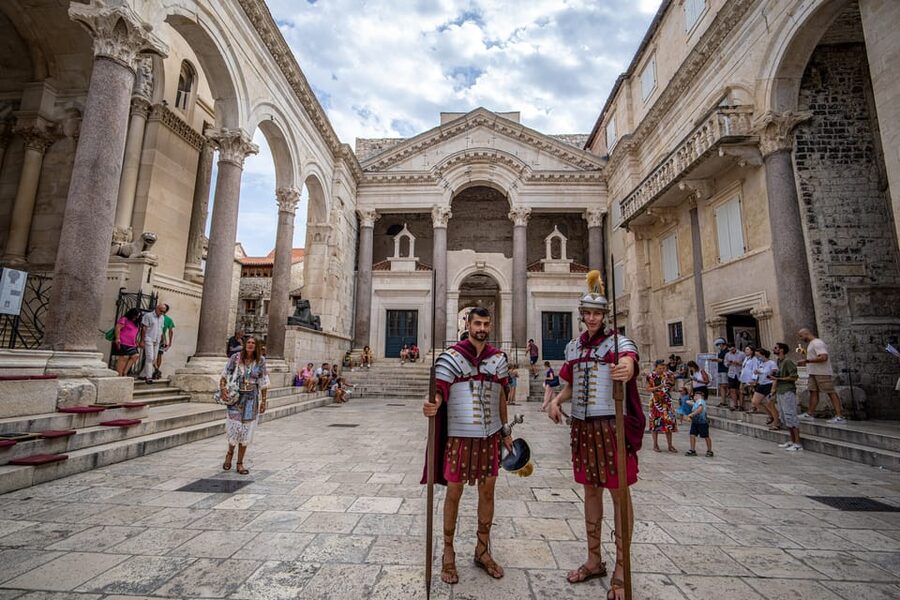
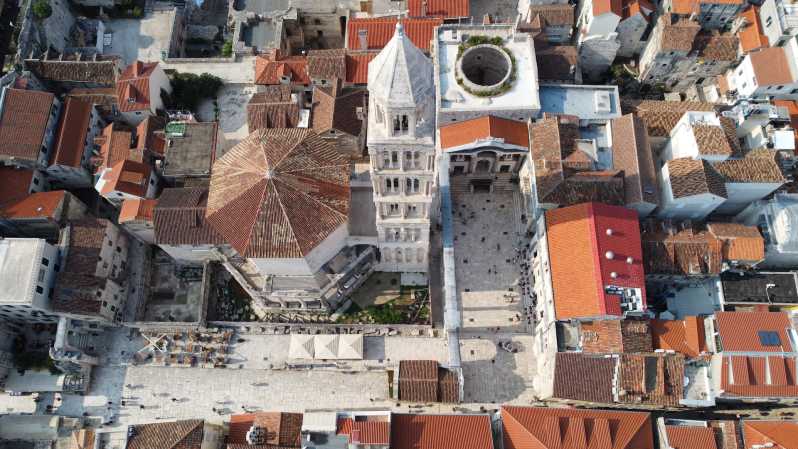
Next you will uncover the story of Split Cathedral. This building has an unusual origin: it began as the mausoleum of Emperor Diocletian. When Christianity spread and the political world shifted, the emperor’s remains vanished, and the structure eventually became a cathedral.
That transition matters because it shows how later cultures treated earlier power. A mausoleum is not just a tomb. It is a statement. When the site became a cathedral, that statement changed, but the location and the monumental architecture still carried weight. On this tour, you get the “why” behind the visible structure, not just a date-and-fact recap.
You will also learn how the cathedral’s presence fits within the palace complex. That is one reason this tour works so well for orientation. It connects the dots between pagan-era imperial design and the later Christian landscape that dominates much of Croatia’s coastal heritage.
Photo and pacing note: cathedral exteriors can be easier to appreciate outside of service times. If services or events affect access to parts of the complex, your guide may adjust the program slightly.
More walking tours of Split:
- Krka Waterfalls tour with Trogir Walking tour and Krka panoramic boat cruise
★ 5.0 · 1,659 reviews - Walking Tour of Split with a ‘Magister’ of History
★ 5.0 · 1,122 reviews - Split Walking Tour with Professor of History
★ 5.0 · 926 reviews - Split: Diocletian Palace & Old Town Guided Walking Tour
★ 4.7 · 882 reviews
Vestibule: the grand entrance to Diocletian’s private world

The Vestibule is the grand entrance to Diocletian’s private chambers, and it helps you understand separation inside the palace. This is not random movement. It is controlled access, with spaces designed to funnel dignitaries and visitors toward the right level of contact with the emperor.
Your guide will frame what the Vestibule represented: a gateway for official arrival and an architectural buffer between the public-facing parts of the palace and Diocletian’s personal quarters. In other words, you see how architecture can enforce hierarchy without saying a word.
I like how this stop explains the palace as a system. Once you understand entrances and “who belonged where,” the palace stops feeling like a sightseeing maze. It feels like a political machine.
If you are the type of traveler who enjoys subtle details, pay attention here. The Vestibule concept is about power and movement. Even if you only catch parts of the space depending on conditions, your guide’s explanation gives you the missing pieces.
North Gate and Porta Aurea, plus the Church of St. Martin
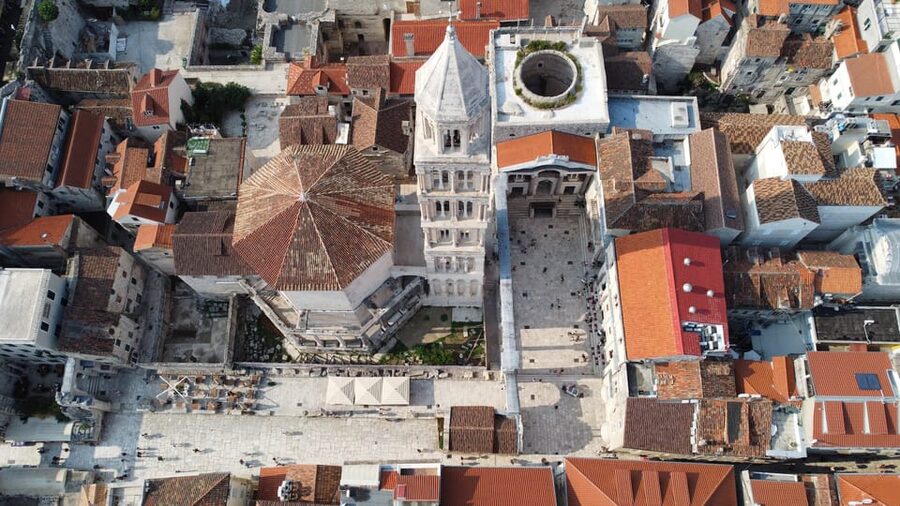
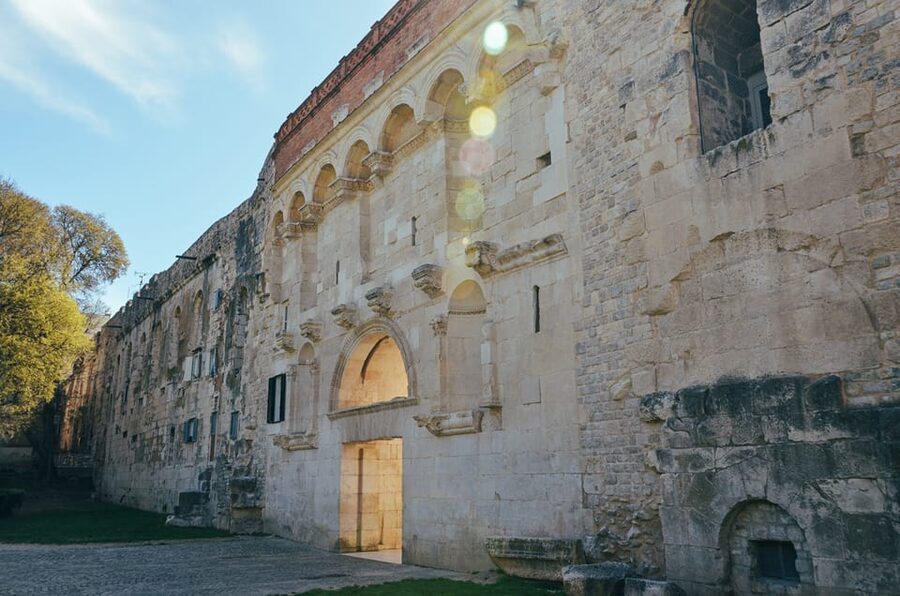
The tour then focuses on the North Gate, which was the most important city gate during the Roman era. It also has other names you will hear, including Golden Gate and Porta Aurea. A gate like this was never just for traffic. It was a statement of who mattered and how the city presented itself.
When a guide explains why this gate carried extra importance, you start seeing the palace as a connection between empire, city, and everyday life. Gates are thresholds, and this one was built to matter.
Inside the former guard corridor stands the city’s smallest church, the Church of St. Martin. That contrast is one of the most satisfying moments in the tour. You go from the imperial symbolism of a major Roman gate to a tiny, quiet religious space tucked into a former defensive corridor. It is the kind of layered history that makes Split so enjoyable to walk.
If you want a simple strategy, use this stop to slow down. You are at a point in the tour where the major ceremonial spaces are sinking in. Take one careful look at the transitions, from gate to guard space to church. That mental map is what turns a list of monuments into a coherent story.
Private guide value: what you get for $135 per person

At $135 per person, this is not a budget add-on. But it also is not overpriced for what you are buying. You are paying for three things: a private-style experience (even with a group cap), expert guiding focused on the palace’s most meaningful spaces, and the flexibility to adjust the route when necessary.
The group limit of up to 10 participants is the key value lever. In large tours, you often miss the chance to ask follow-up questions or to hear details clearly. Here, you are more likely to keep a steady connection with your guide and actually learn, not just pass through.
This tour is also described as individually customizable. I like that because Diocletian’s Palace can be approached in different ways. Some people want architecture and design. Others want religious transformation and the meaning behind spaces like Split Cathedral. The ability to shape the pacing helps you get more out of the time you have in Split.
Language options include French, German, and English, which is a comfort if you do not want to rely on shaky translation. And if you are planning your trip in phases, the reserve and pay later approach can reduce stress.
How to use the tour to get your bearings fast
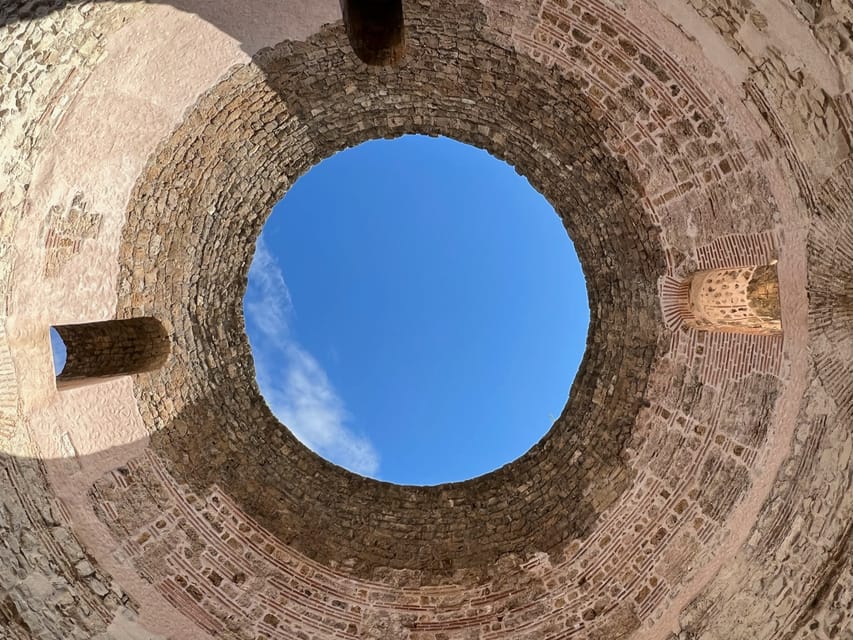
One of the best practical outcomes of a palace tour like this is orientation. Diocletian’s Palace can feel like it goes on forever: entrances, courtyards, and corridors that each look similar until you understand their role.
I love the way this tour is organized around “anchor points,” especially the Peristyle, the Vestibule, and the North Gate. Those are the spaces that give you structure. Once you know what each space is for, everything else becomes easier to interpret on your own later.
A good example of what this feels like: the guide Dana has been praised for enthusiasm and for making the tour feel unforgettable. That matters because great guiding does not just recite facts. It makes you connect the space to real meaning.
Even if you only spend a few hours in Split on one day, a tour like this helps you stop guessing. You start walking with purpose.
What to expect when access changes
Some sights may not be reachable due to events or church services. That is common in living historic sites, and it is worth planning for mentally. In that situation, your program may shift slightly.
The realistic takeaway: do not treat the tour like a rigid checklist. Treat it like a guided path through the palace’s most important zones, with flexibility built in.
If you have mobility needs, know that the palace is partly not wheelchair accessible. The good part is that the tour can be adapted to special needs if you inform the provider in advance. If you are traveling with anyone who needs careful planning, it is smart to contact them before you arrive so the route can be adjusted.
Who should book this tour
I think this tour is a strong fit if you fall into one of these categories:
- You want the major highlights explained clearly, without bouncing between multiple ticket lines or overcrowded group situations
- You like historical interpretation, especially the shift from imperial pagan space to Christian use in places like Split Cathedral
- You want to feel confident navigating the palace area after your tour, so the rest of your Split day becomes simpler
- You prefer a small group experience with a guide who can keep the pacing human
If you are the type who only wants quick exterior photo stops, you might find a walking tour takes more time than you want. But if you enjoy learning how places worked, how power was staged, and how later generations reused monumental spaces, this will likely land well.
Before you go: wear, pace, and expectations
This is a walking tour inside and around historic palace spaces. You should plan for uneven stone and long periods on foot. Wear comfortable shoes with decent grip. If you hate heat, consider timing your visit earlier in the day when possible.
Also, bring a small mindset shift. You will get the most from the tour if you treat it like a guided conversation with architecture. Ask questions when you can. Look at what your guide points out. Then look again, without the guide speaking, and see if the meaning sticks.
Should you book this private walking tour of Diocletian’s Palace?
I would book this tour if you want a guided walk through the palace’s core power spaces, with clear explanations of why the Peristyle, Vestibule, North Gate, and Split Cathedral matter. The price feels reasonable when you factor in a small group size, customization, and a focus on the most meaningful parts of the complex.
I would pause before booking if mobility access is a major concern or if you need guaranteed access to every single area regardless of ceremonies. In that case, message the provider ahead of time so the route can be adapted.
FAQ
How much does the Diocletian’s Palace private walking tour cost?
The price is $135 per person.
What is the group size for this tour?
The tour is designed for a maximum group size of 10 participants.
Where does the tour start?
The tour starts at the bronze model of the city of Split at the eastern end of the promenade Riva.
Where does the tour end?
The tour ends back at the meeting point.
What are the main places you’ll visit?
You’ll cover major highlights such as the Peristyle, Split Cathedral, the Vestibule, the North Gate (Porta Aurea), and the Church of St. Martin in the former guard corridor.
Can the itinerary change due to events or church services?
Yes. Some sights cannot be visited in certain cases, so the program may change slightly.
Is the tour wheelchair accessible?
The site is partially not wheelchair accessible, but the tour can be adapted to special needs if you inform the provider in advance.
What languages are available?
The tour is offered in French, German, and English.
Is it flexible to book now and pay later?
Yes, it offers reserve and pay later, so you can book your spot without paying immediately.
What is the cancellation window for a full refund?
You can cancel up to 24 hours in advance for a full refund.
Fresh options around Split
- Small-Group Communist Tour of Split – Boutique group tour★ 5.0 · 7 reviews
- Controversies behind Split and Croatia-Anthropologist guide★ 5.0 · 59 reviews
- Split City Tour By Electric Rickshaw┃Riva Ride★ 5.0 · 50 reviews
- Coffee, storytelling & walk – The best private tour of Split★ 5.0 · 46 reviews
- Chill Private Walking Tour of Diocletian’s Palace★ 5.0 · 35 reviews
- Canyoning basic on Cetina river from Omiš★ 5.0 · 66 reviews
- River Rafting from Split- Cliff Jumping- Cave Visit★ 5.0 · 90 reviews
- Private Split City Walking Tour – Spanish Guide★ 4.5 · 12 reviews
Diocletian's Palace Tours, compared.
Walking Tour of Split and Diocletian’s Palace
Read our review →
Diocletian Palace & Old Town Guided Walking Tour
Read our review →
Game of Thrones Tour with Diocletian’s Palace Cellar
Read our review →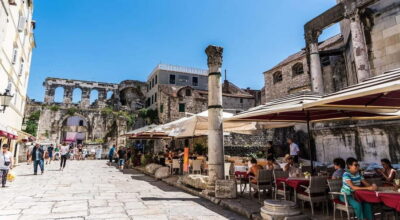
Diocletian’s Palace and Old Town SMALL GROUP Walking Tour
Read our review →
PRIVATE Walking Tour of Diocletian’s Palace & Old Town
Read our review →
Browse the lists this tour appears in