
Reviewed · OLD TOWN WALKING TOURS
Split: Cultural Walking Tour with Anthropologist Guide
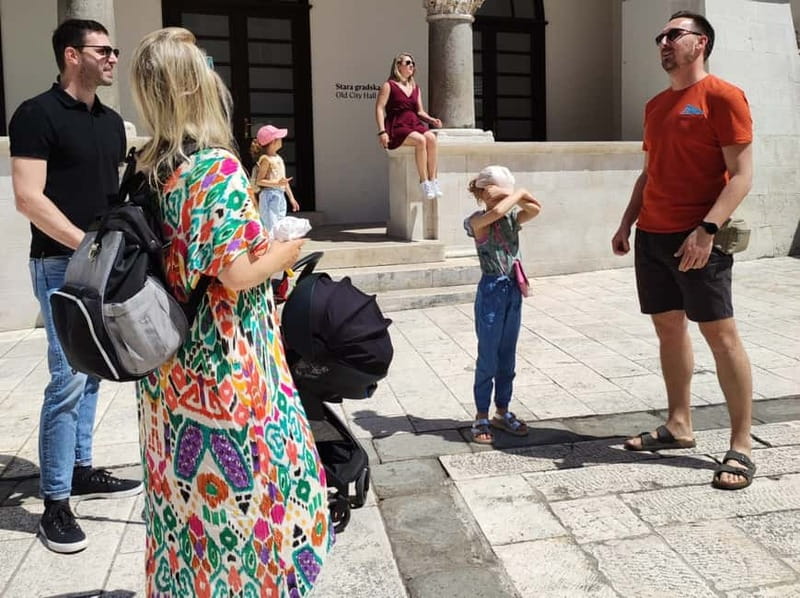
Split can be all marble columns and seaside photos, but this walking tour turns the dial. It looks at the controversies behind Split and Croatia, using the city’s streets as clues to bigger questions about identity, power, and memory.
Two things I especially like: it is led by cultural anthropologist Marin, and it uses a no-hush, no-softening approach to topics like politics, religion, and taboo subjects that still shape daily life. One possible drawback is that this is not the classic I-point-at-a-monument style. If you want only easy, soothing highlights, the taboos and debate-heavy storytelling may feel intense for some visitors.
Key things to know before you go
- Anthropologist-led perspective that connects street scenes to social questions
- Audiovisual materials added to each theme so ideas land faster
- Main sights plus a sharper lens, so first-timers still get their bearings
- From Diocletian to today, with connections across politics, identity, demographics, and more
- A discussion-forward format, not just a lecture, with time for context
Why Split’s controversies make for better sightseeing
This tour is interesting because it treats monuments like evidence, not decoration. You’ll walk the center of Split, see the big historic landmarks, and then ask the harder question: why does the story of this place still spark arguments?
I like that it avoids the clean, stitched-up version of history. Instead, it focuses on contested history and contested contemporary issues, including topics that are uncomfortable to talk about in polite company. The result is a walk that feels like learning how people think here, not just learning what happened long ago.
The best part is that the guide keeps pulling you back to the present. You don’t just hear dates. You learn how social processes keep moving, and why certain identity questions still matter in Croatia today.
More walking tours of Split:
- Split: Old Town and Diocletian Palace Walking Tour
★ 4.9 · 4,727 reviews - Walking Tour of Split and Diocletian’s Palace
★ 5.0 · 2,588 reviews - Krka Waterfalls tour with Trogir Walking tour and Krka panoramic boat cruise
★ 5.0 · 1,659 reviews
Starting in Park Josipa Jurja Strossmayera, then learning how to read Split
Your meeting point is Ul. kralja Tomislava 12, in Park Josipa Jurja Strossmayera, right next to the fountain in the middle of the park. This matters because the park is close enough to the center that you can start thinking like a walker, not a bus passenger.
From the first minutes, the approach is simple: you’ll look at a place, then connect it to the larger story. You’ll also get audiovisual material for each topic covered, which helps if you like your explanations with a visual hook.
Marin’s style, from what you can expect on the ground, is not dry. He keeps context clear and ties the talk to what you see, including the way architecture and urban space shape what people feel and argue about.
Golden Gate: a city landmark with political gravity
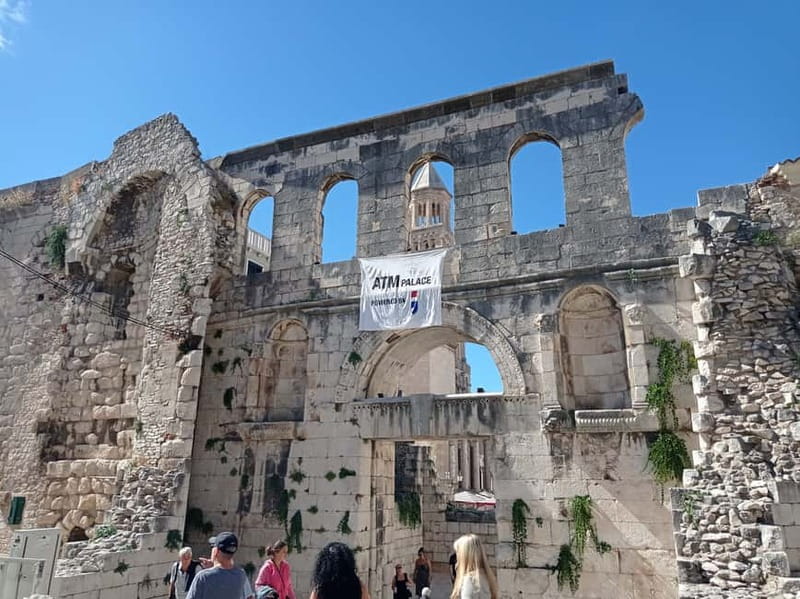
Stop at the Golden Gate for a guided segment that lasts about 15 minutes. This is one of those spots where you can easily think, Nice, old stone. This tour nudges you toward a different question: what did this gateway mean for power, movement, and belonging?
Gates are rarely just functional. They mark boundaries, routes, and who gets to pass through. In a city like Split, where old structures sit beside modern identities, that boundary feeling stays relevant.
You’ll likely start to notice the tour’s rhythm here. You’re not standing in one place for a full history lecture. Instead, each stop is a timed snapshot that builds toward the bigger picture by the time you reach the squares and alleys.
Peristil: Diocletian’s palace courtyard as a stage for identity
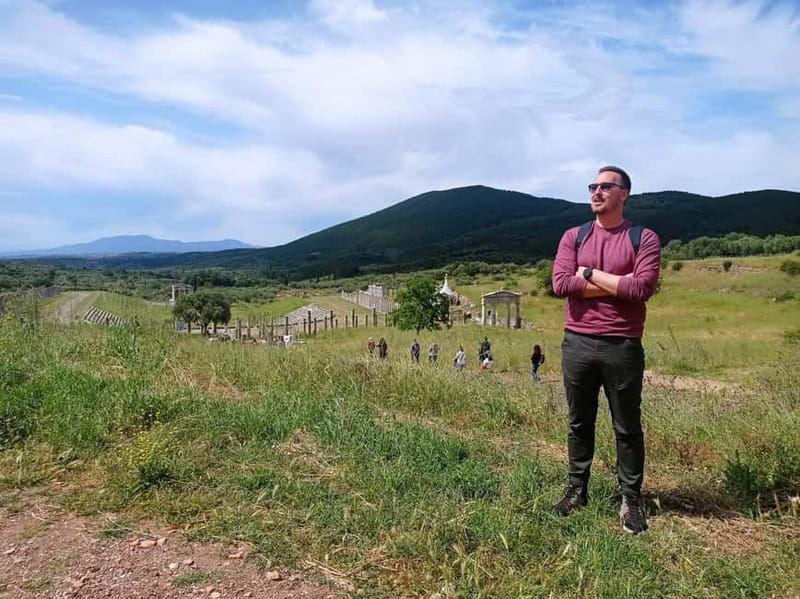
Next is the Peristil, guided for about 15 minutes. The Peristil is visually dramatic, but this tour uses that drama as a way to talk about how societies claim space and meaning.
Diocletian’s complex is an old power layout, and the courtyard becomes a symbol you can carry with you into modern debates. You’ll see how the physical city can influence the stories people tell about themselves, including what gets emphasized and what gets pushed aside.
This is a great stop if you’re a first-timer. Even if you’re not a history nerd, you can still enjoy the walk because the guide grounds every theme in the actual stones around you.
A few more Split days worth comparing
- From Split: Plitvice Lakes National Park Guided Tour
★ 5.0 · 3,002 reviews - From Split: Plitvice Lakes Guided Tour with Entry Tickets
★ 4.9 · 2,468 reviews - From Split: Plitvice Lakes National Park Guided Tour
★ 5.0 · 2,355 reviews - Plitvice Lakes National Park Guided Day Tour from Split
★ 5.0 · 1,948 reviews
Diocletian’s Cellars: where “past” and “present” keep bumping
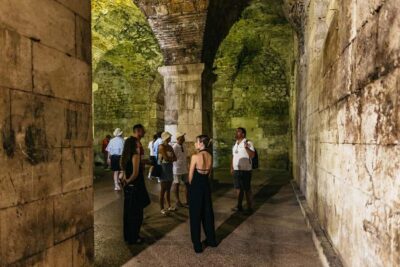
The next stop is Diocletian’s Cellars, with about 10 minutes of guided time. These spaces make a strong anchor for talking about layered history, because they feel like a city inside the city.
This tour aims at taboos and contested issues, so expect the conversation to go beyond broad Roman facts. Instead, you connect the idea of underground, hidden layers, and forgotten or disputed narratives to how people handle sensitive topics today.
If you like tours that connect symbolism to real life, you’ll probably enjoy the way the guide treats these cellars like more than a pretty underground stop. They become part of the argument about memory and who gets to shape it.
People’s Square: civic life, ideology, and why squares become symbols
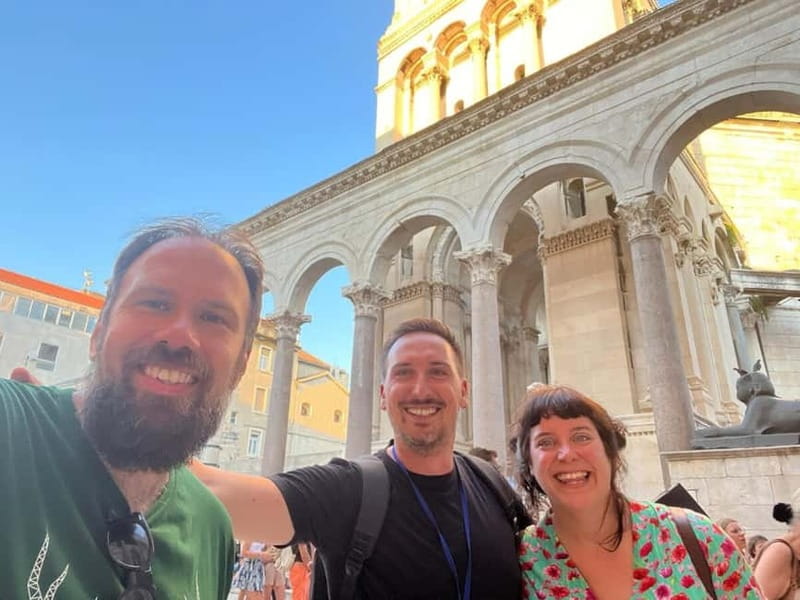
Then you head to People’s Square for about 15 minutes. Squares are not neutral in cities. They collect political energy, social gatherings, and official narratives.
In this tour, the square helps you shift from architecture to society. You’ll connect the themes to how Croatia has been shaped by socio-political movements, and how that history still influences what people argue about in public.
You may notice the tour has a “no gloves on” attitude. It’s not mean-spirited, but it does not avoid controversy. If you prefer sanitized explanations, you might find this portion more challenging, yet it is also where the tour’s value sharpens.
Židovski prolaz: a shortcut that turns into a lesson on communities
The Židovski prolaz stop is guided for about 10 minutes. Prolaz usually means passage, and passages are where you often feel the city’s social mix: different communities, different memories, different levels of visibility.
This stop is a useful reminder that Split is not only about major monuments. The narrow ways and tucked corners matter because they reveal how groups lived together, how they were seen, and how identities formed in close quarters.
The tour ties in themes like religion and demographics, which makes this feel less like a side alley moment and more like a mini chapter on local social structure.
Fruit Square and the smell of everyday life

Next is Fruit Square, guided for about 15 minutes. Here the tour leans into something important: everyday life is political too.
Even if you’re just passing through, a square like this pulls you into questions about economy, consumption, and how neighborhoods work. When the guide connects those everyday patterns back to history, you start to see how economics and identity are intertwined, not separate topics.
This is also a strong stop for people who want some relief from heavier themes. You still get the deeper framing, but the environment helps you reset your brain between more intense discussions.
Riva pass-by: turning the promenade into a context check
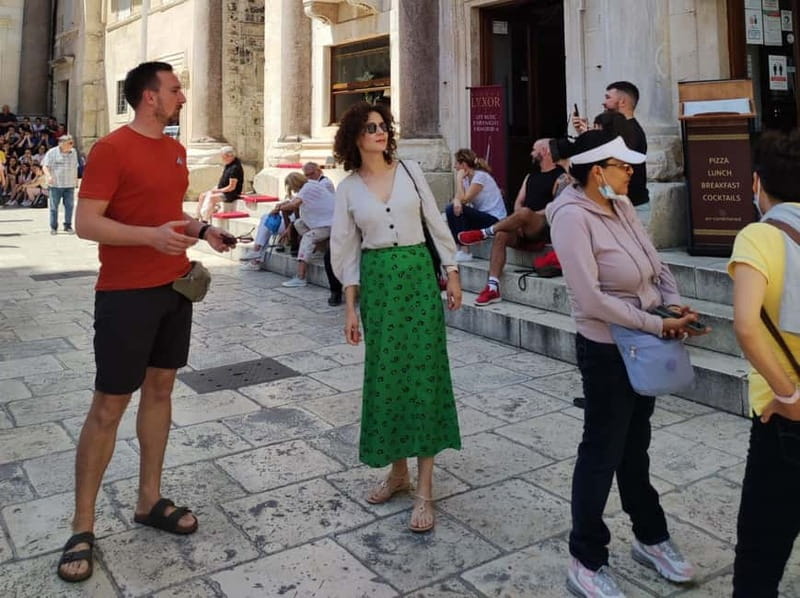
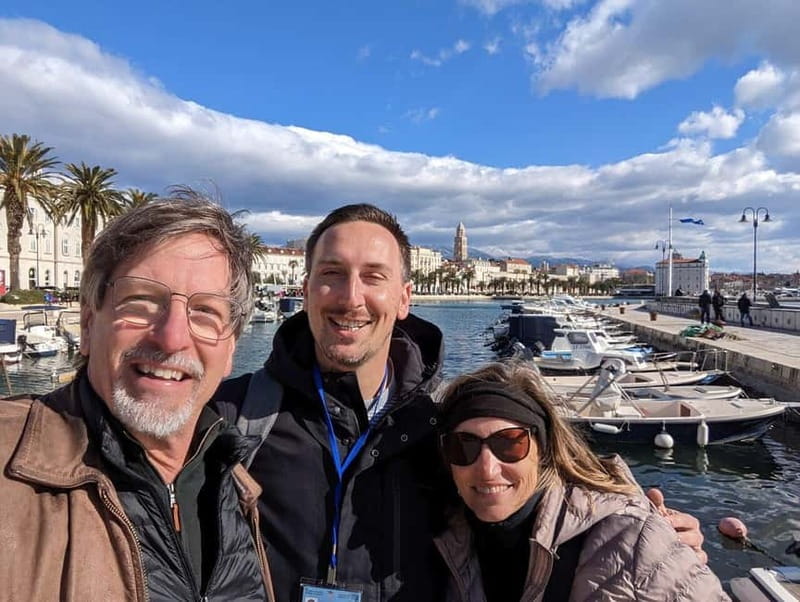
You pass by Riva for about 5 minutes. This is one of those seafront stretches that most visitors treat like a photo spot. On this tour, you get a shorter look, but it still counts because it gives the guide room to talk about modern life and public space.
Riva is where you can think about leisure, tourism, and how a city performs itself. That can connect to themes like geopolitics and economics, especially when you consider how modern pressures can shape what a city chooses to show.
It is short by design, so you won’t feel like you’re stuck in a long stop at the waterfront.
Republic Square: where politics meets stone
Then comes Republic Square, guided for about 15 minutes. This is a natural place for the tour’s thesis, because the word republic carries political meaning and historical baggage.
This is where you’ll likely stitch together what you learned earlier: how identity debates, religion, and contested history feed into today’s social processes. The guide’s method is to connect the physical center to the ongoing questions people carry into modern life.
If you’ve ever wondered why certain countries talk about history so intensely, this stop helps you understand that it is not only about the past. It’s about legitimacy, belonging, and what people believe the future should look like.
Trumbićeva obala finish: turning your walk into a sharper day in Split
You finish at Trumbićeva obala. The tour info indicates the activity ends back at the meeting point, so in practice you’ll wrap up in the same general central area after the final stretch.
I like finishing with a waterfront-adjacent moment because it gives your brain a small exhale. You’ve spent two hours unpacking identity, taboo topics, and geopolitical context, and then you can return to ordinary wandering with better eyes.
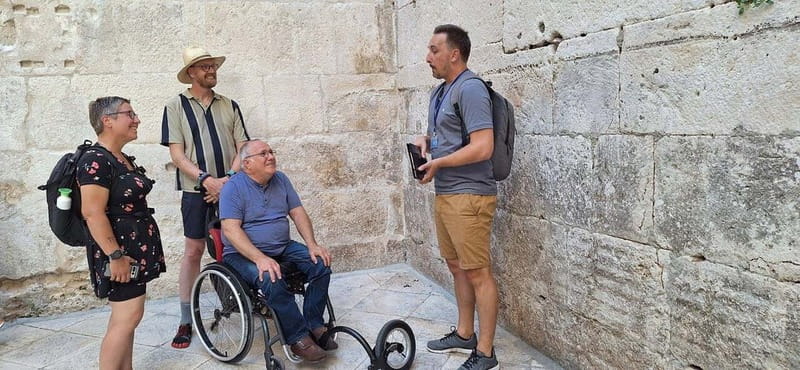
Marin also sounds prepared for real-world conditions. One account notes he made accommodations for rain and allowed time for interpretation so a deaf guest could enjoy the tour too. That tells you the tour isn’t just scripted facts. It is managed with people in mind.
What the anthropologist guide actually does differently
This is the part that matters most for deciding if the tour fits you.
The guide is a cultural anthropologist, so you get more than a timeline. You get attention to how communities interpret their own history, including how people discuss or avoid certain topics. That social lens is why the tour can link architecture to politics and geopolitics without feeling forced.
The tour covers a wide range of themes: politics and geopolitics, religion, identity, demographics, sexuality, history, and economics. It sounds like a lot, but the structure is designed to connect past and present. Instead of treating these as separate lectures, the guide uses specific stops to show how they connect.
Also, the use of audiovisual material helps break up the headspace. You’re not just listening for two hours straight. You get visuals tied to each theme, which makes the message stick.
Timing and pace: a focused 2 hours in the center
The tour runs for about 2 hours, and you’ll walk between major points in Split’s central area. Each stop is short and guided for a set number of minutes, from around 10 to 15 minutes, with brief pass-by time at Riva.
That schedule matters because it keeps the tour energetic. You get a steady flow of ideas without turning it into a long walking slog. It also makes the content easier to process, since each theme arrives in a small, focused dose.
If you’re sensitive to discussion-heavy tours, you should know the format is not purely informational sightseeing. The tour is structured around contested issues, and the guide engages with participants to make the context clear.
Price and value: $33 for a two-hour, theory-plus-streets tour
At $33 per person, this is priced like a mid-range walking tour, and you should judge it by what you get beyond the standard sites.
You get: a live English guide, short guided explanations at major Split landmarks, plus audiovisual material for each topic. More importantly, you get a specific angle that most tours skip. Instead of repeating the usual postcard script, this tour gives you a framework for understanding modern Croatia and why people talk about history the way they do.
If you’re visiting Split for a few days and want one experience that changes how you see the city, I think this price is fair. It can save you time later, because you won’t have to hunt for context on your own.
If you prefer tours that are only about monuments and facts with minimal controversy, you may find the price feels high. In that case, pick a more straightforward sightseeing walk and keep your schedule light.
Who this Split controversies walk suits best
I’d book this if you are curious and enjoy thinking while you walk.
It is particularly good for:
- First-time visitors who want context fast and still want to cover the main sites
- People who like anthropology, social history, or discussions of identity and power
- Travelers who don’t mind controversy and prefer clearer explanations than polished tourism storytelling
Based on what I’ve seen in how this tour is described, it feels most suitable for people 15 and up, meaning teens and adults who can handle complex topics and open discussion.
If you want only photos and surface-level explanations, you might feel restless. But if you want your day in Split to mean something, this tour gives you a way to connect dots you’d otherwise miss.
Should you book this tour?
Book it if you want your Split sightseeing with sharper questions attached. You’ll see the Golden Gate, Peristil, Diocletian’s Cellars, key squares, and pass by Riva, but the bigger payoff is how the guide connects those places to modern Croatian society and ongoing debates.
Skip it if you need a chill, low-emotion walking experience. The tour’s whole point is that contested history and taboo topics matter, and the guide does not hide that fact behind polite silence.
If you like learning how a city thinks, not just what a city used to be, this is one of the best-value ways to start your trip in Split.
FAQ
How long is the Split Cultural Walking Tour?
The tour lasts 2 hours.
What does the tour cost?
The price is $33 per person.
Where is the meeting point?
Meet at Ul. kralja Tomislava 12, 21000 Split, Croatia, in Park Josipa Jurja Strossmayera next to the fountain located in the middle of the park.
Where does the tour end?
The activity ends back at the meeting point. The finish point is listed as Trumbićeva obala.
What language is the tour guide?
The live tour guide speaks English.
Is the tour wheelchair accessible?
Yes, the tour is wheelchair accessible.
What is included in the ticket price?
The tour includes additional audio-visual material for each topic covered.
Are there any extra costs during the tour?
No extra costs are listed.
Can I get a refund if I cancel?
Yes, free cancellation is available up to 24 hours in advance for a full refund.
Can I book without paying right away?
Yes. You can reserve now and pay later, keeping your travel plans flexible.
Fresh options around Split
- Small-Group Communist Tour of Split – Boutique group tour★ 5.0 · 7 reviews
- Controversies behind Split and Croatia-Anthropologist guide★ 5.0 · 59 reviews
- Split City Tour By Electric Rickshaw┃Riva Ride★ 5.0 · 50 reviews
- Coffee, storytelling & walk – The best private tour of Split★ 5.0 · 46 reviews
- Chill Private Walking Tour of Diocletian’s Palace★ 5.0 · 35 reviews
- Canyoning basic on Cetina river from Omiš★ 5.0 · 66 reviews
- River Rafting from Split- Cliff Jumping- Cave Visit★ 5.0 · 90 reviews
- Private Split City Walking Tour – Spanish Guide★ 4.5 · 12 reviews
Old Town Walking Tours, compared.
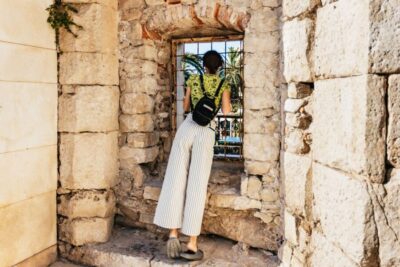
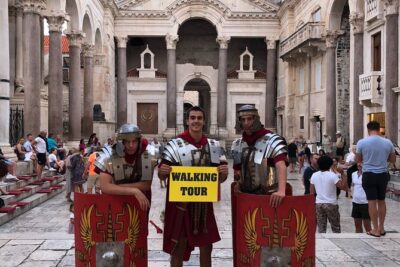
Walking Tour of Split and Diocletian’s Palace
Read our review →
Krka Waterfalls tour with Trogir Walking tour and Krka panoramic boat cruise
Read our review →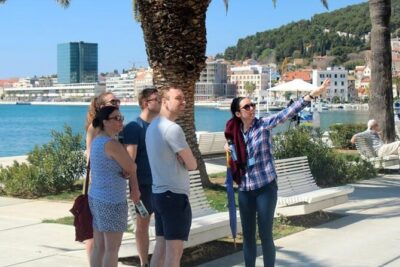
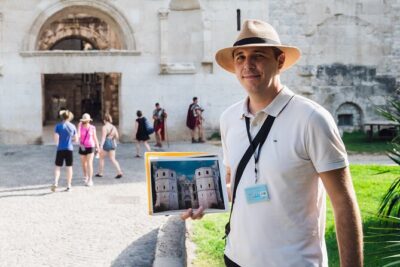
Walking Tour of Split with a ‘Magister’ of History
Read our review →
Plitvice Lakes: Guided Walking Tour with Train and Boat Ride
Read our review →
Diocletian Palace & Old Town Guided Walking Tour
Read our review →Browse the lists this tour appears in