
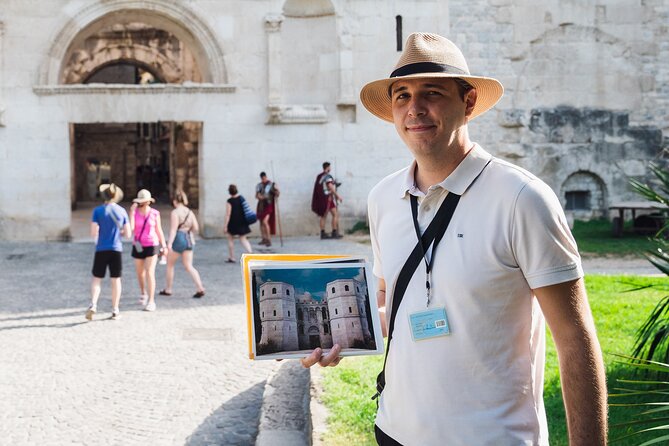
Reviewed · OLD TOWN WALKING TOURS
Walking Tour of Split with a ‘Magister’ of History
Split has one of Europe’s easiest “follow the story” old towns, because Roman walls, medieval streets, and later palaces all share the same space. This Walking Tour of Split with a Magister of History helps you read that mix like a timeline you can walk through.
I love the 3D reconstructions, because they turn “ruins” into a clear picture of how Diocletian’s Palace once looked. I also like the on-foot route, which keeps you focused on the exact gates, squares, and facades you can later use to orient yourself.
One thing to plan for: this tour stays outside. You do not enter museums or paid sites, and you are not going inside the Cathedral or Temple stops, so if you want lots of time in interiors, you’ll need separate visits afterward.
Key things you will notice on this Split history walk
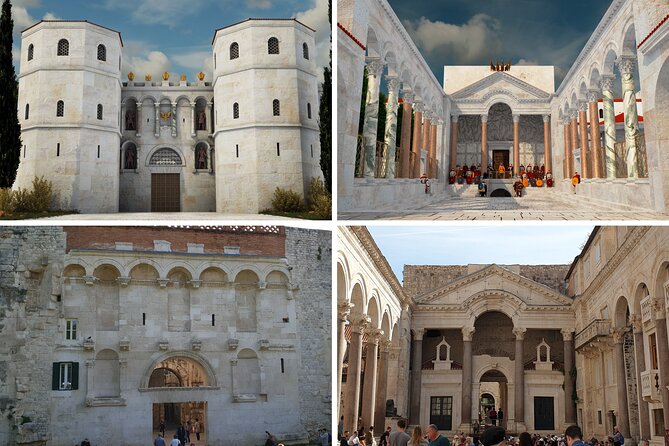
- 3D reconstructions that make the Roman palace feel real, not guesswork
- Diocletian’s gates and main squares, so you learn where you are instantly
- Outside-only approach that still explains what lies behind the walls
- Roman, medieval, Renaissance, and early modern layers, all in one walk
- Optional Game of Thrones filming stops if your group is interested
- Small group size (max 18), which keeps questions from getting lost
The real appeal: seeing Diocletian’s Palace as a living city
The genius of this tour is that it treats Diocletian’s Palace as something more than an ancient monument. You are shown how the Romans built it, how later residents used it, and why today’s Split still feels shaped by those original walls.
What you get is practical. You learn what to look for, and you learn what questions to ask when you’re on your own later. That matters in Split, because the center can feel like a maze until you understand the key “anchors,” like Peristyle, the cathedral, and the major gates.
More walking tours of Split:
- Split: Old Town and Diocletian Palace Walking Tour
★ 4.9 · 4,727 reviews - Walking Tour of Split and Diocletian’s Palace
★ 5.0 · 2,588 reviews - Krka Waterfalls tour with Trogir Walking tour and Krka panoramic boat cruise
★ 5.0 · 1,659 reviews
Who guides you matters: Toni Šare and the “local eye”
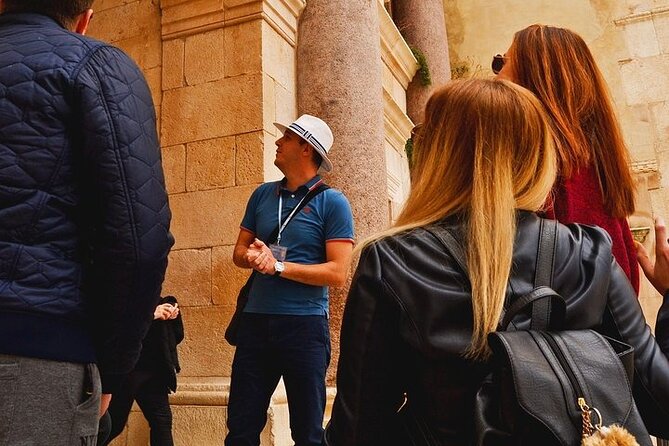
This tour is led by Toni Šare, owner of DiocleSpot Tours. The standout here is that he brings the city as a lived place, not just as a list of dates. In the feedback you can tell he grew up in Split and has put serious time into history study and teaching, which explains why the talk feels steady and structured instead of random.
You also benefit from a format that supports questions. With a maximum of 18 people, the group stays small enough that your guide can slow down when something catches your attention. If you like history with real-world connections, this is the right setup.
Timing and walking expectations (1 hour 40 minutes to 1 hour 50)
This is a short walking tour, about 1 hour 40 minutes to 1 hour 50 minutes. That time frame is ideal for a first visit, especially if you want to “wake up” your eye before you start exploring streets on your own.
The stops are focused and efficient. Some are viewpoints where you look, listen, and then move on. Others are exterior landmark explanations where you do not need museum tickets. The trade-off is simple: you will not spend long enough at any single site to replace a longer, ticketed visit. Think of this as your orientation plus your history class, not your full day of sightseeing.
Stop 1: Riva Harbor, where Split’s Riviera meets Roman stone

You begin at the Brass Gate (Porta Aenea) and quickly connect to the waterfront at Riva Harbor. This is where the story opens in a very logical way: you start with the place local people relate to daily, the edge between sea, city, and movement.
From here, your guide introduces the palace inside the walls. You also get a clear view of the southern wall of Diocletian’s Palace, which helps you understand that you’re walking through a city built on top of a fortress layout. Expect a quick set-up of key ideas and then a smoother walk into the palace core.
A few more Split days worth comparing
- Split Walking Tour with Professor of History
★ 5.0 · 926 reviews - Split: History and Heritage Walking Tour
★ 4.9 · 650 reviews - Split History and Gastro Small-Group Tour with Food and Drinks
★ 5.0 · 375 reviews - SPLIT-PREMIUM Emperor’s Walking Tour for History Lovers + Museum
★ 5.0 · 333 reviews
Stop 2: The Peristyle, Roman design in the middle of today
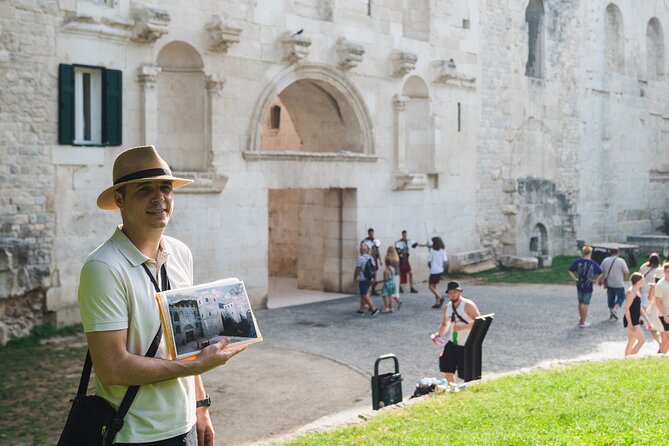
Next you head to the Peristyle, the central square area of Diocletian’s Palace. This is the heartbeat of the complex, and it is also one of the reasons the palace still feels walkable instead of untouchable.
What makes this stop especially valuable is the 3D reconstruction support. The point is not to “wow” you with visuals. The point is to help you register scale and decoration. When you later walk these spaces yourself, you will recognize what used to be there, and you’ll stop thinking of it as only columns and stones.
Stop 3: Cathedral of Saint Domnius, Mausoleum to Cathedral
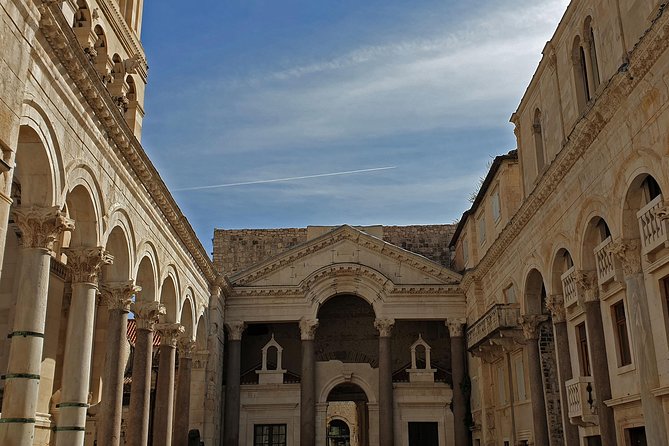
The Cathedral of Saint Domnius is one of the best-preserved Roman structures in Split, and it is still in use. Your tour does not include entry inside, but you still get the essentials: how Diocletian’s mausoleum functioned and how Christians adapted the space over time.
This is a smart stop for first-timers because the building teaches a theme you’ll keep seeing across the walk. Architecture changes hands. Meaning changes with the people living there. And yet, the stone base stays, so you can literally track the timeline by looking outward.
If you want to go inside later, this tour helps you do that with better context. You will know what to look for before you buy any additional ticket.
Stop 4: Temple of Jupiter, and the story behind the name
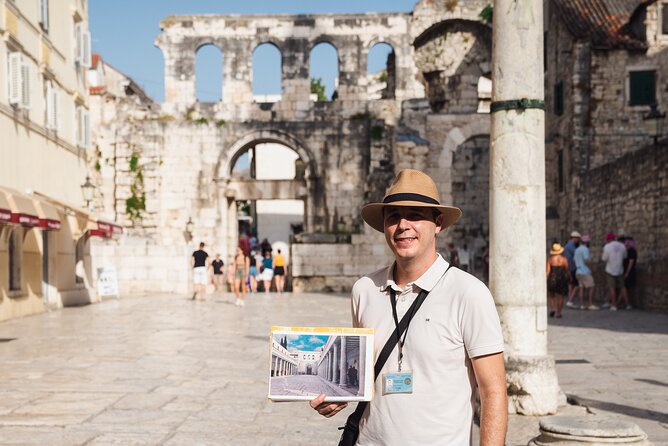
The so-called Temple of Jupiter is among the best-preserved late-Roman temple remains in the world. Your guide keeps you outside, but uses the structure to explain something more interesting than just dates: the construction details, including oddities and errors you can spot.
This is a great moment if you like learning how ancient builders worked in real life, with real constraints. It’s also a good reminder that ancient engineering was impressive even when it wasn’t perfect. You end up looking at the building more carefully, not just taking a photo and moving on.
Stop 5: Eastern (Silver) Gate, framed views and a preserved road
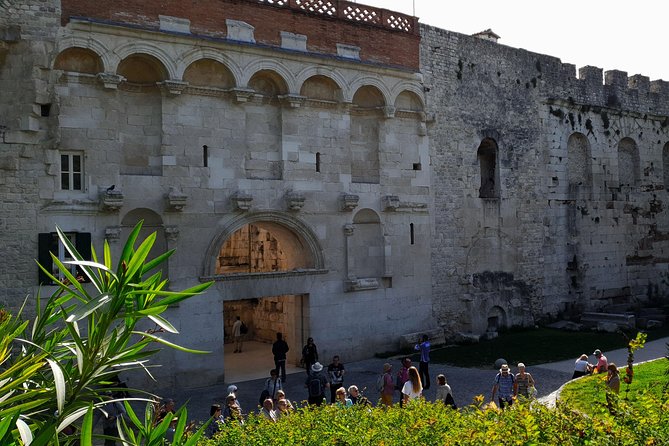
The Eastern (Silver) Gate is a short stop, but it’s worth treating like a “pause and look” moment. From here you get a strong view that aligns major landmarks: the cathedral on one side, the Silver Gate area on the other, and beneath you the preserved section of the original road.
This kind of viewpoint is a cheat code for first-time visitors. Once you see the palace layout from a higher angle, your later wandering makes more sense. Streets stop feeling random, and gates stop feeling like decorative arches.
Stop 6: Grgur Ninski statue, language culture in stone
At the Grgur Ninski statue, the conversation shifts from Roman layout to early medieval Croatian identity. Your guide explains what the statue represents and why it mattered for Croatian language and culture.
This is one of the stops where you feel you’re not only in an “ancient site.” You’re in a city that kept shaping its own identity, generation after generation. For many people, this is where the tour becomes more than sightseeing and starts feeling like understanding.
Stop 7: Vestibulum, the palace entry to Diocletian’s private world
The Vestibulum of Diocletian’s Palace is an entrance area tied to the emperor’s private residence. Again, you do not enter paid spaces, but you do get a guided walk around the remains that helps you understand the palace as a residence, not only a public fortress.
Your guide explains what this entry meant and what you should notice in the remaining structure. The value is how it changes your mental map. After the Vestibulum stop, you stop thinking of Diocletian’s Palace as one big ruin and start seeing it as organized rooms, entrances, and zones with different purposes.
Palaces of noble families, plus the Game of Thrones walk-by
As you continue through the palace area, you pass several palaces linked to noble families. This is where Split’s later layers show up clearly. You’ll see the Roman base, but you’ll also notice how different eras shaped the look and use of the space.
If your group is interested, the walk can also include Game of Thrones filming locations in Split and a pass by the fan shop. That’s an optional bonus, not the main point, but it can be fun if you connect visuals to the streets you’re already learning.
Stop 8: Golden Gate, the best-preserved entrance and the city’s defense logic
The Golden Gate is the main entrance to Diocletian’s Palace and the most preserved of the four entrances. It’s also the most decorated, which makes it the most memorable moment for photos.
This stop is more than pretty stone. From here, you can see the northern wall and how the medieval city used Roman-made structures for defense. Your guide also explains what was removed or left behind and why that reuse matters to understanding Split’s physical survival strategy over time.
If you want one “anchor” stop for your own exploration later, this is a great pick. When you know where the Golden Gate sits, the rest of the palace makes more sense.
City Museum courtyard, Venetian influence without paying museum tickets
Near the Golden Gate area, your tour brings you past the City Museum of Split, located in a Renaissance noble palace. You do not enter the museum itself. Instead, you stay in the courtyard to see the palace atmosphere from the outside.
This is a smart value move. You get the architectural vibe and the palace setting without the additional ticket time and cost. Your guide also ties this to Venetian history, explaining why this style of palace appeared when it did.
Even if you later decide to visit the museum interior, this outside courtyard stop gives you a foundation so the exhibits make more sense.
Old Town Hall on Piazza, ending where you can actually orient fast
You finish at Narodni trg, the main square of Split, also known as Piazza. This is a good ending point because it is naturally central. Everything is reachable from there, and you’re not getting dropped somewhere you still have to figure out.
At Old Town Hall, you see a piece of medieval city life in the form of the 14th century structure and the square’s surrounding energy. The ending works like a reset button: you can decide what you want to do next based on your interests, not on whatever random corner you happened to end up in.
Price and value: why $34.83 can be a bargain in Split
At $34.83 per person, this tour sits in a reasonable range for Split old town guiding. The key value is that you get more than names of sights. You get a guided mental map plus visual explanation through 3D reconstructions.
You also save time and money by keeping the plan outside. Your tour does not include museum entrances or paid site entry. That means you are not locked into ticket costs during the walk. If you later want to add an interior visit to one or two favorites, you can choose based on what you actually liked during the orientation.
Add in the small group size and the fact that the guide can adjust for questions, and the price feels fair. In a dense historic area, that kind of focused guidance often prevents wasted hours wandering in the wrong direction.
Who this tour is best for (and who might want something else)
This is a great fit if you want your first day in Split to feel organized. It’s also ideal if you enjoy architecture and want to understand what you’re looking at rather than just collecting photos.
You will likely enjoy it even more if you like stories that connect Roman engineering to medieval reuse and later palaces, plus the cultural layer around Grgur Ninski. The walk-by of Game of Thrones locations can be a fun add-on if that matters to you.
If you strongly prefer spending time inside buildings, this might feel a bit too focused on exteriors. Since you do not enter museums or paid sites and you do not go inside key stops, you’ll want to pair it with one ticketed interior visit after the tour.
Should you book DiocleSpot Tours for your Split history walk?
Book it if you want a high-return first introduction to Diocletian’s Palace, with Toni Šare guiding you through the gates, squares, and landmark exteriors. The 3D reconstructions plus the tight route help you understand the city fast, and that pays off for the rest of your trip.
Skip it or pair it carefully if you only want indoor experiences or you plan to spend most of your day in ticketed museums. This tour is built for orientation, context, and careful looking from the outside.
If the weather is good and you want a small-group, question-friendly history walk, this one is an easy yes.
FAQ
How long is the Walking Tour of Split with a Magister of History?
The tour runs about 1 hour 40 minutes to 1 hour 50 minutes.
What is the price per person?
It costs $34.83 per person.
What language is the tour offered in?
The tour is offered in English.
Who is the guide for this tour?
Your guide is Toni Šare, the owner of DiocleSpot Tours.
Where does the tour start and end?
It starts at Brass Gate (Porta Aenea) on Obala Hrvatskog narodnog preporoda 22, 21000, Split. It ends at Narodni trg, 21000, Split.
Does the tour include entry to museums or paid sites?
No. The tour does not include entering any museums or paid sites.
What is the group size limit?
The tour has a maximum of 18 travelers.
Is weather a factor?
Yes, this experience requires good weather. If it is canceled due to poor weather, you will be offered a different date or a full refund.
Is free cancellation available?
Yes. You can cancel for a full refund up to 24 hours in advance of the experience start time. If you cancel less than 24 hours before, the amount paid is not refunded.
Fresh options around Split
- Small-Group Communist Tour of Split – Boutique group tour★ 5.0 · 7 reviews
- Controversies behind Split and Croatia-Anthropologist guide★ 5.0 · 59 reviews
- Split City Tour By Electric Rickshaw┃Riva Ride★ 5.0 · 50 reviews
- Coffee, storytelling & walk – The best private tour of Split★ 5.0 · 46 reviews
- Chill Private Walking Tour of Diocletian’s Palace★ 5.0 · 35 reviews
- Canyoning basic on Cetina river from Omiš★ 5.0 · 66 reviews
- River Rafting from Split- Cliff Jumping- Cave Visit★ 5.0 · 90 reviews
- Private Split City Walking Tour – Spanish Guide★ 4.5 · 12 reviews
Old Town Walking Tours, compared.
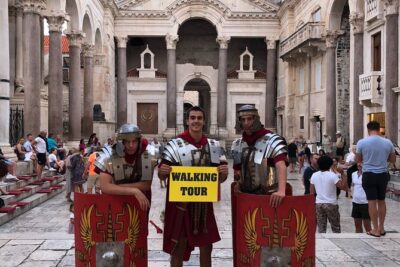
Walking Tour of Split and Diocletian’s Palace
Read our review →
Krka Waterfalls tour with Trogir Walking tour and Krka panoramic boat cruise
Read our review →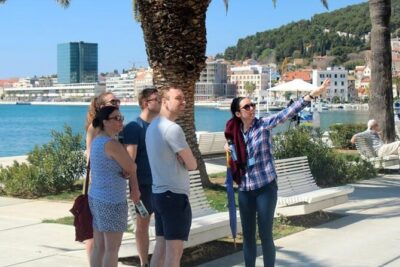

Plitvice Lakes: Guided Walking Tour with Train and Boat Ride
Read our review →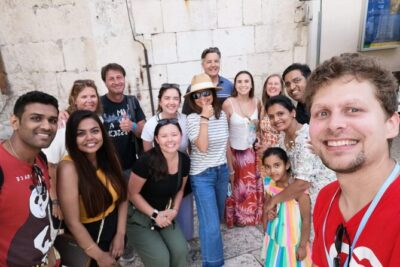
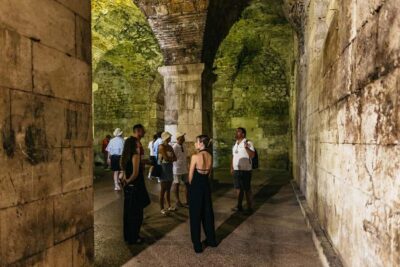
Diocletian Palace & Old Town Guided Walking Tour
Read our review →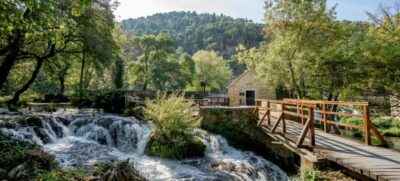
Browse the lists this tour appears in