
Reviewed · OLD TOWN WALKING TOURS
Private History Split Walking Tour in English
Split has a strange superpower. You walk a few minutes and you’re suddenly inside an ancient Roman palace, with streets and shops built right over it. This Private History Split Walking Tour is interesting because it turns that stone maze into a clear story, from Emperor Diocletian to the Venice-era touchpoints you still feel today.
Two things I especially like: you get a private guide who can slow down for your questions, and the route hits the major “I get it now” spots, like the Golden Gate, Gregory of Nin, and the palace core. One drawback to consider is that it involves walking through an old site, including areas that may have high steps, so if stairs are a problem, you’ll want to think carefully.
Key highlights you’ll feel fast
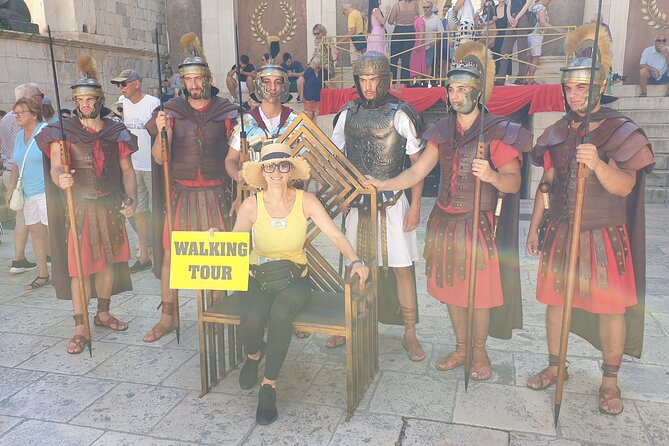
- Private guide, real conversation so your pace stays comfortable and your questions actually get answered
- Diocletian’s palace mapped in 90 minutes, so you don’t wander in circles
- Golden Gate plus Gregory of Nin, with language and history connected to what you see
- Riva Harbor context, including a bronze palace model that makes scale make sense
- Venetian-era Fruit Square and Marko Marulić ties literature to the street you’re standing on
- Jewish history pass-by at the Split Synagogue area, with the main stop focused elsewhere
Diocletian’s Palace: the shortcut to understanding Split
If you’ve only got a short time in Split, Diocletian’s Palace is the best starting point. It’s not just an attraction. It’s the reason Split is laid out the way it is, with ancient walls and gates shaping where people lived, walked, traded, and worshipped.
What makes this tour work well is the order. You start at the palace’s central organizing space, then move outward to gates, corridors, substructures, and the surrounding Old Town features. That means you’re not just seeing famous landmarks, you’re building a mental map as you go.
The tone is practical too. The guide’s job is to connect what you see to why it matters, and you’ll walk away with fewer blank spots when you revisit the palace on your own.
More walking tours of Split:
- Split: Old Town and Diocletian Palace Walking Tour
★ 4.9 · 4,727 reviews - Walking Tour of Split and Diocletian’s Palace
★ 5.0 · 2,588 reviews - Krka Waterfalls tour with Trogir Walking tour and Krka panoramic boat cruise
★ 5.0 · 1,659 reviews
The 90-minute walking rhythm (and what to expect on your feet)
This tour runs about 1 hour 30 minutes. That’s long enough to feel like you learned something real, but short enough that you’re not trapped in a full-day commitment.
Because it’s a walking route through historic stone, wear shoes that are comfortable on uneven surfaces. Also keep in mind the site is old, so you might encounter stairs and steps. The experience is listed as not recommended for people with high-step issues.
The good news is that it’s set up for you. Since it’s private, your guide can adjust how you move through tighter passages and busy corners, as long as your group stays within the tour timing.
Start at the Peristyle: get your bearings fast
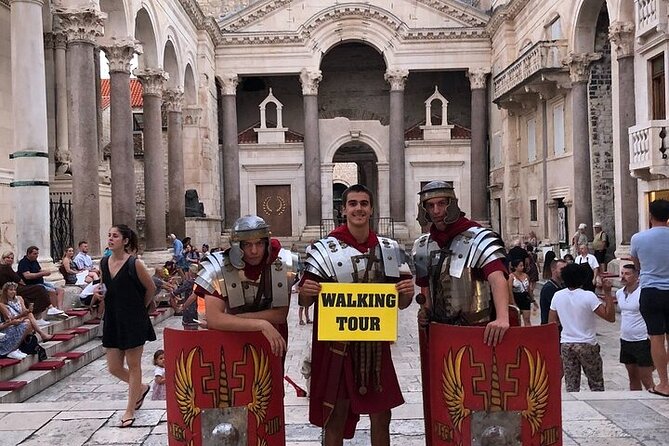
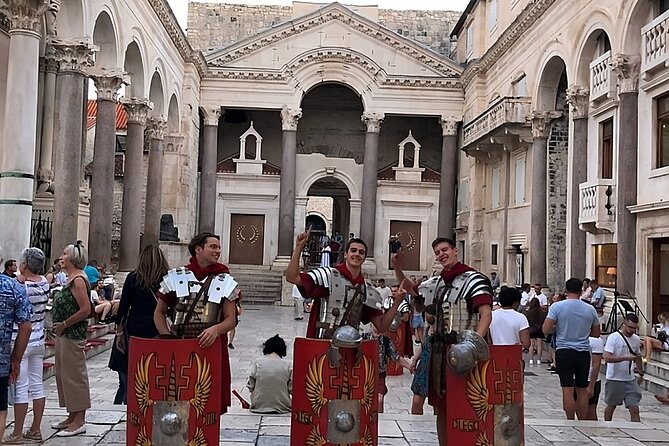
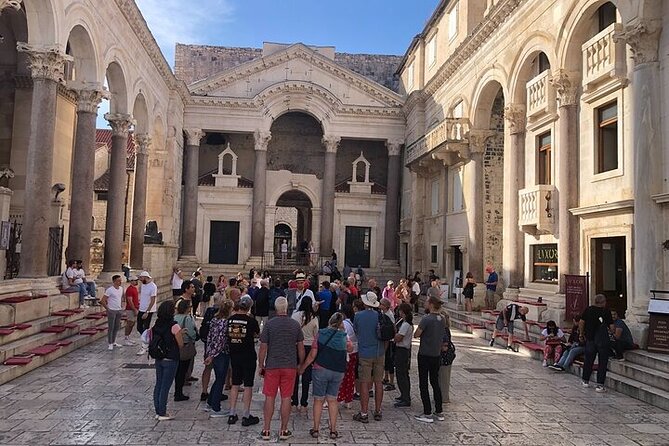
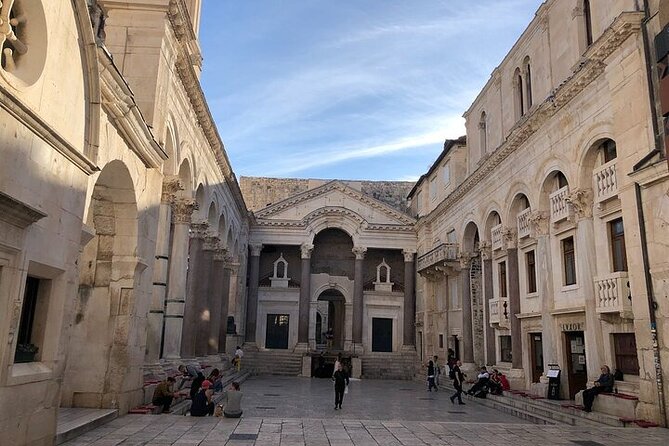
You begin in the Peristyle, the central square of Diocletian’s Palace. This is a smart first stop, because this space acts like the palace hub. From here, you can reach many other palace areas, so the guide can explain structure in a way that actually sticks.
Think of it as your compass moment. Instead of hearing random palace facts, you learn how the complex is laid out and what the spaces were meant to do. If you’ve ever visited ruins and felt lost, this first stop is designed to prevent that.
Time here is about 15 minutes, and admissions are free for this stop.
Vestibulum details: small space, big story
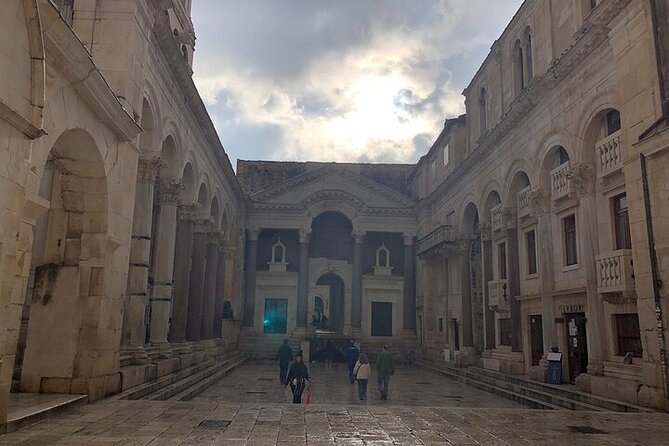
Next comes the Vestibulum, the vestibule of Emperor Diocletian. This is the kind of stop that looks like “just a doorway” if you’ve never been taught how to look. With a guide, it becomes a clue. You’ll learn about the location’s role and what it meant in the palace flow.
There’s also a chance of hearing traditional Dalmatian singing. The wording matters here. It’s not guaranteed, but the guide may encourage you to listen at the right moment.
This stop is brief, around 5 minutes, and it’s also listed as free.
Practical note: even short stops can involve standing in one place. If you’re traveling with someone who needs frequent breaks, you can tell your guide early.
A few more Split days worth comparing
- Walking Tour of Split with a ‘Magister’ of History
★ 5.0 · 1,122 reviews - Split Walking Tour with Professor of History
★ 5.0 · 926 reviews - Split: History and Heritage Walking Tour
★ 4.9 · 650 reviews - Split History and Gastro Small-Group Tour with Food and Drinks
★ 5.0 · 375 reviews
Palace substructures: where function changed over time
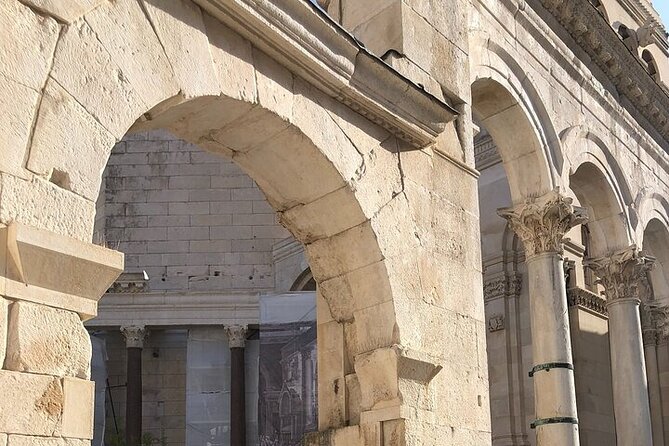
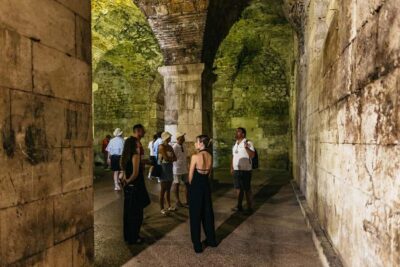
Then you move into the substructures of Diocletian’s Palace. This is one of my favorite types of museum-free history stops. You’re not just admiring surfaces. You’re walking through spaces tied to how the palace operated.
You’ll learn about how these areas were constructed and how their purpose changed as centuries passed. This is where you start understanding the palace as a lived machine, not a picture.
Here’s the key drawback to note: you won’t visit the museum part of the substructures during this tour. You can visit it later on your own. Admission for the substructures stop is listed as not included, so if you want to go in for the museum after, plan for extra cost.
Time is around 10 minutes, so it’s not meant to replace a longer museum visit. It’s meant to give context so the museum makes more sense if you choose to add it.
Golden Gate and Gregory of Nin: the history hits your eye level
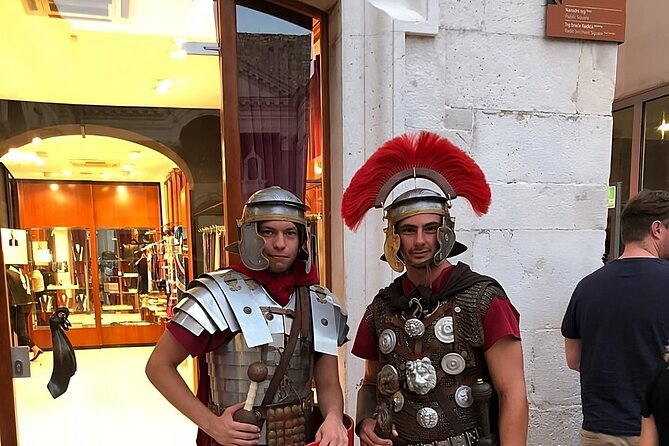
After the palace interior logic, the tour turns outward at the Golden Gate, the main entrance of Diocletian’s Palace.
This is a top stop for a reason. The gate is visually dramatic, and it’s also historically meaningful. You’ll learn about the gate itself, and you’ll see the statue of Gregory of Nin nearby. The guide connects Gregory’s importance to wider history and even to language, which is a neat way to make a statue feel relevant instead of decorative.
Time here is about 10 minutes, and admissions are listed as free.
One consideration: gates and entrances are photo magnets. If you like quiet photos, aim to step a little to the side while your guide talks, then let the group flow before you take pictures.
Riva Harbor: why Split’s promenade feels so official
Next you reach Riva Harbor, the promenade that defines a lot of people’s first impression of Split. But instead of letting you only enjoy the views, the guide adds a layer.
You’ll see a bronze model of Diocletian’s Palace. That model is one of those “oh, that’s the scale” moments. When you’ve walked the palace route, the model turns the complex from a maze into a legible system.
Then you’ll learn about the history of Split’s Riva promenade, so the waterfront feels less like a random strip of cafés and more like a place with a timeline.
This stop lasts around 15 minutes, and admissions are listed as free.
Fruit’s Square and Marko Marulić: Venice-era Split in one walk
From the waterfront, you move to Fruit’s Square (Trg Brace Radic). This is where the tour helps you notice the layers in Split’s Old Town.
You’ll learn about a 15th-century Venetian citadel, and the guide connects it to Marko Marulić, described as the father of Croatian literature. That’s a great example of why I like this kind of walking tour. It doesn’t stop at Roman ruins. It shows how the city kept evolving.
Time is about 10 minutes, and admissions are listed as free.
A practical tip: squares are open, so they can feel hot or windy. If you’re visiting in summer, bring water and plan sun protection.
Split Synagogue pass-by: a respectful stop without the full detour
The tour then passes by the 16th-century Split Synagogue and shares the history of the Jewish community in the city. This is a thoughtful add-on, but it’s also important to set expectations.
The stop is listed with admission not included, which fits the idea that this portion is about context and orientation, not an extended visit inside. If you want to go deeper, you might choose to return later when you can arrange the separate visit.
Time here is around 10 minutes and you’ll be moving along with the main route.
If you’re someone who loves architecture, you might notice the area more than you expect once the guide points out what to look for.
Price and value: is $66.54 worth it?
At $66.54 per person for about 1 hour 30 minutes, the real question is what you get for that money.
First, it’s private, meaning your guide is focused on just your group. That matters in Split, because the palace is confusing for self-guided walkers. You’ll spend less time trying to figure out where you are and more time learning what you’re seeing.
Second, the route concentrates on high-impact stops: the Peristyle, Golden Gate, Gregory of Nin, and the Riva Harbor model. Those are the places that help you understand the city quickly.
Third, some entries are free in the tour stops, but not all. The palace substructures museum part is not visited, and the synagogue stop lists admission as not included. So you should treat this as a guided history walk with key orientation, not a ticket bundle for everything on site.
If you compare it to multiple solo visits or long museum wandering, the private guide often wins for people who want clarity, pacing, and a clean plan.
Guides and the style that makes the palace click
I paid close attention to the guide factor because this is the make-or-break part of a “private history” tour.
One guide name that came up clearly is Antonella. The description of her approach was that she brought the palace alive with easy, wonderful understanding of the history of the town. That kind of guide skill is exactly what you want in a place where the stones can otherwise feel flat.
The tour also comes across as fun, not stiff. People talked about the guide making history easy to follow, and that you end up with suggestions for what to explore next. Even if you plan to explore on your own after, those tips can save time.
Who should book this tour, and who might not
This works best for you if:
- you want a focused, high-value history walk without spending half a day sorting out the palace layout
- you like your sightseeing tied to stories, especially Roman structure plus later layers like Venetian influence
- you prefer a guide who can explain architecture in plain language
- you want a private format to go at your own pace
It may be a poor fit if:
- you have trouble with high steps or you’re very sensitive to uneven old-stone surfaces
- you’re looking for a museum-heavy program, because the substructures museum part is not included in the tour itself
If you’re traveling with kids, it can still work if they’re interested in stories, but you might need a little patience with walking time and standing still for explanations.
Practical tips before you go
A few things will make your experience smoother:
- Expect steady walking for about 90 minutes, in an old historic area.
- Use comfortable shoes, and plan for some standing.
- Bring a water bottle, especially if you’re in warmer months. Open squares like Fruit’s Square can feel exposed.
- The tour is offered in English, and it’s a mobile ticket experience. Have your confirmation ready on your phone.
Your meeting point is at Peristil ulica, Split, and the tour ends back at the meeting point.
Should you book this Private History Split Walking Tour?
I’d book it if you want Split to make sense fast. The palace is the heart of the city, and this route is a smart way to learn it without getting lost. The focus on big visual anchors like the Golden Gate and Gregory of Nin, plus the quick context stops around Riva and Fruit’s Square, makes it feel worth your time and money.
Skip it, or at least consider a different format, if your main goal is museum admission inside the palace substructures, or if stairs and steps are a real problem for you. In that case, you may prefer a more accessible walking route or a longer, ticket-inclusive museum day.
If you’re the type who likes to walk with a plan and leave with a clear mental map, this is one of the better uses of a short day in Split.
Fresh options around Split
- Small-Group Communist Tour of Split – Boutique group tour★ 5.0 · 7 reviews
- Controversies behind Split and Croatia-Anthropologist guide★ 5.0 · 59 reviews
- Coffee, storytelling & walk – The best private tour of Split★ 5.0 · 46 reviews
- Chill Private Walking Tour of Diocletian’s Palace★ 5.0 · 35 reviews
- Split City Tour By Electric Rickshaw┃Riva Ride★ 5.0 · 50 reviews
- Canyoning basic on Cetina river from Omiš★ 5.0 · 66 reviews
- River Rafting from Split- Cliff Jumping- Cave Visit★ 5.0 · 90 reviews
- Private Split City Walking Tour – Spanish Guide★ 4.5 · 12 reviews
Old Town Walking Tours, compared.
Walking Tour of Split and Diocletian’s Palace
Read our review →
Krka Waterfalls tour with Trogir Walking tour and Krka panoramic boat cruise
Read our review →
Walking Tour of Split with a ‘Magister’ of History
Read our review →
Plitvice Lakes: Guided Walking Tour with Train and Boat Ride
Read our review →
Diocletian Palace & Old Town Guided Walking Tour
Read our review →Browse the lists this tour appears in