
Reviewed · OLD TOWN WALKING TOURS
SPLIT-PREMIUM Emperor’s Walking Tour for History Lovers + Museum
Split is one of those places where the past feels like it’s still living in the walls, and this tour is a smart way to read the city without getting lost in facts. You’ll walk through Diocletian’s Palace and the medieval streets of Old Split with a licensed local guide who tells the story in a way you can actually remember, from the Roman emperor era to later layers of Croatian life. I especially like that guides such as Joško and Daniela bring humor and real local context, not a script. One consideration: this is a serious history walk, so if you want Game of Thrones explanations, you’ll likely have to spot those locations yourself.
This 2-hour experience also wins on comfort and pacing. With a maximum of 15 people, you get time for questions and the route tends to feel more like a guided conversation than a long queue. The route starts and finishes near the water, so you can easily fold it into the rest of your day in Split’s waterfront area. The main drawback for some folks is that the group tour is adults only, and it depends on good walking weather.
Key highlights if you love history in walkable places
- Diocletian’s Palace, UNESCO-listed core, with major Roman features like gates, squares, and the peristyle area
- Small-group format (max 15), which helps you get answers and better attention
- Local guide energy, including humor and clear explanations from people like Joško and Daniela
- Iconic photo-stops on the way, from the Golden Gate to the Temple of Jupiter exterior views
- Quick hits across Old Town squares, including Fruit Square with Marul and People’s Square in the center of action
- Optional paid add-ons, including the Diocletian’s Cellars museum segment (extra fee)
Walking Into Roman Split, Diocletian’s Palace and the City’s Spine
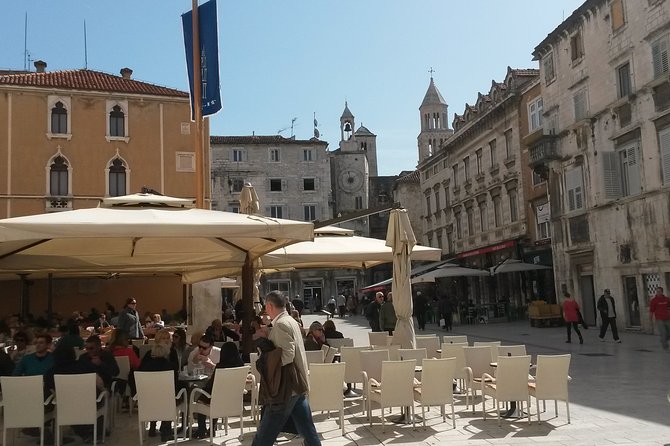
If you only do one history-oriented thing in Split, this is a strong choice because it focuses on the place where everything started. Diocletian’s Palace is not just an old building sitting there. It is the framework that shaped how the rest of the city grew, and that’s why your guide’s job is so important. A good guide helps you see what you might otherwise miss: entrances that mattered, squares with social function, and architectural clues that point to how Roman power was designed to look and work.
I like that the tour keeps the message simple and grounded. You learn the why behind the walls. And you get those quick “lightbulb” moments when a gate or square suddenly makes sense. In guides like Joško’s style, the explanations are organized enough to follow, but not stiff, so you don’t feel like you’re being lectured.
A practical note: the tour’s flow assumes you’ll be able to walk steadily through Old Town streets. On a hot day, you may want an early start and water. One guide experience I saw included adapting sensitively when someone in the group had mobility concerns, but it’s still a walking tour, so come prepared for cobblestones and sun.
More walking tours of Split:
- Split: Old Town and Diocletian Palace Walking Tour
★ 4.9 · 4,727 reviews - Walking Tour of Split and Diocletian’s Palace
★ 5.0 · 2,588 reviews - Krka Waterfalls tour with Trogir Walking tour and Krka panoramic boat cruise
★ 5.0 · 1,659 reviews
Stop 1: Palazzo di Diocleziano and the Roman Building That Still Runs the Show
You start at the palace area, right where the Roman emperor’s complex begins to feel real. This part matters because it sets the timeline. You’re looking at Diocletian’s Palace, a UNESCO World Heritage Site built in 305 AD, and your guide frames it as a retirement palace with political design baked into the stone.
The value here is orientation. Once you understand what the palace was meant to be, later stops become easier to interpret. Instead of seeing random arches and corridors, you understand them as parts of a functioning world: controlled entrances, ceremonial spaces, and everyday movement routes.
It’s also a free-admission segment, so you get the context first without immediately needing tickets.
Old Split Streets, Medieval Life After Rome
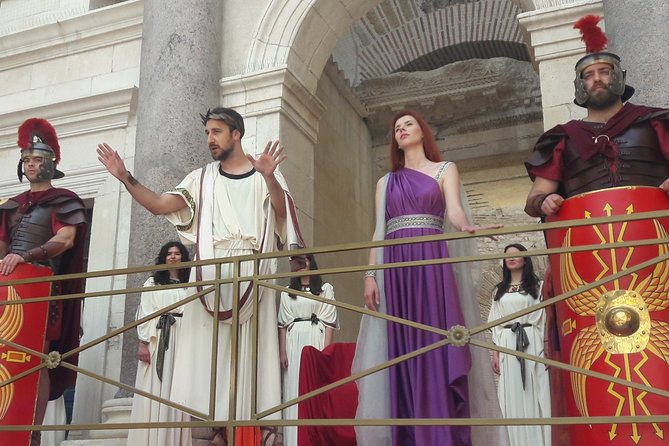
Right after the palace context, you head into Old Split. This shift is key. Diocletian’s Palace is Roman, but Split did not freeze in the 5th century. It changed as centuries passed, and Old Split is where you feel that layering.
In a short amount of time, you’re shown enough medieval street logic that the old town stops feeling like a maze. Your guide’s local perspective helps you connect squares and street corners back to the larger palace story, so the walk feels cohesive rather than stitched together from random highlights.
This is also where the pace helps. The tour stays quick at each stop, so you can absorb a new idea, move on, and still keep energy for later parts of the route.
Cathedral of Saint Domnius: Seeing It From the Right Angle
You’ll view the Cathedral of Saint Domnius from outside, with admission not included for this segment. That might sound limiting, but it works well in a walking itinerary because it gives you a built-in “pause point” without turning the morning into a ticket-buying exercise.
From the outside, you still get the visual anchor of one of Split’s major religious landmarks. A guide can also use this moment to explain why the cathedral fits into the city’s longer timeline, connecting it back to how older spaces were repurposed and revalued over time.
If you love architecture, this outside look is a good match, and then you move on before you lose the thread.
A few more Split days worth comparing
- Blue Lagoon & Underwater Museum from Split with Lunch & Drinks
★ 4.5 · 1,122 reviews - Split: Klis Fortress GOT and Olive Museum Entry Tickets
★ 4.6 · 283 reviews - Visit Klis fortress GOT & Olive museum Klis
★ 4.5 · 77 reviews - Split: Olive museum Klis with Olive Oil Tasting
★ 4.9 · 51 reviews
Riva Harbor and the Main Stage: Where the Tour Meets the Sea
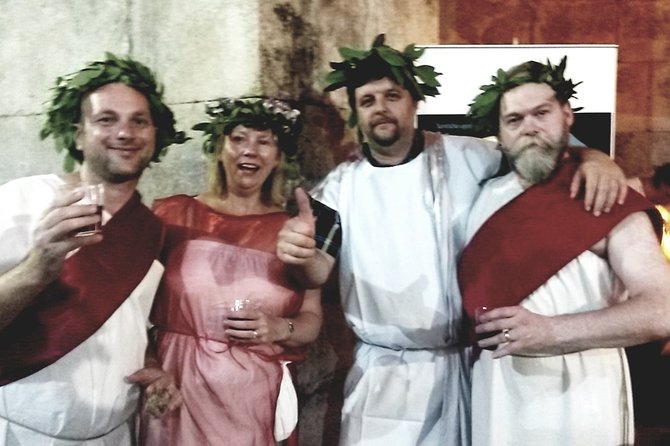
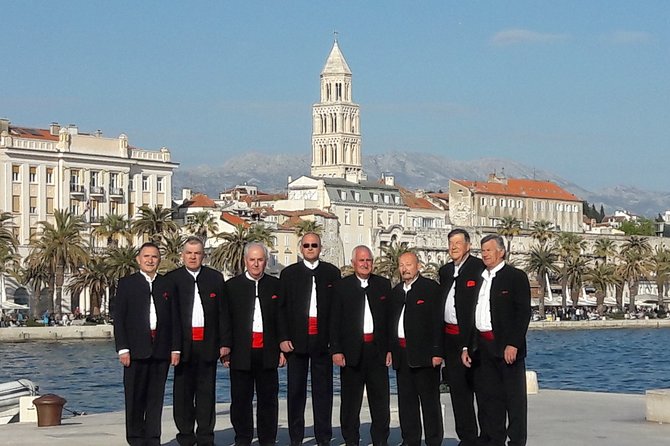
The tour starts and finishes at the Main Stage on the Riva promenade. This matters for two reasons.
First, the location is easy to plug into your day. After the tour, you can keep walking along the waterfront with a clearer sense of where you’ve been. Second, the Riva area gives you a sense of the city’s present-day rhythm, so the history doesn’t feel like it’s floating in isolation.
Even if you’re focused on Roman and medieval facts, I think this watery setting helps you remember you’re in a real working port city, not a museum-only destination.
The Peristyle and Emperor’s Square: The Heart-Soul Test
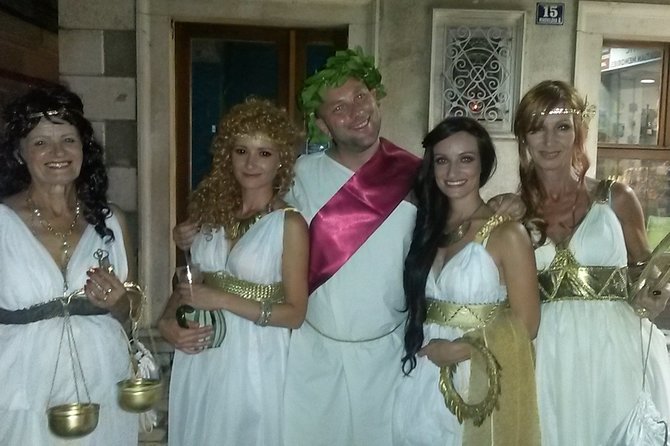
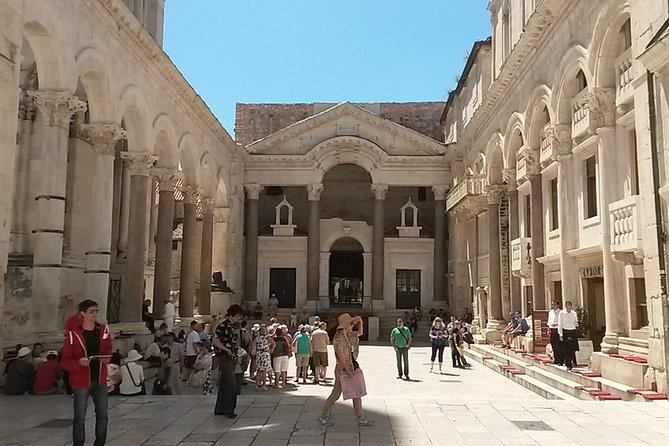
Next comes the Peristyle of Diocletian’s Palace, including Emperor’s Square, which your guide frames as the heart and soul of Split’s central old core. This is the space where you’re supposed to slow down a bit and look more carefully.
If you’ve ever wandered through ruins and wondered what was ceremonial and what was practical, this is where a guide helps. A peristyle space makes more sense when explained in terms of how people moved, gathered, and projected authority.
The stop is short, but that’s part of the design. You’re not trying to spend an entire day studying one courtyard. You’re learning to recognize what each space was for.
Grgur Ninski Statue: A Croatian Person, Not Just a Roman Setting
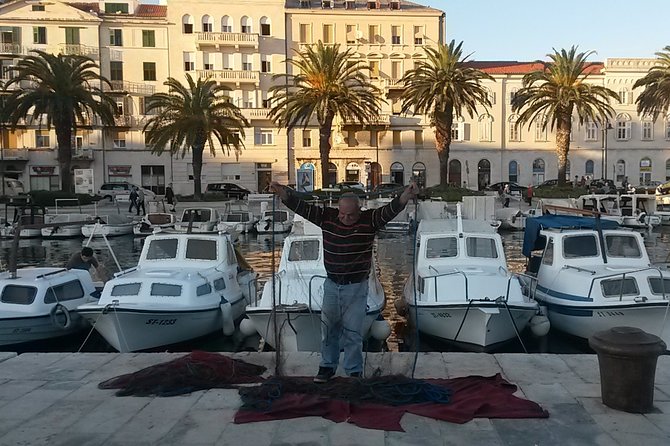
One of the tour’s strengths is that it does not treat Split as only Roman. You get a specific historical figure stop at the Grgur Ninski statue, and your guide explains why this person matters in Croatian history.
This is a great “human scale” break from palace architecture. Instead of only learning about buildings, you also learn about legacy, identity, and what later eras celebrated. For many history lovers, that’s the piece that makes a city feel like more than dates on a timeline.
It’s also free, so you’re not losing time to ticketing.
Fruit Square (Trg Brace Radic) and Marul: Literature on Stone
Then you reach Fruit Square, also called Trg Brace Radic. Here, you’ll see the famous statue of Marul, often described as the father of Croatian literature, and your guide brings the story into focus.
This stop is short, but it adds a layer that many palace-heavy tours miss. Split is not only a stage for emperors and temples. It’s also a place where language and literature became part of national pride and cultural identity.
If you like history that connects to everyday ideas, this is a satisfying break.
Narodni Trg: People’s Square, Big Energy, Big Context

Narodni Trg is described as the biggest and liveliest piazza in Old Town, and your guide uses it as an organizing point. When you stand in a large square, you start to understand city power and public life: where people met, where news traveled, and how the city’s center worked.
The tour keeps this segment brief, but if you like people-watching, it’s a nice fit. You’re learning while you also get to sense the modern use of a place that grew around older structures.
Temple of Jupiter: Outside Views and Optional Inside Plans
You’ll see the Temple of Jupiter from the outside. There’s also an optional inside visit, but admission for that part is not included.
Outside, you can still take in the meaning of the site as the Roman main god connection point. If you choose to go inside, it can turn into a bonus step for people who want more than just architectural recognition.
Because the tour is designed as a 2-hour hit, the optionality gives you control. If you’re tired or it’s hot, you can stay exterior and still complete the full story arc.
City Clock: A 500-Year-Old Time Keeper
The city clock stop is a simple idea with big payoff. You’ll see a 24-hour clock that’s about 500 years old. It’s one of those details that makes you slow down, because it’s not just about what’s ancient, it’s about how daily life was measured.
A guide can connect the clock to practical life in pre-modern cities. Even if you don’t go deep into mechanics, the moment tends to stick because it’s concrete: time, public order, and city routines.
This stop is free, so it’s pure value.
The Golden Gate: The Palace Entrance That Looks Like Power
The Golden Gate is presented as the main and most beautiful entrance into Diocletian’s Palace. Even in a short viewing moment, it’s the kind of structure that makes the palace feel like what it was: a place meant to impress.
This is where I like having a guide. Without context, you might just take a photo and move on. With context, you understand the meaning of entrances, how movement was controlled, and why certain perspectives were designed.
If you love architecture, you’ll probably want to spend an extra few seconds here framing your photos. The guide’s explanations help you choose what angles matter.
Diocletian’s Palace Substructures: The Paid Piece You Should Decide On
The tour includes a stop at the Diocletian Palace substructures, described as the best preserved part of the palace, with about 20 minutes for this segment. Admission is not included, and there’s an extra fee for the Museum of Diocletian’s Cellars, listed at €10 per person.
This is worth weighing based on your interests. If you want the deepest physical sense of what’s preserved and how the palace’s underworld functioned, the paid cellars segment is likely your best added value. If your priorities are mostly street-level orientation and exterior architectural interpretation, you might prefer to treat this part as the optional chapter.
Either way, the rest of the route still gives you the full narrative arc.
Vestibulum and the Emperor’s Main Entrance Feeling
The final portion includes the vestibulum of Diocletian’s Palace, described as the main entrance to the private residence of the emperor. This is a strong closing note because it ties the story back to the human idea of power and privacy.
Walking the approach to such a doorway helps you understand how the palace was built for status. Even if you’re not going inside, the explanation can make the space feel like a lived environment rather than a diagram.
Then you return to the meeting point area by the Riva promenade. With that, you can keep exploring Old Town on your own with a better sense of direction and meaning.
The Guides, Humor, and Small-Group Pace That Make the Difference
A theme in the experiences shared by people who booked this tour is the way guides teach and keep energy up. Guides such as Joško and Daniela are repeatedly described as funny, friendly, and engaging, with lots of information that stays understandable.
There’s another practical plus: because the group is small, the tour tends to feel flexible. One experience highlighted how a guide helped fit the route when someone had a time constraint and needed to get back on schedule. Another experience pointed out how a guide handled mobility concerns with care and patience.
For me, that is the real value of paying a bit extra for a local, licensed guide. The tour isn’t only about “seeing” places. It’s about understanding why each stop belongs in the story, and doing it at a pace your body can handle.
Price and Value: $30 for a Roman Palace Orientation Lesson
At $30 per person, this tour sits in a low-to-mid range for walking tours focused on major UNESCO sites. What makes the price feel fair is the focus.
You’re not spending your money on a generic city loop. You’re buying an ordered walk through Diocletian’s Palace and Old Split with context at each stop. Plus, the guide is licensed and local, and the group is capped at 15.
Your main extra cost is the optional museum piece at €10 for the Diocletian’s Cellars segment. If you add that, make sure it matches your interest level for deeper interior history. If you skip or choose not to go inside optional segments like the Temple of Jupiter interior, you can keep the budget closer to the base price.
Either way, the tour’s “you walk away knowing what to look for” factor is usually what justifies the spending, especially if it’s your first time in Split.
Who This Tour Is Best For, and Who Might Prefer a Different Style
This is a great match if you love history, architecture, and learning how cities grow from one era into the next. It’s also a solid choice for people who want a short, structured tour that doesn’t feel rushed.
It’s also good for teenage history fans, as long as they’re interested in real context rather than pop-culture framing. One practical note from an experience: this is a history-first tour, so it won’t center Game of Thrones scenes. You may see show-related locations, but the emphasis stays on Roman and Croatian historical interpretation.
Group tour rules matter here. The group option is adults only, and it is not recommended for people under age 18. If you’re traveling as a family, the private option is listed as for all ages.
If you’re the type who likes to ask questions, bring curiosity. Small groups make that easier.
Practical Tips So Your 2 Hours Feel Smooth
Because this is a walking tour in Old Town, a few small choices can make a difference.
Wear shoes with solid grip for cobblestones and uneven surfaces. Bring water, especially in summer. The tour depends on good weather, so plan for sun or light rain in your mind.
If you’re arriving from somewhere else and using public transport, the meeting point is near public transportation, and your mobile ticket helps with entry. Also, since many stops are exterior or free to enter, the flow is generally straightforward, but keep in mind which parts have optional paid admission, like the Diocletian’s Cellars museum segment.
Finally, if you want photos, expect to pause at multiple key Roman and old town landmarks. Frame first, then listen. The guide’s explanations will help you know what’s worth capturing.
Should You Book This Split History Tour?
Book it if you want a focused, guided way to understand Split’s core story, especially Diocletian’s Palace and how it shaped Old Town. The small group size and the consistent guide style, including humor and clear explanations, make this a high-value way to spend a couple of hours rather than wandering without a plan.
Skip or choose something different if you’re mostly chasing entertainment beats, like Game of Thrones trivia, or if you need a lot of indoor time. This tour is designed around walking and interpretation, and parts that are paid or optional, like the Cellars museum, are there for people who want that extra layer.
If you’re in Split for a short stay, this tour is one of the fastest ways to get your bearings in a city built on stone that still tells time.
FAQ
Is this tour offered in English?
Yes. The tour is offered in English.
How long is the walking tour?
It runs for about 2 hours.
Where does the tour start and end?
It starts at Obala Hrvatskog narodnog preporoda 22, 21000, Split, Croatia and ends back at the same meeting point.
Is this a small-group tour?
Yes. The group tour has a maximum of 15 travelers, and it runs with a minimum of 4 guests.
Is the group tour for adults only?
Yes. The group tour is adults only and is not recommended for guests under age 18. A private tour option is listed as for all ages.
What is included in the price?
The tour includes a licensed resident guide, a custom-designed itinerary, and tour organization. You also receive a mobile ticket.
Are any museum or attraction entrances included?
Not all of them. Admission to the Museum of Diocletian’s Cellars is not included and is listed as €10 per person. Some optional interior visits are also not included.
Does the tour require good weather?
Yes. The experience requires good weather. If it’s canceled due to poor weather, you’ll be offered a different date or a full refund.
Is there a cancellation policy?
Free cancellation is listed. You can cancel up to 24 hours in advance for a full refund, and changes within 24 hours are not accepted.
How far in advance is it typically booked?
On average, it’s booked 47 days in advance, so earlier booking can help secure a spot, especially in peak season.
More Historical Tours in Split
- Walking Tour of Split with a ‘Magister’ of History
★ 5.0 · 1,122 reviews - Split Walking Tour with Professor of History
★ 5.0 · 926 reviews - Split: History and Heritage Walking Tour
★ 4.9 · 650 reviews - Split History and Gastro Small-Group Tour with Food and Drinks
★ 5.0 · 375 reviews
Fresh options around Split
- Small-Group Communist Tour of Split – Boutique group tour★ 5.0 · 7 reviews
- Controversies behind Split and Croatia-Anthropologist guide★ 5.0 · 59 reviews
- Split City Tour By Electric Rickshaw┃Riva Ride★ 5.0 · 50 reviews
- Coffee, storytelling & walk – The best private tour of Split★ 5.0 · 46 reviews
- Chill Private Walking Tour of Diocletian’s Palace★ 5.0 · 35 reviews
- Canyoning basic on Cetina river from Omiš★ 5.0 · 66 reviews
- River Rafting from Split- Cliff Jumping- Cave Visit★ 5.0 · 90 reviews
- Private Split City Walking Tour – Spanish Guide★ 4.5 · 12 reviews
Old Town Walking Tours, compared.
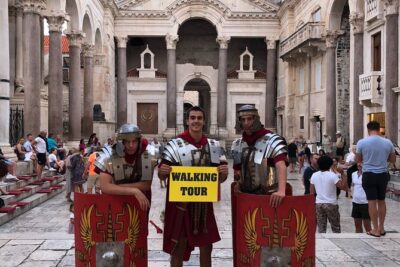
Walking Tour of Split and Diocletian’s Palace
Read our review →
Krka Waterfalls tour with Trogir Walking tour and Krka panoramic boat cruise
Read our review →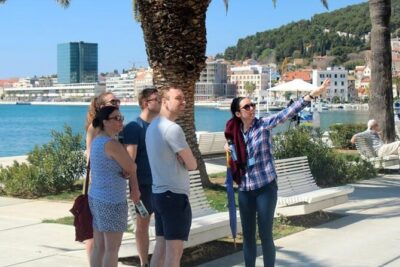
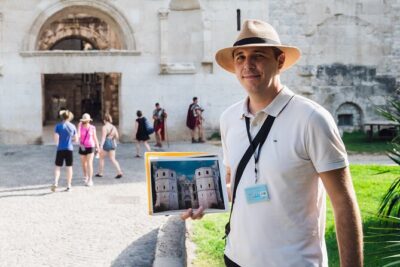
Walking Tour of Split with a ‘Magister’ of History
Read our review →
Plitvice Lakes: Guided Walking Tour with Train and Boat Ride
Read our review →
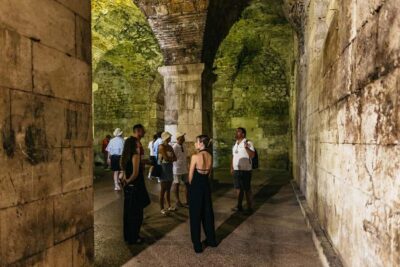
Diocletian Palace & Old Town Guided Walking Tour
Read our review →Browse the lists this tour appears in