
Reviewed · DIOCLETIAN'S PALACE TOURS
Diocletian’s Palace Small Group Tour in Split
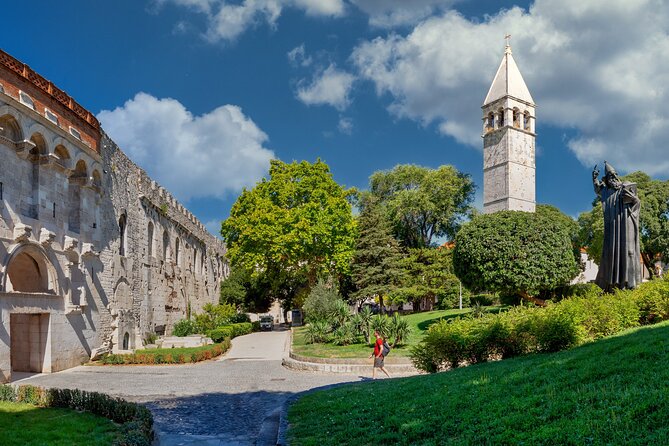
Diocletian’s Palace is one of those places that feels less like a ruin and more like a real neighborhood, wrapped inside Roman walls. In Split, the palace structures form about half the old town and city center, so you do not just see history, you walk through it at street level.
I really like the short, focused route and the chance to get local street-level context while you move. Guides brought up in recent feedback, including Luka, Sandra, and Jelena, get praised for being friendly and for turning Roman details into something you can picture.
One possible drawback: this is an about-2-hour visit, so if you want to linger in every corner for a long time, you may leave wanting more. Also, tickets for the cathedral are not part of this tour.
Key highlights you’ll care about before you go
- Multiple departure times so you can match the tour to your day in Split
- 2 hours on foot with a route designed to give you quick orientation in the palace core
- Peristyle, Vestibule, Cellars, and Golden Gate covered in manageable time blocks
- A guide who connects sites to everyday life, including practical tips around town
- Admission ticket free for the included palace areas, with the cathedral ticket left out
Diocletian’s Palace: why Split’s old town feels Roman at street level
Diocletian’s Palace is often called a palace, but the scale is more fortress than getaway. Built by Emperor Diocletian around the turn of the 4th century AD, it was meant as a retirement residence, with part of it for the emperor and part for the military garrison.
What makes it special for you is the way the structure still organizes daily life. Today, the palace buildings form a huge chunk of Split’s historic center, which means your walk is half Roman architecture and half the living city that grew inside it.
You will also get a time-hopping sense of Split. As you move through the palace area, you may notice layers that range from an Egyptian sphinx to much later buildings, so it does not feel like one frozen moment. It feels like a city that kept evolving.
And the best part is simple: you do not need to figure it all out alone. The guide helps you connect what you see, where it fits, and why it matters.
More time inside Diocletian's Palace:
- Split: Old Town and Diocletian Palace Walking Tour
★ 4.9 · 4,727 reviews - Walking Tour of Split and Diocletian’s Palace
★ 5.0 · 2,588 reviews - Split & Diocletian’s Palace Walking Tour
★ 5.0 · 1,125 reviews
The 2-hour small-group pace, and how to make it work for your day
This tour is designed as a compact walking experience, around 2 hours. That timing matters because it helps you get bearings fast, then use the rest of your day exploring on your own.
You get several departure choices throughout the day, which is helpful if you are planning around meal times or ferry schedules. It is offered in English, and you receive a mobile ticket, so you can keep it simple on your phone.
Physical effort is listed as moderate fitness. You will be walking through old-city streets and palace spaces, so wear shoes you trust on stone and uneven surfaces.
Group size is capped at a maximum of 99 travelers, though this is still presented as a small-group tour. In practice, what usually improves the experience is that the guide can keep everyone together and still answer questions as you go.
A smart way to use the 2 hours: treat it like orientation. You are not trying to read every wall like a textbook. You are trying to understand how the palace spaces relate to each other so your later wandering feels more confident.
Also note what is not included. Food and drinks are not part of this tour, and tickets for the cathedral are not included. If you want to add the cathedral, plan that as a separate stop.
Stop 1: Diocletian’s Palace walk, from Roman bones to a maze of street life
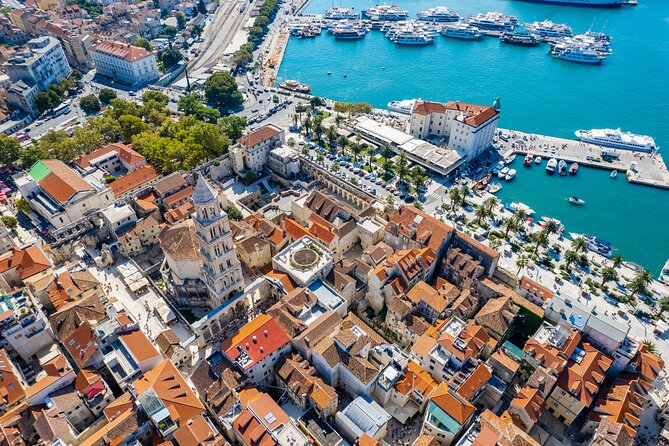
The first stop is the palace complex itself, where you begin with the big-picture story and the layout. Diocletian’s Palace today covers a large slice of Split’s old town and city center, so this is where the walking tour makes its promise: quick understanding of the place, then the fun of moving through it.
You will hear how the term palace can be misleading. The scale is massive, and part of the complex was for Diocletian personally, while the rest supported the military garrison. That mix helps you make sense of what you see next, like walls, gates, and interior courtyards that still feel defensive.
Expect the feel of maze-like streets. The palace area includes lanes and built-up spaces that have that older-city feel, described as something like a 17th century maze, even while the Roman foundation is doing the heavy lifting.
This stop is also your first chance to soak up Mediterranean street life. You are not in a quiet, cordoned-off world. You will be sharing space with the kind of everyday hustle that comes from a living historic center.
The drawback of this kind of “big start” is that the sheer amount of sight can feel overwhelming if you are not listening closely. The guide solves that by pointing out what to look for so you do not lose the thread.
Stop 2: The Peristyle, square-and-theater energy in one place
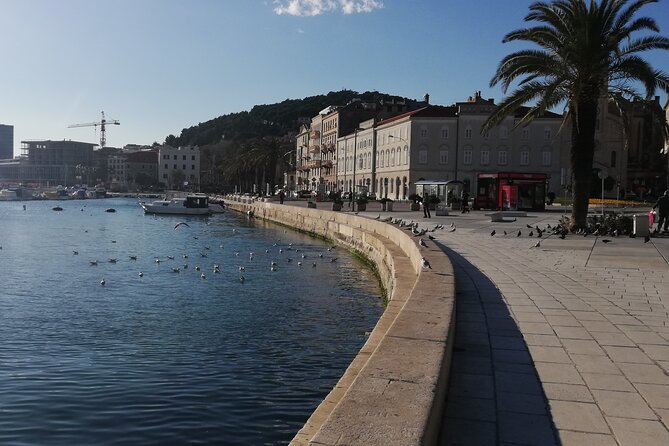
Next you move to the Peristyle, the central square of Diocletian’s Palace. It is described as a hub filled with temples tied to Diocletian’s role and image, including his link to Jupiter as the living son of Jupiter.
This is where the tour becomes more than walls and dates. The Peristyle is also known for unusual acoustics, and it is easy to see why it could become an ideal stage setting. The tour notes that it has been used as scenery for opera classics and works of ancient literature, even as city life continues around it.
For you, that means you are looking at a Roman space designed for public meaning and performance, not just private luxury. The shape and open square give you that “center of gravity” feeling, which makes it easier to orient the rest of the palace.
The stop is short, about 10 minutes, and that is on purpose. You get the key ideas without turning the tour into a long lecture.
A practical tip: take a quick moment to stand still here. Let the space do its thing, then move on. This stop rewards you for pausing, even briefly.
Same stretch of the Dalmatian coast, a different kind of day:
- Split: Krka Waterfalls Trip with Boat Cruise and Swimming
★ 4.8 · 10,519 reviews - From Split: Krka Waterfalls, Food & Wine Tasting Tour
★ 5.0 · 9,326 reviews - Blue cave, Mamma Mia and Hvar, 5 islands speedboat tour
★ 5.0 · 7,150 reviews - From Split: Krka Waterfalls, Food & Wine Tasting Tour
★ 4.9 · 6,598 reviews
Stop 3: Vestibulum, the geometry trick you can feel in your bones
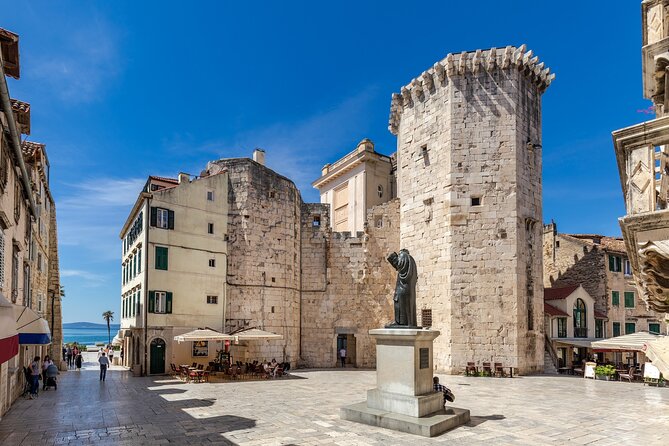
The Vestibulum is next, and the description is one of those neat details that changes how you look at buildings. From the outside, it appears rectangular, but from the inside, the ground plan turns circular.
That inside-out contrast is memorable, and it is the kind of Roman design choice you would never notice as a casual passerby. With a guide, you learn how to “read” the structure instead of just photographing it.
The stop time is about 10 minutes and admission is free for the included areas. So think of this as a quick hit of architecture that adds depth to the bigger story you started in Stop 1.
If you like little design puzzles, this is a great moment. If you do not, you can still appreciate that Roman spaces often had intentional effects, like guiding movement and shaping how people gathered.
Stop 4: Diocletian’s Cellars, the UNESCO reason you will want to remember
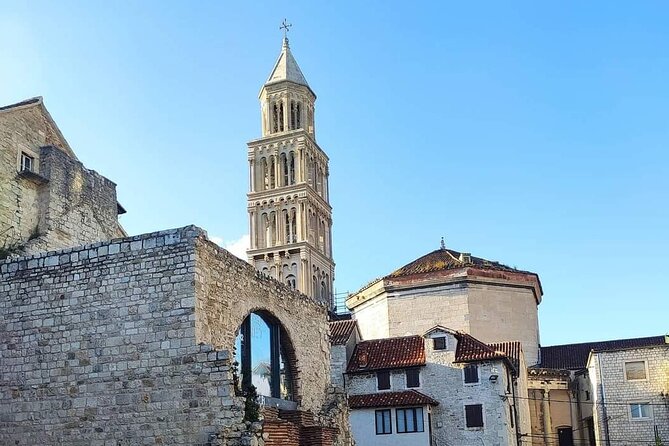
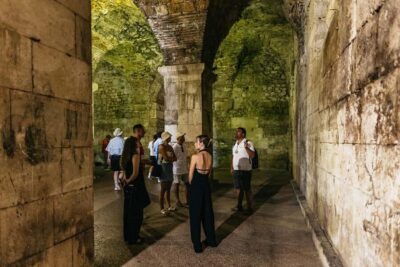
Then you get to the Diocletian’s Cellars, described as part of the palace substructures. These are among the best preserved ancient complexes of their kind, and they play a major role in why Split’s historic core was included on UNESCO’s World Heritage list in 1979.
That UNESCO connection matters because it gives context. You are not just looking at a “nice old area.” You are seeing a part of the palace that helps prove the city core’s significance.
The cellars stop is also about 10 minutes, with free admission for what the tour covers. That short timing keeps the tour moving, but it still gives you a sense of scale and the sense of being under a living city.
One consideration: subterranean or enclosed spaces can feel cooler, and stone can be slick. If you are visiting during warmer months, bring water and keep an eye on your footing.
Stop 5: The Golden Gate (Porta Septemtrionalis) and the emperor’s entry date

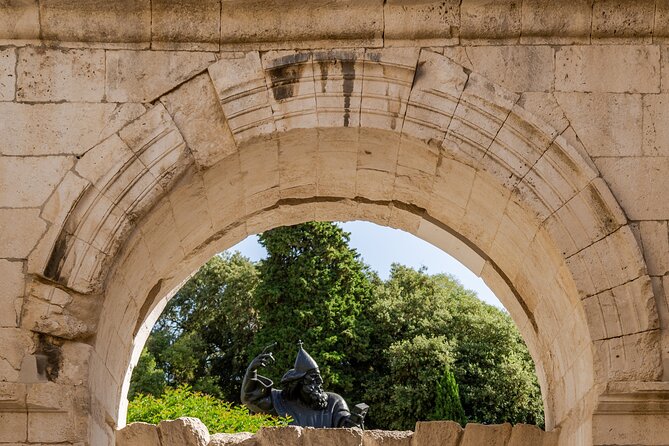
The final major stop is the Golden Gate, known in Roman terms as Porta septemtrionalis. The tour also highlights a specific historical moment: Diocletian walked through these gates as he entered the palace on 1 June 305.
That date is a good mental anchor. When you stand where an emperor entered centuries ago, your photos feel less like souvenirs and more like time travel with good lighting.
The gate is described as rectangular with double doors and tied to defensive military tactics, including reference to propugnaculum. Even if you are not a Roman military nerd, the idea is easy to understand: these weren’t just decorations, they were functional entries designed for control.
For you, this stop closes the loop. Earlier you saw open spaces and interior geometry. Here you see the boundary and the approach, which makes the whole palace complex feel like a planned system rather than scattered sights.
Again, the stop is about 10 minutes and admission is free for the included area, so you end with knowledge, not fatigue.
The guide factor: why friendly, professional storytelling changes everything
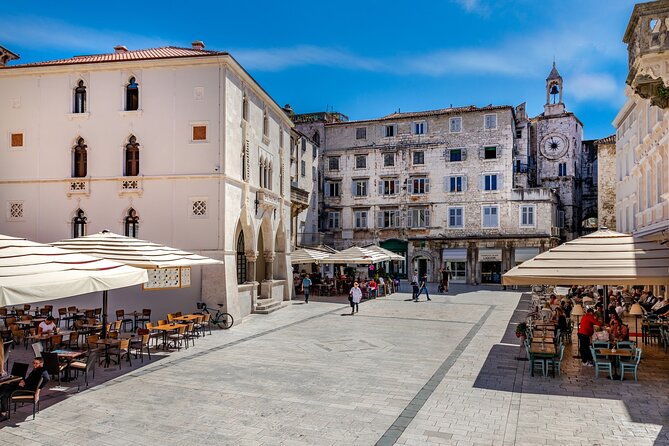
The guide is included, and it is not just someone reading notes. This tour is designed around getting inside tips and making sure you understand what you are seeing as you walk.
The tone matters. In recent feedback I saw names like Luka, Sandra, and Jelena mentioned with praise for being friendly, professional, and genuinely engaged. One guide was even noted for a quirky sense of humor, which is a surprisingly useful tool in old cities, because it keeps you from zoning out.
A strong guide also helps you with the practical part of sightseeing. You get advice beyond the Roman stones, including local tips and even shop suggestions. That matters when you are trying to turn one guided walk into a full day in Split.
Here is how I suggest you use the guide time. Ask one question at each stop that connects the site to your next move, like where to go after the tour for views, or what local street patterns to look for as you wander. The tour is short, so your best strategy is to ask smart, not just lots of questions.
If you travel in high season, timing matters too. One piece of advice linked with this experience is that early morning in August can make a big difference, because you start with better comfort and a calmer feel in the old town.
Admission that is included, and what you might want to add yourself
One of the easiest ways to judge the value is to look at what your money covers. The tour includes the palace-focused stops, and each of the listed stops is marked as admission ticket free.
That means you can spend your time on storytelling, orientation, and site context rather than figuring out separate entries for every piece of the palace core. It also means your decision-making is simpler: you do not have to budget for extra tickets for the included areas.
The cathedral ticket is the only obvious omission in the provided information. If you want it, plan it separately.
Also, food and drinks are not included. The fix is simple: if you want lunch soon after, eat before or bring a snack. With only about 2 hours, you can time your meal break well.
Price and value: is $60.21 worth a 2-hour palace orientation?
At $60.21 per person, you are paying for a guided, organized walk through key parts of Diocletian’s Palace. The value comes from that blend: you get access to the right spots, guided context, and a route that keeps you from wandering blindly through a maze.
This is especially worth it if it is your first time in Split. The palace area is large, and it is easy to get lost in the details. A good guide helps you create a mental map, so the rest of your time in Split becomes easier.
There is also a practical value in the small-group setup and multiple departure options. When a tour has several departure times, you are more likely to find a slot that fits your pace, not the other way around.
One more hint from the booking pattern: this tour is often booked about 45 days in advance on average. That does not guarantee it sells out, but it does suggest demand, so if your dates are set, reserve sooner rather than later.
Finally, mobile tickets are included, which reduces the hassle factor. You show up with your phone, you walk, you learn. No extra steps.
Who this tour fits best, and who might skip it
This is a great fit if you want quick orientation and you like learning as you walk. If you are in Split for a short stay, this type of structured route is a smart way to understand the palace without spending your whole trip reading walls.
It also works well if you care about how spaces were used. The tour touches the emperor’s image tied to Jupiter, the Peristyle’s acoustic reputation and performance ties, and the gate’s defensive design.
You might skip it if you want to spend a half day deeply exploring on your own at a slow pace. With only about 2 hours, you will not have time to read everything, linger in every nook, or add extras like the cathedral as part of the same ticket.
It is also less ideal if English is a problem for you, since the tour is offered in English. If that is a dealbreaker, you will want another option.
Should you book Diocletian’s Palace Small Group Tour in Split?
Yes, if you want a focused, guided way to understand the palace core and leave with a map in your head. It is a good match for first-timers, for travelers who prefer short walking tours, and for anyone who values local street context, not just textbook Roman facts.
I would book it early in your Split stay. That way, the next time you wander the old town, you will recognize what you are looking at and why it is shaped the way it is.
FAQ
FAQ
How long is the Diocletian’s Palace small group tour in Split?
The tour lasts approximately 2 hours.
What language is the tour offered in?
The tour is offered in English.
Are the included sites ticketed?
The listed stops are marked as admission ticket free for the parts included on the tour. Tickets for the cathedral are not included.
What is included in the price?
The tour includes a local guide and a professional guide.
What is not included?
Food and drinks are not included, and tickets for the cathedral are not included.
Where do I meet for the tour?
The meeting point is South Tours Travel Agency, Mrčelina 1, 21000, Split, Croatia.
Is the tour walking-heavy?
Yes, it is a walking tour, and it is suitable for travelers with moderate physical fitness.
Do I need to print anything or can I use a phone ticket?
You get a mobile ticket.
How large is the group?
The tour has a maximum of 99 travelers.
What is the cancellation policy?
You can cancel for a full refund up to 24 hours before the experience starts. Changes less than 24 hours before the start time are not accepted.
Fresh options around Split
- Walking Tour Split★ 4.7 · 61 reviews
- Unique vintage Tomos moped tour Split – Back to the ’80s★ 4.8 · 17 reviews
- Essential Diocletian’s Palace Tour for First-Time Visitors★ 4.8 · 19 reviews
- Split: Trogir Open Top Bus Trip + Free Split Walking Tour★ 4.1 · 17 reviews
- Ranch 22 Podstrana, ” Horse riding 12 km from SPLIT “★ 4.5 · 79 reviews
- Zinfandel Wine Tasting & Storytelling with Dalmatian Food★ 5.0 · 20 reviews
- 1 st Waterbike Safari in the World★ 5.0 · 23 reviews
- Full-Day Quad and Wild Horses Safari in Livno from Split★ 5.0 · 12 reviews
Diocletian's Palace Tours, compared.
Walking Tour of Split and Diocletian’s Palace
Read our review →
Diocletian Palace & Old Town Guided Walking Tour
Read our review →
Game of Thrones Tour with Diocletian’s Palace Cellar
Read our review →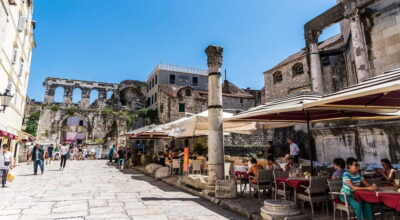
Diocletian’s Palace and Old Town SMALL GROUP Walking Tour
Read our review →
PRIVATE Walking Tour of Diocletian’s Palace & Old Town
Read our review →
Browse the lists this tour appears in