Reviewed · GUIDED
Controversies behind Split and Croatia-Anthropologist guide
What makes this experience interesting is that it does not treat Split like a museum. You walk the center and connect the big monuments to the controversies that locals have argued about for generations, especially around Diocletian’s Palace.
I really like the way the guide uses a teaching style, with visuals and maps on an iPad, and still keeps it fun and human. I also like the scope, you get a practical sense of how geography and politics overlap in everyday city life, from Ottoman-era frontiers to today’s identity debates.
One consideration: it is a 2-hour walking tour, and you will spend time standing, so bring comfy shoes and be ready for less “sit-down sightseeing” than you might expect. Also, it is weather dependent, so plan for the possibility of a date change if conditions are poor.
Key reasons this tour works so well
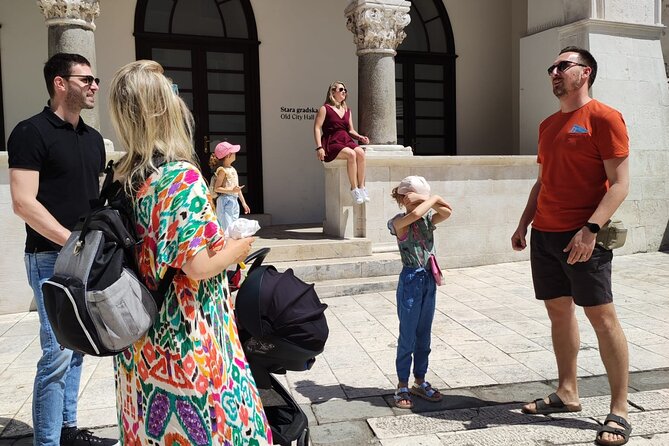
- A controversy-based route that links old stone to modern identity debates, not just dates and facts
- Small group size (max 12) so you can ask questions and actually get answers
- Guide-led visuals using iPad maps and materials to help you place what you are seeing
- Entry tickets included at the start site and at the endpoint, so you are not paying extra for every stop
- A city-center loop that touches major squares, streets, and viewpoints without feeling like a long hike
Why Split’s Old Town Needs an Anthropologist’s Eye
Split is famous for Roman roots, but the real story is how those roots get argued over. This tour treats the city like a living conversation. You are not just looking at walls, you are learning why different eras kept rewriting what those walls mean to people living there now.
That approach is practical. In a place like Split, it is easy to feel lost in a swirl of sightseeing. This tour gives you a thread you can hold onto, the idea that a site can be contested across history, then still shape opinions and identity today.
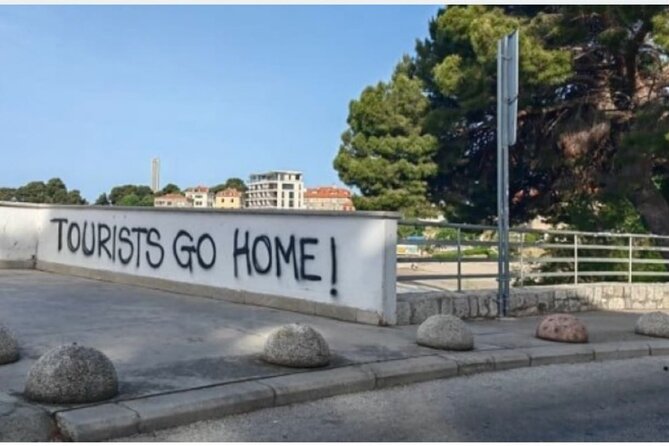
The vibe is also refreshingly grounded. One big theme here is the difference between public signage you might glance at and the larger context behind it. You will get that context in a way that feels like a focused lesson, not a rushed script.
A few more Split days worth comparing
- From Split: Plitvice Lakes National Park Guided Tour
★ 5.0 · 3,002 reviews - From Split: Plitvice Lakes Guided Tour with Entry Tickets
★ 4.9 · 2,468 reviews - From Split: Plitvice Lakes National Park Guided Tour
★ 5.0 · 2,355 reviews
Your Main Thread: The Controversies Behind Diocletian’s Palace
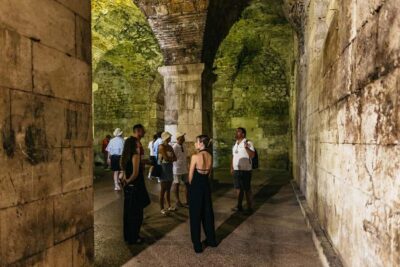
The tour starts at Palazzo di Diocleziano, and this is where the anthropologist angle becomes real. You spend about 35 minutes here, with the tour building the story from the perspective of historical and modern tensions tied to the palace.
This matters because Diocletian’s Palace is not just one moment in time. The palace became a stage for who belonged, who controlled space, and what the past should mean. The tour frames it as something locals have contested in every historical period, so you leave with a sharper understanding of why the palace is still emotionally loaded, even if it looks calm from a distance.
A good sign, from what I would call the “how you can tell a great guide” checklist, is that you get more than surface interpretation. The guide can explain the why behind the controversy, and that makes the palace feel less like a postcard and more like a real civic issue that grew over centuries.
Practical heads-up: entry ticket is included at this stop, so you are not scrambling to figure out what to pay for ahead of time.
Riva and Squares: How Public Space Shapes Split’s Identity
After the palace, the tour shifts to the everyday stages of city life. This is where the experience gets especially useful for first-timers, because squares and promenades are how you orient yourself in Split.
Stop 2: Obala Hrvatskog narodnog preporoda (Riva)
You get about 15 minutes along Obala Hrvatskog narodnog preporoda, the Riva style promenade that functions as Split’s public living room. The tour treats this stretch of waterfront as more than a photo line. It is where public life happens, and the guide connects it to important historical events tied to the city’s changing identity.
This stop is short on purpose. It helps you reset your brain after the palace, then anchor the rest of the walk around “where people actually gather.”
Admission is free here, and you are mostly absorbing context through the route and the setting.
Same stretch of the Dalmatian coast, a different kind of day:
- Split: Krka Waterfalls Trip with Boat Cruise and Swimming
★ 4.8 · 10,519 reviews - From Split: Krka Waterfalls, Food & Wine Tasting Tour
★ 5.0 · 9,326 reviews - Blue cave, Mamma Mia and Hvar, 5 islands speedboat tour
★ 5.0 · 7,150 reviews - From Split: Krka Waterfalls, Food & Wine Tasting Tour
★ 4.9 · 6,598 reviews
Stop 3: Trg Braće Radić and the Ottoman frontier story
Next is Trg Braće Radić, about 15 minutes. This is tied to the old Venetian square, and the guide uses it to talk about turbulent times when Split was described as a frontier fighting the Ottomans.
What makes this more than a history detour is the bridge to today. The tour connects how that period is perceived now, and why it still shapes local politics and identity. If you have ever wondered why a city’s older fears show up in modern talking points, this is where it clicks.
Stop 4: Narodni trg and the feeling of walking over the past
Narodni trg gets another 15 minutes, and the tone changes. Here you learn a less comfortable detail: human remains are under your feet because the location was once an ancient graveyard. Later events also took place there, including infamous ones.
That can sound heavy, but it is handled in a way that makes the city feel honest. You stop treating the ground as neutral. Instead, you start noticing how layered the city is, and why certain places keep meaning more than their official role.
Stop 5: Šperun ulica and the neighborhood behind the tourist stays
Then the tour heads into Šperun ulica, another 15 minutes. This neighborhood is described as one of the most famous areas in Split, and the guide uses it to explain the story behind the place, not just what it looks like today.
This is a smart inclusion because many visitors only see a neighborhood as a place to sleep, drink, or take a quick stroll. The tour frames it as a social space with history, which helps you understand the “why” behind the atmosphere.
Stop 6: Trg Franje Tuđmana and end-20th-century divisions
At Trg Franje Tuđmana, you spend about 15 minutes. The square is named after the first Croatia president, and the guide uses that name as a jumping-off point into the turbulent end of the 20th century, including issues that still divide Croatian society.
This is where the anthropologist lens is most obvious. You are not hearing abstract national talk. You are looking at a physical place named for a person, and learning how memory and public space feed into ongoing disagreement.
Free to visit at this stop, you will mostly be listening, but the payoff is that the city names and monuments start to make emotional sense.
Matejuška as a Finale: Modern Split and the Famous View
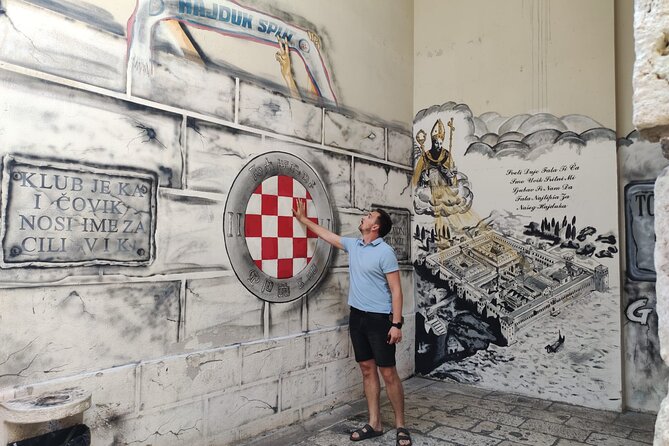
The tour ends at Matejuška, with about 10 minutes here. From this location you get one of Split’s most famous views, and it is chosen as the closing point so the guide can land the final words of the walk with an outlook on modern Split.
This is the part I like most for practical travel reasons. After several stops where you are tracking history, it is good to end somewhere with a clear sense of place. You see the city from a distance, then connect it back to the human stories that shaped the streets you walked.
Admission ticket is included at the endpoint. Even if you are not planning to do more there afterward, this helps the finale feel like part of the experience, not an afterthought.
Meeting the Guide: Why the Delivery Matters
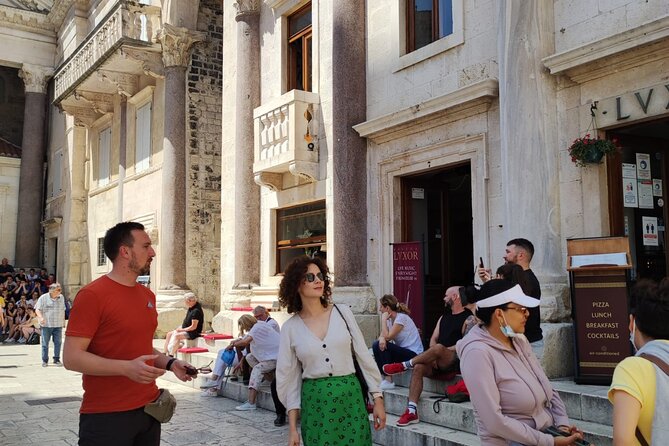
The biggest compliment that shows up again and again is the guide’s preparation and warmth, and I can see why that matters. This is not a tour where you can “tune out” for a few minutes. The themes connect, and the guide keeps tying them together in a way that feels like a class with walking breaks.
Marin, the guide, has a teaching background, and it shows in how he explains things clearly without turning the walk into a lecture. One of the most practical details is his use of maps and visuals on an iPad. That helps you keep track of locations and time periods without the stress of trying to figure it out on your own while walking.
He is also open about questions. If something confuses you, you do not get a vague answer. You get a straight one.
And small-group size reinforces this. With a maximum of 12 people, you are less likely to get swallowed by the group. Instead, you can actually stay engaged, and the guide can adjust the pace when needed.
Price and Timing: Is $35 Good Value for a 2-Hour Walk?
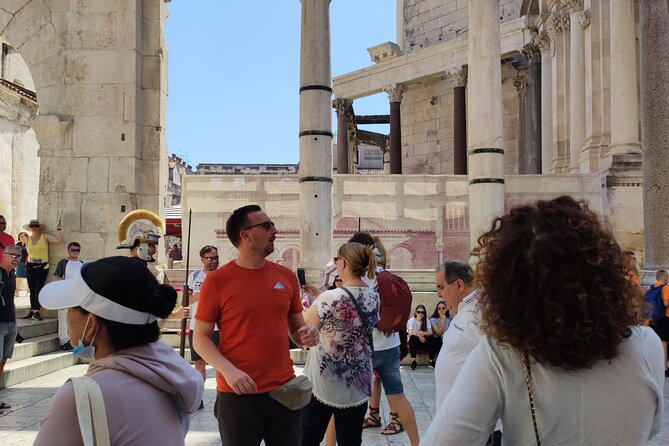
At $35 per person for about 2 hours, the value is strongest if you want interpretation, not just location hopping. What helps here is that admission tickets are included at two key points: Palazzo di Diocleziano and the end stop at Matejuška.
So you are paying for:
- A focused route through the most central parts of Split
- A guide who links locations to controversies and modern identity
- Included entry where it counts
If you planned to visit those sites anyway, this tour can feel like a better deal than paying separately and then trying to piece together context on your own.
Also, the 2-hour duration is realistic. You get enough time to build understanding, without turning it into an all-day commitment that steals your energy for the beach and dinner plans.
When This Tour Fits Best, and When It Might Not
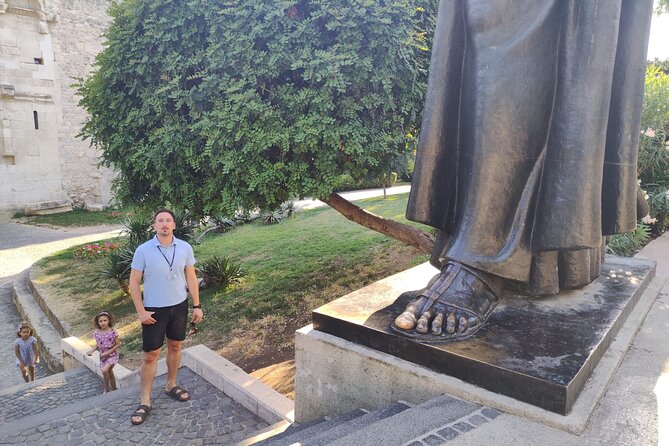
I would book this tour if you want to understand Split as a society, not just a set of famous stones. It is ideal for:
- First-time visitors who want a fast way to get oriented
- Travelers who like history, but also want to know what history means today
- People who enjoy asking questions and getting straight answers
- Anyone who has been bored by “noticeboard facts” and wants more meaning
I would hesitate if:
- You dislike walking and expect lots of sitting
- You prefer only straightforward chronology and minimal political or identity discussion
- You want a purely visual tour with fewer explanations
The best way to think about it is this: it is built for your brain. If you like that, you will probably enjoy every stop more than you expect.
Practical Route Tips So You Get the Most Out of It
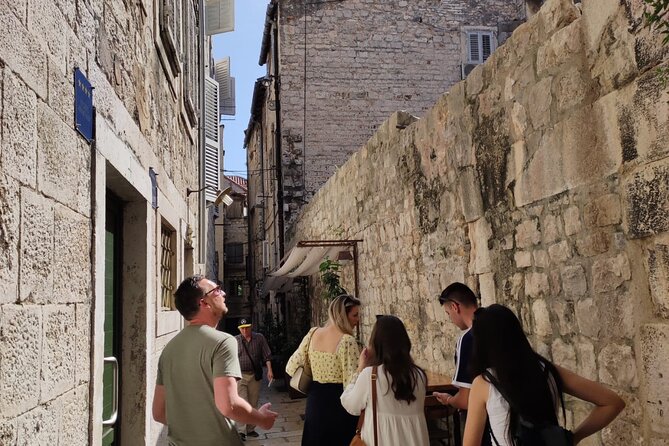
This is a city-center loop starting at Ul. kralja Tomislava 12 in Split, and ending at Trumbićeva obala 2. It is near public transportation, so you can usually reach it without complicated logistics.
Because it runs on good weather, I treat it like a “plan your day around it” activity. If the forecast looks messy, keep some flexibility with the rest of your schedule.
Wear comfortable shoes, because while each stop is timed in blocks of about 10 to 35 minutes, the tour still adds up over 2 hours. And if you are sensitive to standing, arrive ready to move slowly and rest when the guide allows.
Should You Book This Split Anthropological Walk?
If you want more than a highlights loop, book it. This tour is strongest when you care about why places matter, not just that they exist. The included admissions help the value feel real, and the small group size keeps the guide focused on your questions.
It is also a great choice if you are the kind of traveler who wonders why certain names, squares, and landmarks keep showing up in modern arguments. This walk gives you a clean set of connections you can carry with you when you wander Split on your own afterward.
If you are mainly looking for a low-effort photo route with minimal talking, this might be a mismatch. But if you like a small-group, guide-led lesson that turns Split into a living story, this is an excellent way to spend your time.
FAQ
How long is the tour in Split?
The tour is about 2 hours.
What language is the tour offered in?
The tour is offered in English.
What group size should I expect?
The tour has a maximum of 12 travelers.
Are any admission tickets included?
Yes. Admission ticket is included for Palazzo di Diocleziano, and admission ticket is included for the final stop at Matejuška.
Where does the tour start and end?
It starts at Ul. kralja Tomislava 12, 21000, Split, Croatia, and ends at Trumbićeva obala 2, 21000, Split, Croatia.
Is the tour dependent on weather?
Yes. This experience requires good weather. If it is canceled due to poor weather, you will be offered a different date or a full refund.
Is free cancellation available?
Yes. You can cancel up to 24 hours in advance for a full refund.
Fresh options around Split
- Small-Group Communist Tour of Split – Boutique group tour★ 5.0 · 7 reviews
- Split City Tour By Electric Rickshaw┃Riva Ride★ 5.0 · 50 reviews
- Coffee, storytelling & walk – The best private tour of Split★ 5.0 · 46 reviews
- Chill Private Walking Tour of Diocletian’s Palace★ 5.0 · 35 reviews
- Canyoning basic on Cetina river from Omiš★ 5.0 · 66 reviews
- River Rafting from Split- Cliff Jumping- Cave Visit★ 5.0 · 90 reviews
- Private Split City Walking Tour – Spanish Guide★ 4.5 · 12 reviews
- Classic Tuk Tuk City Tour Split★ 5.0 · 80 reviews
Guided, compared.
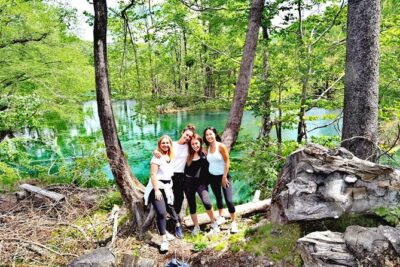
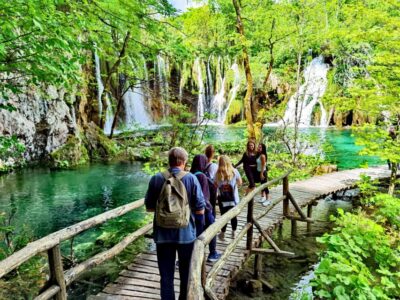
Plitvice Lakes Guided Tour with Entry Tickets
Read our review →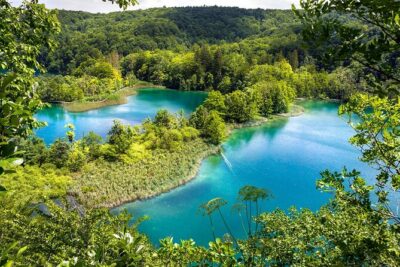
Plitvice Lakes National Park Guided Day Tour from Split
Read our review →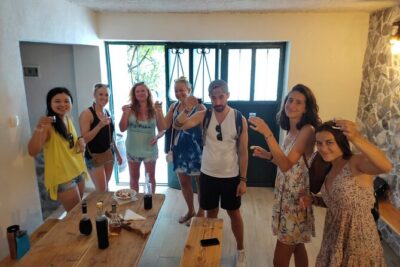
Krka National Park Tour with tour Guide & Wine tasting from Split & Trogir
Read our review →

Self-Guided Plitvice Lakes Day Tour with Boat Ride
Read our review →
Plitvice Lakes: Guided Walking Tour with Train and Boat Ride
Read our review →