
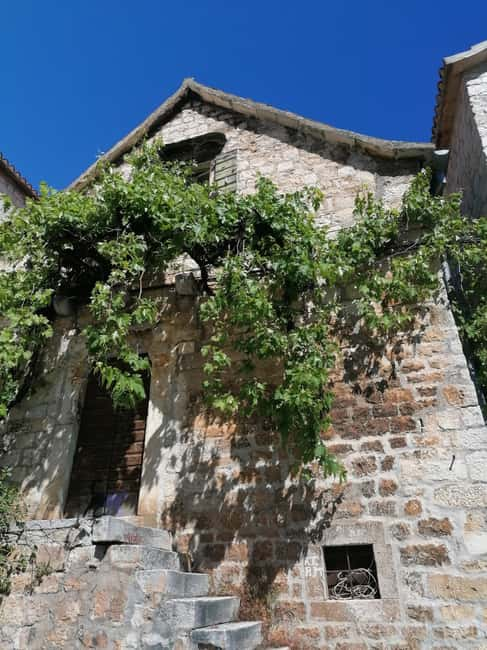
Reviewed · TROGIR TOURS
Trogir; Private walking tour of higlights of Trogir
Trogir is interesting because it is a small city where art, politics, and everyday life all sit close together, so a walking tour turns the stone into something you can actually understand. I love how the route spotlights Cipiko palaces and the St. Lawrence Cathedral portal, not just the big sights but the details that make them feel personal. One possible drawback: this is a proper walk, so you will want comfortable shoes, and weather can change your timing.
What makes this work for many visitors is the private setup, up to 8 people with a licensed local guide, plus the chance to get practical suggestions for the rest of your time in Dalmatia. The tour starts at the north city gate, then strings together the story of the town from medieval streets to the waterfront and up to the fortress.
In one real example of how the guide handles the day, a German-speaking guide managed an unexpected storm over Trogir by shifting the tour by about 3 hours. So yes, plans may flex, but you are not left guessing. Languages are German and English, and you can reserve with pay later options.
Key Things That Make This Trogir Tour Worth Your Time
- Cipiko palaces plus clear context on noble families and what their collecting meant
- St. Lawrence Cathedral with focus on the masterpiece portal, not just a quick glance
- City Loggia and City Hall that explain civic power in a walkable way
- Kairos the Greek god of happy moments, tied into local stories you will remember
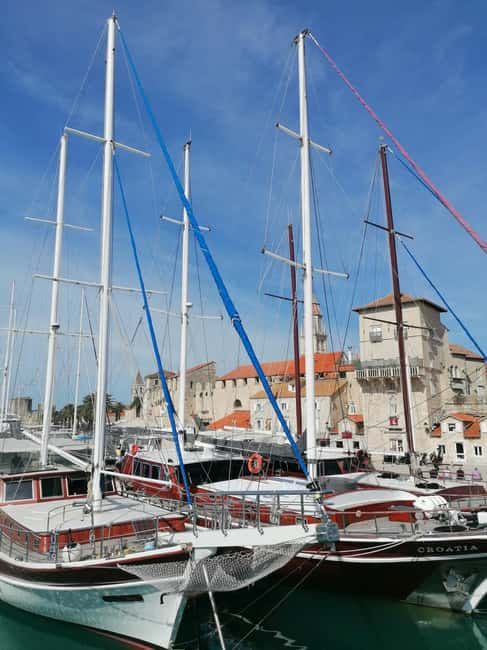
- Riva promenade views with palm trees, sea, and anchored ships as a visual break
- Fortress Kamerlengo to end with a grand, dramatic finish
Private Walking Through Trogir, Where the Details Actually Matter
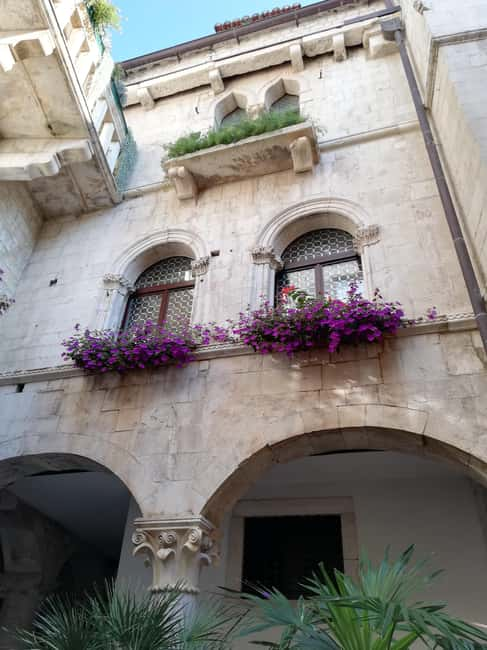
Trogir works best when you do not rush. This private highlights tour is built for that. You start at a real gateway, walk through the medieval streets in a logical order, and stop at places that connect like puzzle pieces. Instead of a checklist, you get the “why” behind what you are seeing.
I like that the guide keeps the story grounded in people. For example, the tour includes the idea that noble families gathered and displayed stone fragments as a way to show respect for the past. That is a small detail on paper, but it changes how you look at carved stone and reused fragments. You start noticing symbols, materials, and what was important enough to be preserved or displayed.
You also get the bigger timeline without drowning in dates. Trogir has been inhabited for more than 3,600 years, and the city drew major artists early on, including Greek influence. The tour weaves that into what you see today, so you are not stuck staring at pretty buildings with no context for the symbolism.
Practical note: this is a walking tour through the historic core. That means you should plan for uneven stone, narrow streets, and some time standing still to look up. Bring water, and dress for the day, not for the forecast you hope for.
More walking tours of Trogir:
- Krka Waterfalls tour with Trogir Walking tour and Krka panoramic boat cruise
★ 5.0 · 1,659 reviews - From Split: Krka Waterfalls Cruise & Trogir Walking Tour
★ 4.7 · 681 reviews - Trogir: City Highlights Guided Walking Tour
★ 4.9 · 199 reviews
Starting at the North City Gate, the Smart Way to Get Oriented
You begin right in front of the north city gate, the main entrance to the city. That matters more than it sounds. When you start at a gateway, you naturally get your bearings and understand how the town’s layout funnels you into its heart.
From there, the guide sets the tempo. You are not just walking from one photo spot to another. You are learning how the medieval street grid and the urban “center” functioned. The result is that you feel less lost and more in control, even if it is your first time in Trogir.
If you like tours that make the first 10 minutes useful, this one fits that style. You do not waste time. You start at a point that explains the city’s boundary, then move inward to the palaces and church that defined status and power.
Cipiko Palaces, Noble Families, and the Art You Can Feel
The Cipiko palaces are one of the main stops for a reason. They are not only pretty. They help you understand how wealthy families displayed their position in stone, and how they linked themselves to what came before.
During this part of the walk, the guide’s focus on noble families gives you a better way to interpret the architecture. You learn that these families collected elements from the past, including stone fragments, as a sign of respect. That detail makes the palaces feel less like museum objects and more like personal statements.
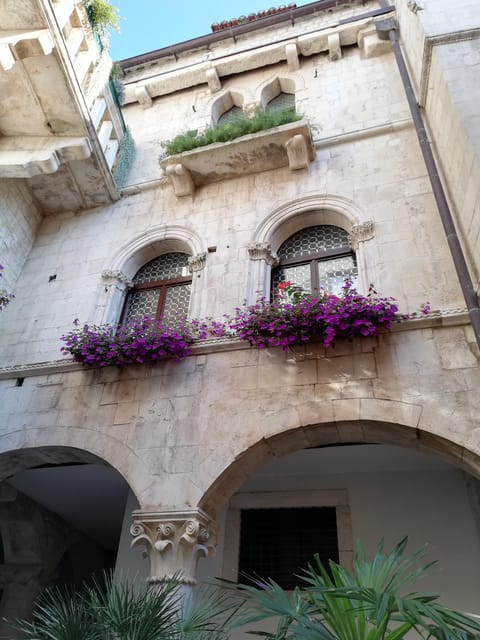
Look up as you pass. With palaces, the “wow” is often on façades and upper details. If you glance only at street level, you miss the part that shows wealth and taste. This is also a good moment to ask the guide to point out what changes from one façade section to another. You will often notice patterns, textures, and decorative priorities.
A small consideration: palaces can be busy visually. There is a lot to look at. The guide helps you sort it, so you do not end up overwhelmed by too many carvings at once.
St. Lawrence Cathedral Portal, Where the Highlights Are Worth Slowing Down For
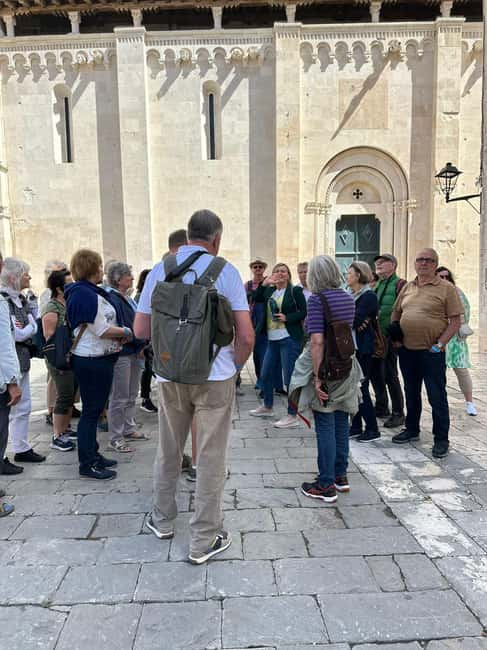
The St. Lawrence Cathedral is a key highlight, especially because the tour focuses on the masterpiece portal. That makes your visit more specific and more satisfying.
Portals tend to be where a cathedral “announces” itself. They often show artistic skill, symbolism, and the kind of message a community wanted to present. By concentrating on the portal, you get more than a quick exterior look. You get a reading of why it is treated as the star feature.
You’ll also notice how the cathedral fits into the medieval streetscape. Even if you have seen churches elsewhere, this one feels part of the town, not dropped into it. That is the difference between skimming and understanding.
If you want photos, plan to spend a moment framing slowly from a few angles. Portals look different depending on where you stand and how high you tilt your camera. The guide can help you find the best spots without wasting time circling.
More Trogir departures and old-town time:
- Split/Trogir: Blue Cave, Mamma Mia, Hvar and 5 Island Tour
★ 4.6 · 6,320 reviews - Blue cave, Mama Mia and Hvar, 5 island speedboat tour from Trogir
★ 5.0 · 2,861 reviews - Krka Waterfalls Day Tour with Boat Ride from Split and Trogir
★ 5.0 · 2,134 reviews - Krka National Park Tour with tour Guide & Wine tasting from Split & Trogir
★ 5.0 · 1,625 reviews
City Loggia and City Hall, Civic Power in Walking Distance
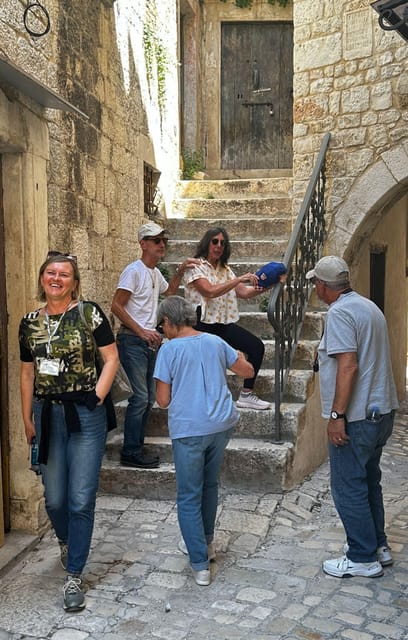
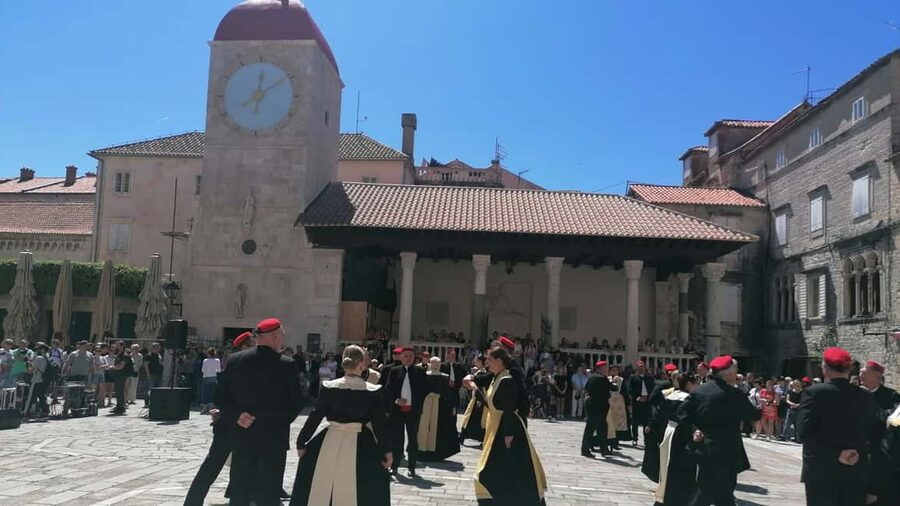
After the cathedral, the tour shifts from religious display to civic life. You stop to discover the secrets of the City Loggia and City Hall. These are the places where the town managed itself, made decisions, and performed power in public.
Why this part matters: Trogir is often described through its architecture, but civic buildings explain how architecture served everyday governance. They show the town’s “public face,” the space where authority met citizens.
When you stand near these buildings with the guide’s context, you start to connect architecture with behavior. You get a sense of who would have gathered, what roles mattered, and how the town communicated legitimacy.
This segment is also a nice change of pace from the church. If you have been staring at stone carvings and religious art, loggias and halls give you a more civic, slightly more grounded feeling. It is still beautiful, but the story shifts.
Kairos, the Greek Happy-Moment God, and How Legends Stick to Place
One of the tour’s most memorable elements is the story of Kairos, the Greek god of the happy moment. It is a clever stop because it turns abstract mythology into something tied to the city’s identity.
You might wonder how a Greek concept becomes part of Trogir storytelling. That is exactly why it is worth including. Trogir has attracted influence over centuries, and legends become a way to hold onto those influences in a human way.
Kairos is not about long speeches. It is about a concept that makes you pay attention. The happy moment is brief, timing matters, and you have to notice it when it appears. That fits a walking tour perfectly, because the best sights are often those quick moments when you turn a corner and suddenly see the sea, the stonework, or the scale of a street.
If you like tours that feel like someone is showing you their favorite way to read a place, this is the kind of detail that makes you feel that connection.
The Riva Promenade Views, Sea Air and a Much-Needed Pause
Next you enjoy a typical Mediterranean view from the Riva promenade. You get sea views, palm trees, and anchored ships. It is a real reset for your eyes.
I like adding a waterfront moment in a city walk. It stops the “all-stone, all-the-time” feeling. You can look far. You can breathe. And the guide’s framing helps you see the waterfront as part of the town’s life, not just a scenic break.
This is also a good point to check your energy level. Walking tours can feel effortless until you realize you have spent a lot of time looking up and stopping frequently. Sit if there is a place to sit, or stand for photos, then keep going.
Practical tip: if the day is warm or bright, use your time here to refill water and protect your face. A promenade stop is a gift, but it can also be direct sun.
Fortress Kamerlengo, Ending With Scale and Serious Views
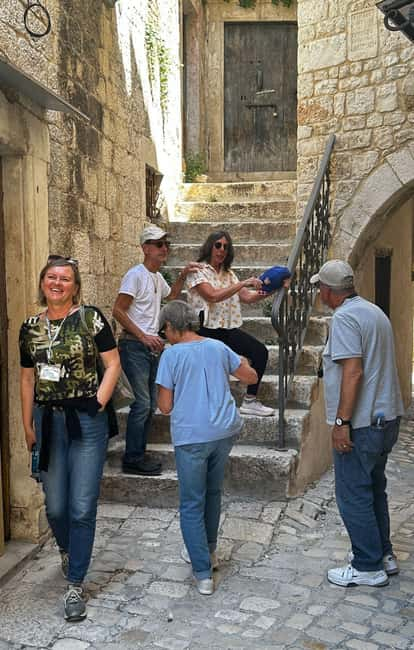
You conclude at the impressive Fortress Kamerlengo. Fortresses do two things well. They give you a sense of defense and strategy, and they give you views. For most people, this is the emotional ending of the tour, the place where the city becomes a panorama.
Even if you are not a military-history person, fortress walls help you understand why the town was built the way it was. The guide ties the setting to the broader story of Trogir, so you leave with perspective rather than just having walked.
Timing-wise, you should expect this part to involve more standing and looking. Weather matters here too. If there is wind, it can be cold even on a mild day, and it can affect how comfortable you feel while taking in the views.
End point note: this activity can end back at the starting point, and there is also flexibility mentioned that the tour can end at another point that suits you. If you want to connect to dinner plans, ask early so the route makes sense.
Price and Value for $129 Per Group Up to 8
The price is $129 per group, for up to 8 people. That is a big value factor because you are not paying per person.
Here is the simple math:
- If you have 2 people, you are paying $129 each on a per-person basis.
- If you have 4 people, it is about $32 per person.
- If you have 6 people, it is about $21 per person.
- If you have 8 people, it is about $16 per person.
So the best value is for small groups, families, or couples traveling with friends. If you are just two people, it can still be worth it if you value private guidance and you want the flexibility of a guide who can set the pace and answer questions as you go.
Also, you get a licensed tour guide included. That is important in historic cores where details matter. A good guide turns “I saw it” into “I understood it.”
What is not included is personal expenses, so plan on any drinks, snacks, or anything you choose to buy along the way.
Practical Tips to Make This Walk Feel Effortless
A private tour can feel fancy, but the basics still matter. Here are the small things that help you get more out of the day.
Wear shoes you trust on uneven stone. Start hydrating early. If you know you get cold easily near the sea or at the fortress, bring a light layer. And give yourself permission to slow down when the guide points out a detail. That is where the payoff is.
If the weather turns, remember that the tour can shift. In one documented case, a guide adjusted the schedule by roughly three hours due to an unexpected storm. That tells me the approach is flexible, not rigid, which is exactly what you want in a place where skies can change quickly.
Languages are German and English, so if you have language preferences, confirm what is available when you book.
Who This Tour Fits Best
This tour is a strong match if:
- you want a private, guided walk through the historic center without time wasted
- you care about meaning behind architecture, especially portals, civic buildings, and palaces
- you travel with a small group, since the group pricing can lower the per-person cost
- you like the idea of stories that connect ancient influence to places you can actually stand in
It may be less ideal if you want a hands-off, wander-at-your-own-speed visit with no planned stops. This is structured. The guide controls the sequence to keep the story coherent.
Should You Book This Trogir Highlights Private Walk?
I would book it if your goal is understanding Trogir, not just collecting views. The route hits the big “must sees” like Cipiko palaces, St. Lawrence Cathedral, and Fortress Kamerlengo, but it also adds the connecting tissue: City Loggia, City Hall, and the Kairos story that links Greek influence to a local way of seeing time.
It is also a smart financial choice if you can fill a group of 4 to 8. You get private attention at a per-person price that often beats other formats in small cities.
If you are only two people and you want maximum value, compare priorities. If you want the guide’s pacing, the context, and the flexibility to ask questions, the private format is still a good fit. If you mainly want to roam independently, you might prefer a lighter plan.
Bottom line: if you like guided details and want your feet to do the exploring without your brain doing all the work, this is an excellent way to experience Trogir.
FAQ
Where does the tour start and end?
It starts in front of the north city gate, the main entrance to the city. The activity ends back at the meeting point.
What is the group size and price?
The tour is priced at $129 per group, up to 8 people.
Is a guide included?
Yes. A licensed tour guide is included.
What is the tour language?
The tour is offered in German and English.
What sights are covered on the highlights route?
You visit the Cipiko palaces and St. Lawrence Cathedral (including the portal), plus stops related to City Loggia and City Hall, the Kairos story, the Riva promenade, and Fortress Kamerlengo.
What is not included in the price?
Personal expenses are not included.
Can I book with pay later and cancel if plans change?
The listing offers reserve and pay later options. Cancellation is possible up to 24 hours in advance for a full refund.
Fresh options around Trogir
- Trogir: White Lagoon, Maslinica & Blue Lagoon Speedboat Tour★ 4.8 · 11 reviews
- Trogir: Old Town Guided Walking Tour★ 4.6 · 76 reviews
- Trogir 1.5-Hour City Tour★ 4.4 · 37 reviews
- Split: Trogir Open Top Bus Trip + Free Split Walking Tour★ 4.1 · 17 reviews
- Trogir: Blue Lagoon, Maslinica, and Solinska Bay Boat Tour★ 4.9 · 88 reviews
- From Split or Trogir: Tour to Mostar and Kravice Waterfalls★ 4.3 · 4 reviews
- Trogir Boat Tour To Secret Underwater Museum★ 5.0 · 50 reviews
- Trogir Old Town History and Monuments Private Guided Walking Tour★ 5.0 · 5 reviews
Trogir Tours, compared.
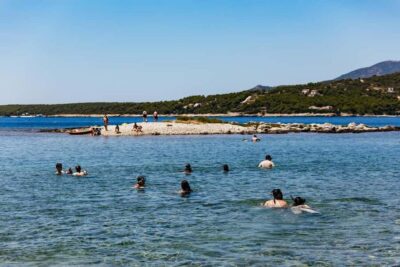
Blue Cave, Mamma Mia, Hvar and 5 Island Tour
Read our review →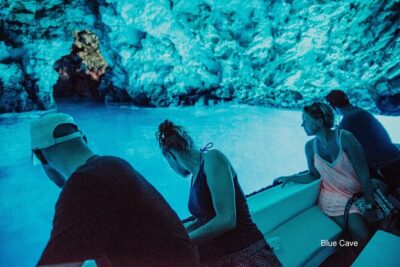
Blue cave, Mama Mia and Hvar, 5 island speedboat tour from Trogir
Read our review →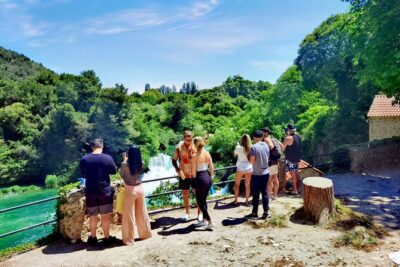
Krka Waterfalls Day Tour with Boat Ride from Split and Trogir
Read our review →
Krka Waterfalls tour with Trogir Walking tour and Krka panoramic boat cruise
Read our review →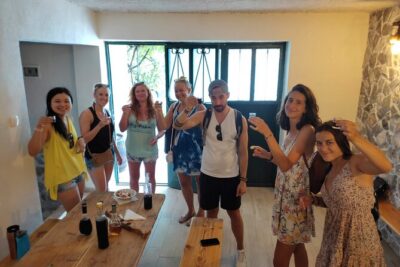
Krka National Park Tour with tour Guide & Wine tasting from Split & Trogir
Read our review →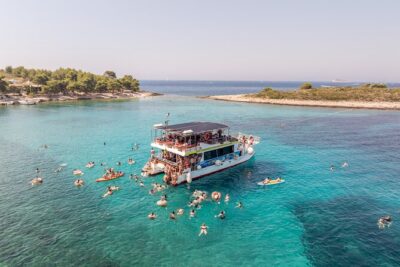
Hvar, Brač & Pakleni islands cruise with lunch & drinks from Split & Trogir
Read our review →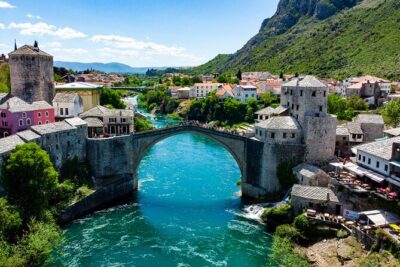
Mostar and Herzegovina Tour with Kravica Waterfall from Split & Trogir
Read our review →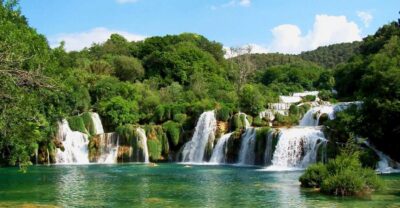
Browse the lists this tour appears in