Reviewed · TOURS
Storytelling World War II in Split Tour
World War II in Split is interesting because the war did not just happen far away. It left marks right on the streets, squares, and even the Roman bones of Diocletian’s Palace. You will see how the city changed under pressure, told in a clear local voice.
What I like most is the archival photographs that help you visualize what you are standing on. You also get storytelling that connects places to events, not random facts.
One consideration: this tour has you standing in a few key spots while the guide sets the scene. It is still a walking tour, but it is not a nonstop stroll, so wear comfy shoes and be ready to listen.
Key highlights you should know before you go
- Local licensed guide, Ina Nikolic, guiding in English with a storyteller’s pace
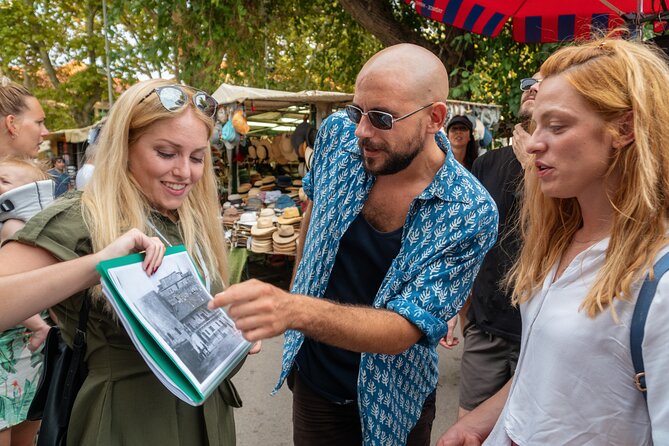
- Archival WWII photos from the Museum of the City of Split archive, used with permission
- Small group size (maximum 15), so questions stay easy
- Center-of-Split meeting flexibility plus pickup available near the port
- Stops designed around major WWII moments across riva, markets, gates, squares, and Prokurative
- Free admission tickets for each listed stop
How World War II shows up in Split’s streets
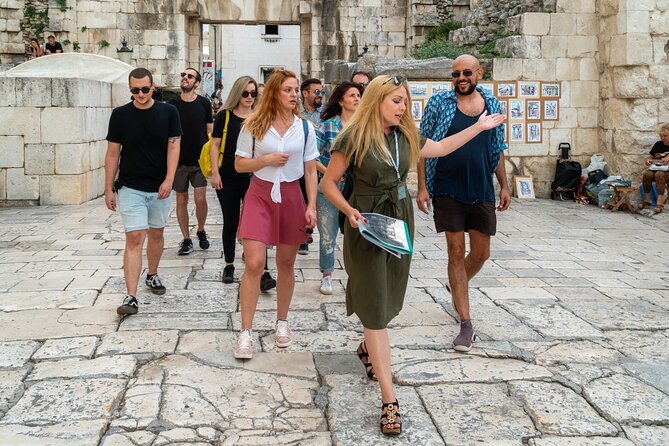
If you love history but hate museum-only tours, this one is a good fit. Split is already atmospheric, with Roman architecture up front and everyday life moving around it. This experience adds another layer. Instead of treating WWII like distant background, the guide frames it as something that unfolded block by block, target by target, and day by day.
You start and end in the historical center, near the waterfront promenade and Trg Republike. That matters because you are not hopping between far-flung sites. You are moving through the same kind of spaces locals still use, which makes the war feel less like a textbook chapter.
Also, the guide leans into story, not lecturing. The tone is direct. You hear what happened, where it happened, and why that spot mattered. Then you look around and compare the modern street to what must have been happening here decades ago.
More of Split worth an open tab:
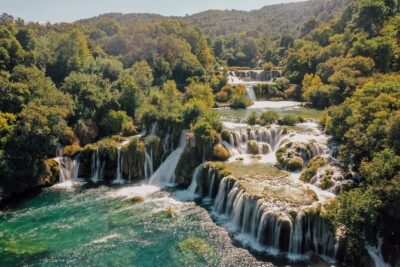
- Split: Krka Waterfalls Trip with Boat Cruise and Swimming
★ 4.8 · 10,519 reviews - From Split: Krka Waterfalls, Food & Wine Tasting Tour
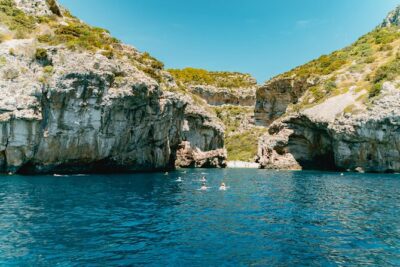
★ 5.0 · 9,326 reviews - Blue cave, Mamma Mia and Hvar, 5 islands speedboat tour
★ 5.0 · 7,150 reviews
Meeting at the Split waterfront, starting at Obala Hrvatskog narodnog preporoda
The tour starts along the riva area at Obala Hrvatskog narodnog preporoda 27. If you are meeting on foot in central Split, that is a convenient spot to orient fast, especially if you want to stroll the waterfront after.
If you prefer pickup, there is an option near the port area, listed at Trajektna luka Split, Obala kneza Domagoja. That can help if your day starts with a ferry or you just do not want to navigate right at the start.
Either way, the vibe is the same: you gather, then the guide sets up the story of how the war began impacting Split. You learn the when and the why, so later stops make sense instead of feeling like separate anecdotes.
Expect about 15 minutes at the first place, then you move on. The pacing is designed for short attention spans and tired legs, with enough stops to keep you grounded in the map.
Green Market bombing stories at the heart of daily life
Next you head to the Green Market area, where the guide points out the most horrific bombing in Split. Markets are the opposite of war. They are where people go for everyday needs, not sirens and shelters. So having the darkest event explained here hits harder than you might expect.
This stop also tends to be memorable because it is not an abstract description. The guide ties the event to the setting you can still picture. You get a better sense of how quickly normal routines can break.
It is another about 15 minutes, and it is worth listening closely rather than skimming. These stories set up what you will hear at later city-center stops, including the squares and major streets connected to the war’s violence.
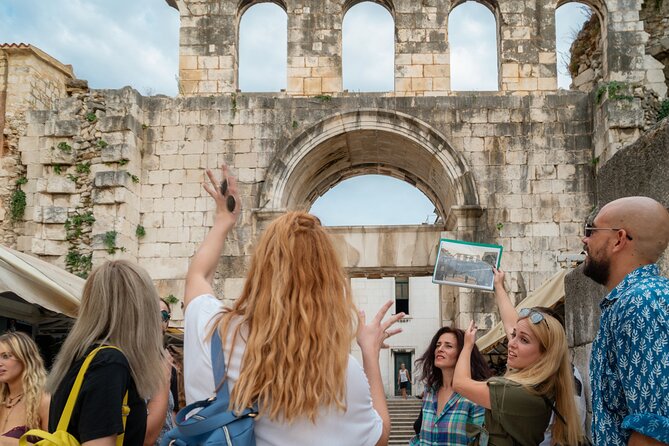
Eastern (Silver) Gate, entering Diocletian’s Palace from the war’s angle
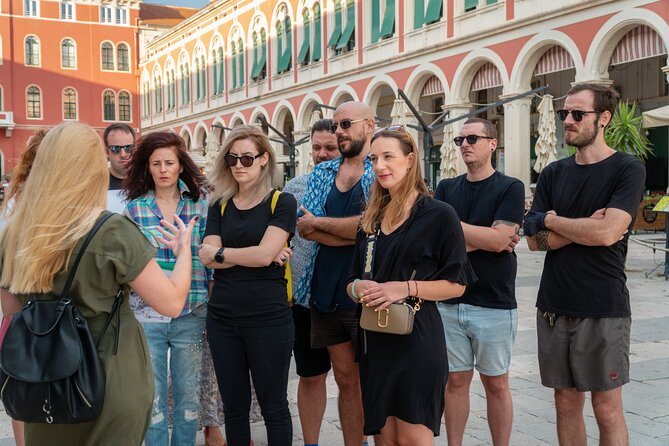
After the market, you walk to the Eastern (Silver) Gate, which is the entrance to Diocletian’s Palace from the east. This stop works on two levels.
First, it is a practical way to orient yourself inside the world of the palace. Second, it frames the war in a place most people associate with ancient power, not modern destruction. You learn what you are looking at, and then you hear how parts of this area were attacked.
This is a short stop, about 5 minutes, but it gives you a key piece of the puzzle. Once you understand the gate and access points, the next areas of Diocletian’s Palace make more sense when the guide talks about what was hit and how the space might have been used.
If you are the type who likes architecture, you will appreciate this brief step. It gives structure to the narrative without bogging you down.
Same stretch of the Dalmatian coast, a different kind of day:
- From Split: Krka Waterfalls, Food & Wine Tasting Tour
★ 4.9 · 6,598 reviews - Split/Trogir: Blue Cave, Mamma Mia, Hvar and 5 Island Tour
★ 4.6 · 6,320 reviews - Blue Lagoon & 3 Islands Cruise with Lunch from Split
★ 4.5 · 5,756 reviews - Split: Old Town and Diocletian Palace Walking Tour
★ 4.9 · 4,727 reviews
The Peristyle of Diocletian’s Palace: where Roman space meets WWII damage
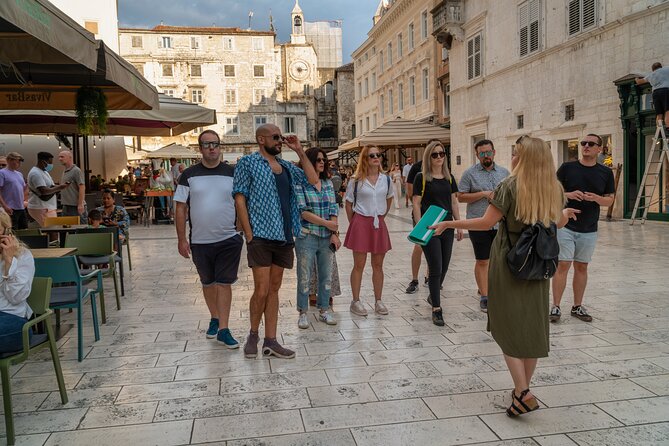
From the gate, you move into the Peristyle of Diocletian’s Palace. This is the big, open heart of the palace complex, and the guide uses that physical space to explain which parts were attacked during the war.
Here the tour does something smart: it does not treat the palace as a static backdrop. Instead, it treats it like a living environment, where the shape of the area influences what can happen inside it.
You get around 15 minutes here, which is enough time to (1) look around, (2) understand the guide’s key points, and (3) let the contrast land. Roman columns and WWII stories is a strange pairing, but that is exactly why it sticks.
One small reality check: palace stops can mean standing where the sun hits. Bring water, and dress for the weather. You are not just taking photos, you are absorbing a story.
Narodni Trg and Marmontova Ulica: the main square and the main street under pressure
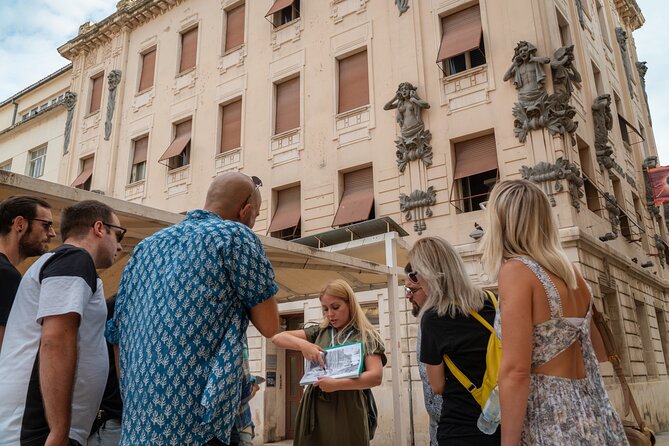
Two of the most impactful pieces come in quick sequence.
First is Narodni Trg, the city’s main square. The guide explains what terrible events took place there during the war. This is the kind of stop that feels both public and personal. Public, because a square is where crowds gather. Personal, because a story told in a specific corner of a square makes the event feel immediate.
You then head to Marmontova Ulica, the main street of the town. This is a short visit, around 5 minutes, but it matters because it shows war as something that moves through everyday routes. Streets are how people get to work, to schools, to markets, to shelters. That is what makes the story feel grounded.
The pairing of square and street helps you see the city as a network. The guide essentially shows how violence was not isolated to one battlefield-like place. It unfolded across the places people had to pass through.
Prokurative: prisons and executions, ending near Trg Republike
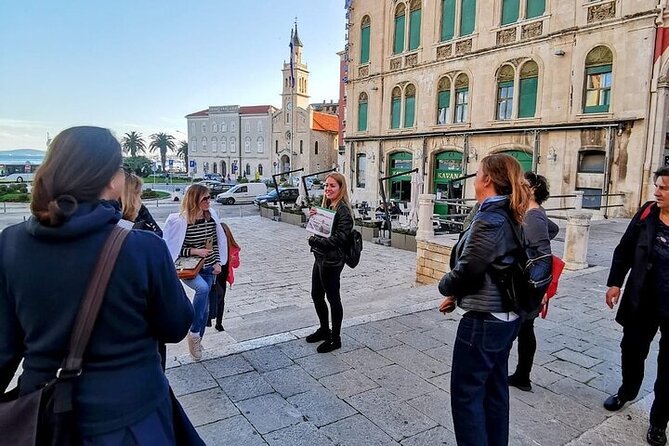
The tour ends at Prokurative, at Trg Republike. This is where the guide explains prisons and executions during the war.
This final stop is the emotional finish. The earlier locations set the stage with bombing and damage. Here the story turns toward punishment and what happens when the war machinery tightens.
You get about 15 minutes at the ending point. After that, you are free to continue exploring on your own. Since the tour stays in the old historical center and is near the promenade, it is easy to tack on a slow walk by the waterfront.
I recommend planning something calm afterward. Even if you are a history fan, the subject matter is heavy.
Why the old WWII photos matter more than you think
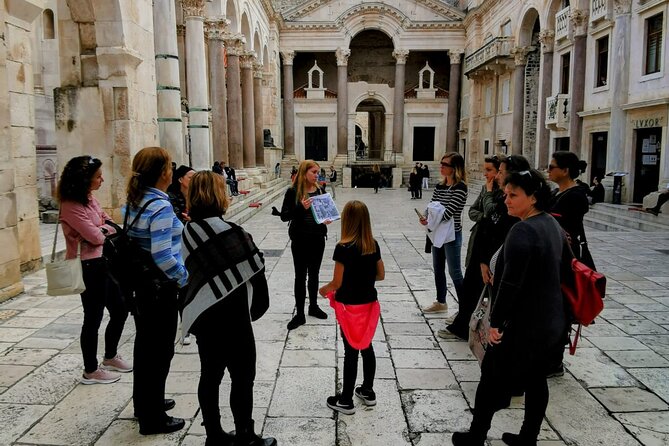
A big part of the value is the tour’s focus on archival photographs. These images are kept in the archive of the Museum of the City of Split. They are not always on permanent display, but the guide has permission to use them for the tour.
What this does, in practical terms, is fix the imagination problem. Without photos, you might hear the story and think, sure, that could have happened there. With photos, you can compare the then-and-now instantly.
In fact, I love how the photos support the guide’s pacing. She can point to an angle, a street context, or a kind of scene, then you can look at the real location and connect the dots. It is much easier to remember a place once you have an image to attach to it.
The best part is that the photos do not float in space. They connect directly to the exact corners you stand on.
The guide, Ina Nikolic, and what her storytelling adds
The guide leading this experience is Ina Nikolic. A licensed local guide matters here. You want someone who knows Split beyond the basics, and who can explain why specific sites mattered during the war.
From what you will experience on the walk, Ina’s approach is strongly narrative. She tells stories that make the city feel like an active participant in history, not just a scenic setting.
She also covers extra historical connections. In particular, there is a focus on Jewish history and the way later conflict in the 1990s connects back to the region’s long shadow. That helps the tour feel less like a single-date stop and more like a lesson in how modern identity and conflict shaped the area.
Pacing, group size, and comfort tips that actually help
The tour runs for about 2 hours. With a small group maximum of 15 travelers, you will likely have more room to ask questions, and the guide can adjust as the group responds.
Still, it is not a hike. One review noted that there is a fair amount of standing compared with walking. That is consistent with a story-based approach, especially when the guide wants everyone facing the same direction for photos and explanations.
So plan for:
- comfy shoes (the city center is walkable, but you are standing during key points)
- sun protection or a light layer (you will be outside)
- patience for the heavier parts of the story, especially at the end around prisons and executions
If you like learning in short blocks, the tour’s structure helps. You get several stops, each with a focused time window, so you stay engaged instead of getting stuck in one long lecture.
Price and value for a WWII tour in Split
At $60.01 per person for roughly 2 hours, this is not a bargain-basement walking tour. The upside is that you are paying for a lot of interpretation, plus access to WWII materials through archival photos tied to the city’s museum collection.
You also get:
- a local licensed guide (with storytelling skill and historical focus)
- a small group (maximum 15)
- free admission tickets for each listed stop
- pickup offered in the port area if you need it
- a mobile ticket approach
For me, the real value is the combination of guided narrative and visual proof. If you normally skip paid history tours because you think you will get generic info, this one is built to correct that assumption. The tour is only as long as it needs to be, yet it gives you enough time at key places to feel the timeline.
Who should book this tour in Split
Book it if you:
- want WWII history in Split that stays grounded in real street locations
- like a guide who uses photos to make history concrete
- enjoy cities where ancient sites, like Diocletian’s Palace, can be discussed in multiple eras
- are okay with heavy subject matter, including bombings, prisons, and executions
You might think twice if you:
- dislike standing in place while listening
- prefer only light, everyday sightseeing with minimal war content
Should you book this WWII storytelling tour with Ina?
Yes, I would book it if you are in Split for more than a quick stop and you want your history to have shape. The tour keeps you in the center, uses archival WWII photos, and focuses on a tight set of locations that explain how the war affected daily life and key city spaces.
If your goal is to understand Split as a living city with layers, not just as a postcard, this hits the mark. And with English guidance, a small group cap, and pickup options, it is also practical.
If you are the type who remembers best through images and specific stories, this tour is one of the smarter ways to spend two hours in Split.
FAQ
How long is the World War II in Split tour?
The tour lasts about 2 hours.
Is pickup available for this tour?
Yes. Pickup is offered at Trajektna luka Split, Obala kneza Domagoja.
Where does the tour start and end?
It starts at Obala Hrvatskog narodnog preporoda 27, 21000, Split, Croatia. It ends at Trg Republike (Prokurative square).
What language is the tour offered in?
The tour is offered in English.
How many people are in the group?
The tour has a maximum of 15 travelers.
Are tickets required or included for the stops?
Admission ticket fees are free for each listed stop.
What is included regarding WWII photos?
You will see old photographs from the time of World War II. They are kept in the Museum of the City of Split archive and the guide has permission to use them.
What is the cancellation policy?
You can cancel for a full refund up to 24 hours before the experience starts. Cancellation within 24 hours of the start time is not refundable.
Fresh options around Split
- Walking Tour Split★ 4.7 · 61 reviews
- Unique vintage Tomos moped tour Split – Back to the ’80s★ 4.8 · 17 reviews
- Essential Diocletian’s Palace Tour for First-Time Visitors★ 4.8 · 19 reviews
- Split: Trogir Open Top Bus Trip + Free Split Walking Tour★ 4.1 · 17 reviews
- Ranch 22 Podstrana, ” Horse riding 12 km from SPLIT “★ 4.5 · 79 reviews
- Zinfandel Wine Tasting & Storytelling with Dalmatian Food★ 5.0 · 20 reviews
- 1 st Waterbike Safari in the World★ 5.0 · 23 reviews
- Full-Day Quad and Wild Horses Safari in Livno from Split★ 5.0 · 12 reviews
Tours, compared.
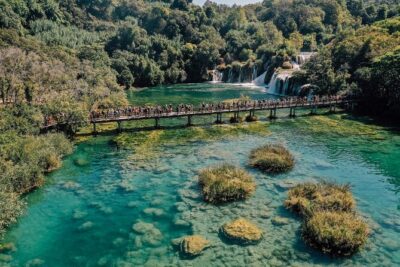

Blue cave, Mamma Mia and Hvar, 5 islands speedboat tour
Read our review →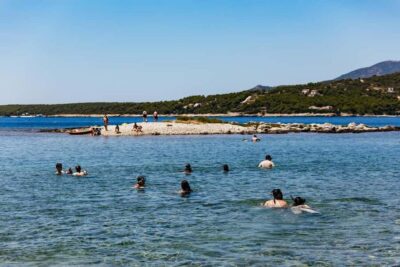
Blue Cave, Mamma Mia, Hvar and 5 Island Tour
Read our review →

Blue Cave & 6 Islands Speedboat Tour From Split or Podstrana
Read our review →