
Reviewed · TROGIR TOURS
Split and Trogir Half Day Tour from Split (with port pickup)
Split and Trogir in just four hours is interesting because you get two UNESCO old towns, plus the story of how Roman power, Venetian style, and local life all piled up in one small stretch of Dalmatian coast. I especially like the easy port logistics and the fact you ride in an air-conditioned coach with live guiding, so you are not stressed about transport. One thing to consider is that it is a moderate physical-fitness outing with some walking, and several major sights have entry fees that are not included.
My other favorite part is the way the itinerary hits “big name” places without turning into a checklist. You start inside Diocletian’s palace complex in Split, then head to Trogir for Romanesque churches and Venetian-period buildings, ending with a mix of cathedral stops and older fortifications like Kula Karmelengo. Just remember, if you are on a cruise stop, you must plan your day so you can handle the end point in Split and the walk back to the terminal.
Key highlights you should care about
- Port pickup and city-center ending: simple cruise-day flow, plus help getting a taxi if needed
- Comfort on the move: air-conditioned coach with live commentary in English
- Two UNESCO towns in one shot: Split and Trogir, each with a very different feel
- Stops that teach you the “why”: from Diocletian’s palace to Venetian-inspired architecture
- Small group size (up to 50): easier pacing than big bus tours
- Mix of ticketed and free sights: you control the cost by deciding which ticketed interiors to enter
Price and value, especially if you are on a tight cruise schedule
The tour costs $78.61 per person for about 4 hours. That price is doing more than buying sightseeing. You are paying for port pickup, an air-conditioned coach ride, and a professional guide with live commentary, plus the taxes and handling charges. For cruise passengers, that convenience can be the difference between enjoying the day and feeling like you are scrambling.
The one cost wrinkle is that entry tickets are not included for several stops. The schedule flags admission ticket not included at Palazzo di Diocleziano, Cathedral of Saint Domnius, and Kula Karmelengo. Some stops are free to view from the outside or access without an included ticket, including Prokurative and Saint Lawrence’s Cathedral (marked free). So if you want maximum “inside time,” budget a bit extra for tickets.
Is it “worth it” if you are a slow traveler? If you like guided context and hate transit hassles, yes. If you prefer to wander independently with no guide at all, you may decide to build your own day. But this one has a strong advantage: you can see the headline sights of both towns in one compact half-day.
More Trogir departures and old-town time:
- Split/Trogir: Blue Cave, Mamma Mia, Hvar and 5 Island Tour
★ 4.6 · 6,320 reviews - Krka Waterfalls Day Tour with Boat Ride from Split and Trogir
★ 5.0 · 2,134 reviews - Krka Waterfalls tour with Trogir Walking tour and Krka panoramic boat cruise
★ 5.0 · 1,659 reviews
Where you start, where you finish, and how that affects your day
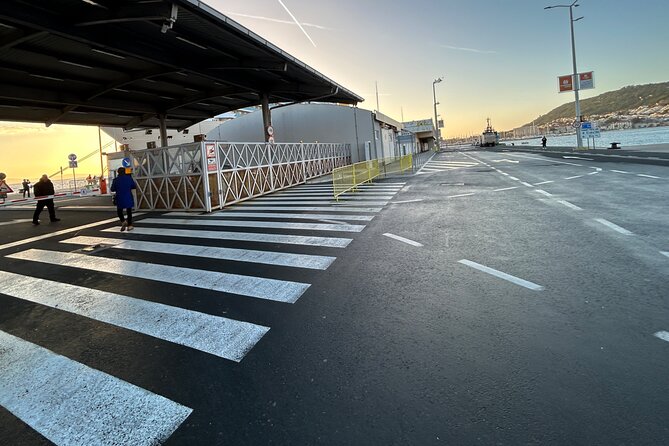
This is built for cruise days with port pickup. The meeting point is the New Split Berth for cruise ships at Obala kneza Domagoja 16 (21000, Split). The tour ends in the Split Riva area (city center). Drop-off is not included, and the tour ends close enough that you likely walk back, with the tour information noting about a 20-minute walk back to the ship’s terminal.
For non-cruise passengers, exact pickup details are sent about one week before via messaging, so you can plan without guessing. Also note that the guide will have a Croatian Trails sign and will be located at the ship’s terminal entrance near the hop-on/hop-off red buses area. The instructions are very direct here for a reason: if you ask random passersby where your guide is, you can end up at the wrong gate.
Timing matters too. The tour operates within a morning window (9:00 AM to 11:00 AM), and cruise passengers are asked for ship name, docking time, disembarkation time, and re-boarding time. That data is used to set pickup timing so you do not get stuck missing your ship.
In the coach with live commentary, and why that is more than comfort
The air-conditioned coach is not just a “nice to have.” It gives you a buffer against Split’s summer heat and makes the timing more reliable, especially when you are doing two towns in one half day. Live commentary means you are not staring at scenery while waiting for a tour guide to catch up.
You will also benefit from the way the guide frames the story. Multiple guides are named in the tour’s history, including Tina, Sandra, Hrvoje, Roko (sometimes spelled Roku), and Josipa. When you get a guide who enjoys the area and explains it clearly, you stop seeing Split and Trogir as random pretty streets and start recognizing patterns, like Roman foundations plus later Venetian design choices.
One small heads-up: the tour lists moderate physical fitness. That usually translates to enough walking that you will want comfortable shoes, even if the itinerary segments are not “all-day hikes.”
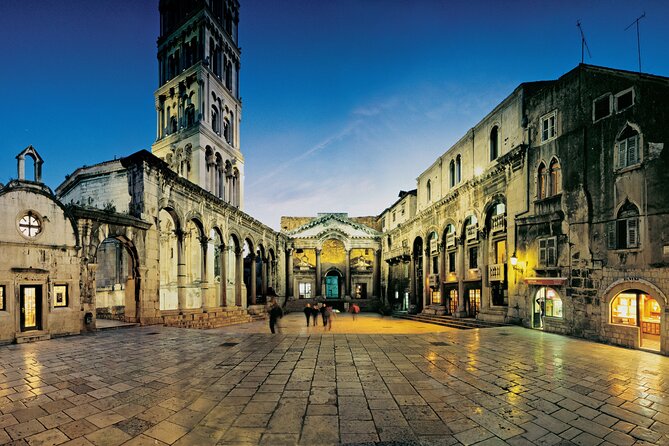
Stop 1, Palazzo di Diocleziano: the Roman core that still shapes Split
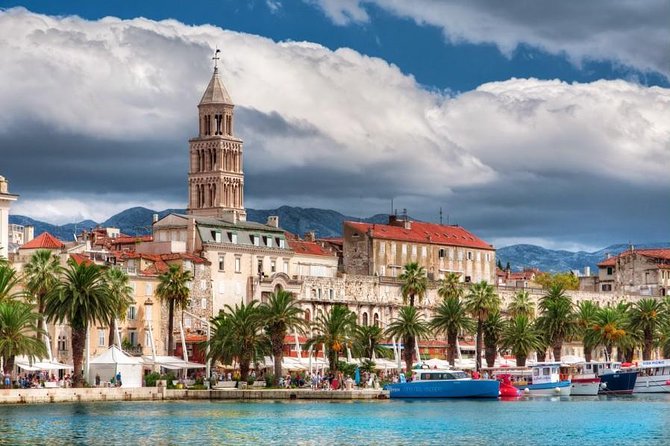
Your first real immersion is at Palazzo di Diocleziano, Diocletian’s palace complex. This ancient palace was built by the Roman emperor Diocletian at the turn of the 4th century AD, and it still forms about half of today’s old town and city center.
What I like about starting here is the “map in your head” effect. Once you understand that so many streets and buildings sit inside the bones of a Roman palace, Split stops feeling like a maze. The palace stop is scheduled for about 20 minutes, and entry is marked as not included. That usually means you will either focus on the exterior and key interior viewpoints, or you can decide on your own whether to pay for additional access.
If you are short on time, this is a smart sequencing choice. You see the anchor of the city first, then you get to compare it with Trogir’s later layers.
More full days out of Split:
- Plitvice Lakes National Park Guided Day Tour from Split
★ 5.0 · 1,948 reviews - Split: Self-Guided Plitvice Lakes Day Tour with Boat Ride
★ 4.9 · 1,519 reviews - Split: Krka National Park Day Trip with Boat Ride & Swimming
★ 4.6 · 1,321 reviews - Split: Blue Cave, Vis & Hvar Full-Day Trip by Speedboat
★ 4.4 · 976 reviews
The ride and the transfer to Trogir: coast views, less stress
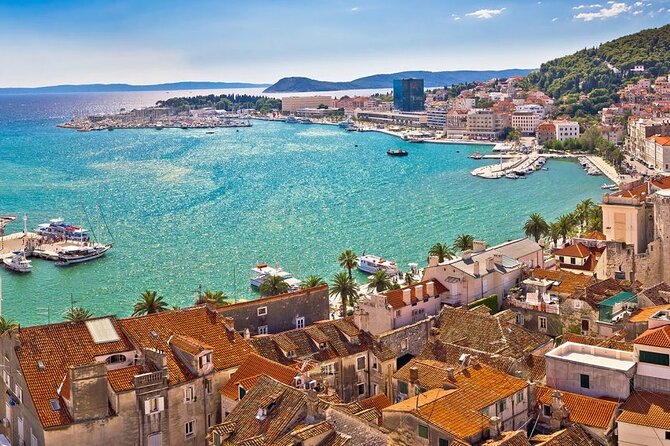
Between Split and Trogir, there is a short ride along the coast. It is not framed as a long scenic drive, but it helps in two ways. First, it breaks up the morning so you are not going from one dense old-town street to another immediately. Second, the coastal approach gives you a sense of how these places relate geographically, which makes the two-town day feel cohesive rather than rushed.
You are also in a group that moves together, so you do not need to find buses, taxis, or parking. That matters when your schedule has cruise-reboarding time built into the day.
Historic City of Trogir: 2,300 years of urban continuity in one walkable town
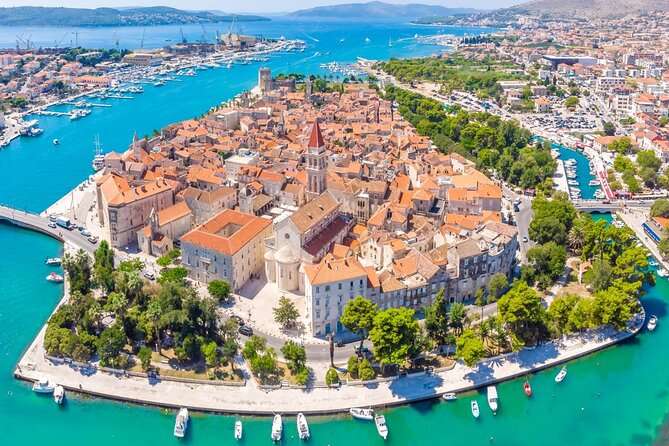
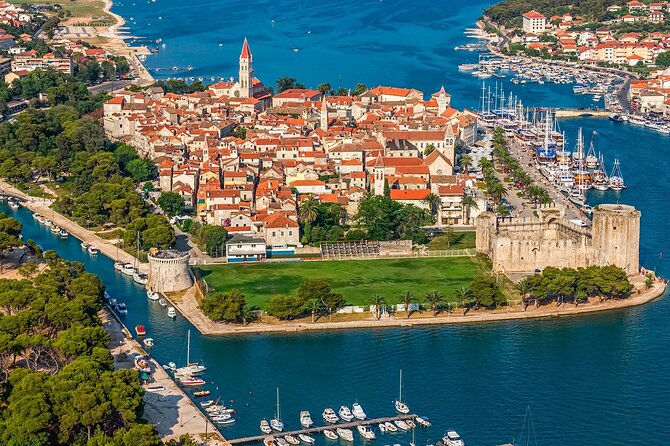
Trogir is where the tour earns its UNESCO label. You get about 1 hour in the historic city, which is described as founded by Greek colonists in the 3rd century BC. The point is not just the Greek origin, it is the idea of continuous urban tradition for around 2,300 years.
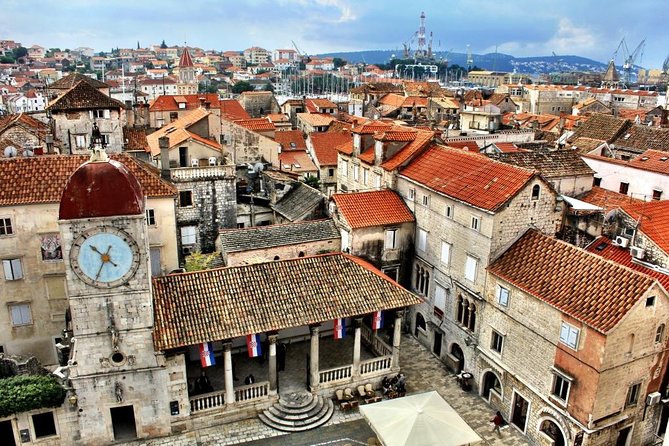
I love Trogir because the architecture does not feel like it was “assembled for tourists.” The schedule mentions Romanesque churches plus Renaissance and Baroque buildings from the Venetian period. In practice, that means you can walk a few streets and see style transitions. One stop might look Romanesque in massing and details, and another might show later Venetian influence, including the look and proportion of façades.
Also pay attention to how small the town center is. One hour is enough to get a good feel if you do not spend it hunting for the perfect photo. If you like to pause, look up, and let the streets guide you, Trogir gives you that chance.
Cathedral of Saint Domnius: a church complex built on Roman foundations
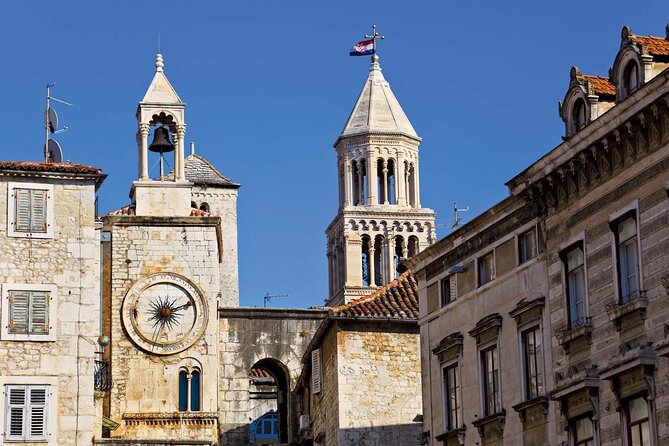
After Trogir’s main street wander, you move to Cathedral of Saint Domnius, scheduled for 20 minutes. The tour description explains it as a complex that connects an Imperial Roman mausoleum, a bell tower, and the church itself. It also notes the church is dedicated to the Virgin Mary, while the bell tower is dedicated to Saint Domnius.
This is the kind of stop where the “what you are seeing” matters. When you know it is not one single building but a layered complex, you start to notice why some parts feel different from others. Entry is marked as not included, so you will decide based on what kind of interior viewing you want versus keeping the day moving.
Even if you only do the viewpoints available without a ticket, the structure is worth your time because it visually links Roman-era presence to later Christian architecture.
Kula Karmelengo: fortification turned cultural venue

Next up is Kula Karmelengo, about 20 minutes. This mid-15th century castle is tied to Marin Radoj and an expansion of the earlier Veriga Tower site. The tour info also notes it is used for performances during summer months, and that the name refers to an administrative official, camerlengo.
I like this stop because it shifts the mood. Instead of churches and façades, you get a defensive structure with an administrative and cultural role. Even a short look can help you understand how Trogir worked as a town that needed protection.
Entry is marked as not included here as well, so you may focus on exterior views and the strategic position of the tower.
Prokurative and Saint Lawrence’s Cathedral: free stops that keep the pacing smooth
Two short stops round out your Trogir time.
Prokurative is scheduled for 15 minutes and is marked as free. It is described as a 19th-century complex supervised by General Marmont and initiated by Split’s mayor Antonio Bajamonti. Architecturally, it is inspired by Italian architecture and closely resembles St. Mark’s Square in Venice. The tour even notes the architect was from Venice and wanted something that felt like home.
Then Saint Lawrence’s Cathedral takes 15 minutes, also marked free. It is described as a Roman Catholic triple-naved basilica with Romanesque-Gothic construction in Dalmatia. Since construction lasted for several centuries, you get evidence of multiple styles in one building, and it is labeled as the most imposing monument in Trogir.
What makes these two stops valuable is the pacing. Because they are short and you do not have to budget entry fees for them, you can spend your money and time where you care most, like the cathedral complex.
How the itinerary rhythm helps you actually enjoy the day
This tour is designed around short, high-impact segments:
- A quick start in Split at Diocletian’s palace area
- Transfer to Trogir by coach
- One solid hour to explore Trogir’s historic core
- Short focused visits at major monuments
You are not stuck for hours in one place. That is important for people who get bored by rigid museum-style tours, or who just need flexibility when the weather changes.
The tour also operates in all weather conditions, and the guidance says to dress appropriately. Croatia coast weather can swing fast, and if you are prepared with a layer or rain option, you stay comfortable.
Group size is capped at 50, which usually helps keep the guide from sounding like a radio announcement.
Who this tour is best for, and who might want to skip it
This is a great choice if you want a guided, time-smart way to see both UNESCO towns on a limited schedule. It is especially well suited to cruise passengers because it handles port pickup and builds the day around re-boarding reality.
You will also enjoy it if you like history explained in plain language, and you appreciate when a guide turns monuments into stories. With guides like Tina, Sandra, Hrvoje, Roko, and Josipa showing up as examples, the tour clearly attracts people who care about communicating the place.
That said, you might skip it if you want total freedom to roam for a full day, or if you are not interested in ticketed interiors where entry is not included. Also consider the walking and moderate fitness note. If you know you struggle with steps and cobblestones, you may want a less stop-heavy option.
My booking decision: should you sign up for Split and Trogir?
If you are on a cruise stop, I think this is an easy yes. You get a compact itinerary, port pickup, and the chance to see both towns’ headline monuments without wrestling with transport.
If you are not on a cruise, it can still be a strong value if you like guided context and want to avoid planning a half-day around two separate towns. The key is to budget extra for the ticketed stops like Diocletian’s palace area, Saint Domnius, and Kula Karmelengo if you plan to go inside.
If that sounds like your kind of day, book it. If your idea of a good trip is slow, independent wandering with no scheduled stops, you might do better with a self-guided route.
FAQ
What’s the duration of the Split and Trogir half-day tour?
It runs for about 4 hours (approx.).
Does the price include port pickup and guide service?
Yes. The tour includes port pickup, a professional guide, and live commentary on board, plus an air-conditioned vehicle and included taxes and fees.
Is the tour in English?
Yes, it is offered in English.
Are entry fees included for the sights on the itinerary?
No. Entry fees are marked as not included for stops such as Palazzo di Diocleziano, Cathedral of Saint Domnius, and Kula Karmelengo. Some stops are marked as free, including Prokurative and Saint Lawrence’s Cathedral.
Is food and drinks included?
No. Food and drinks are not included.
Where do we get picked up and where does the tour end?
Cruise ship pickup is at New Split Berth for cruise ships at Obala kneza Domagoja 16. The tour ends in the Split Riva city center area, and drop-off is not included. The information notes about a 20-minute walk back to the ship’s terminal.
What level of walking or physical effort should I expect?
The tour requires a moderate physical fitness level, so plan for some walking on historic streets and paths.
What if I need to cancel?
You can cancel for a full refund if you cancel at least 24 hours before the experience’s start time. If you cancel less than 24 hours before, the amount paid is not refunded.
Fresh options around Split
- Small-Group Communist Tour of Split – Boutique group tour★ 5.0 · 7 reviews
- Controversies behind Split and Croatia-Anthropologist guide★ 5.0 · 59 reviews
- Chill Private Walking Tour of Diocletian’s Palace★ 5.0 · 35 reviews
- Split City Tour By Electric Rickshaw┃Riva Ride★ 5.0 · 50 reviews
- Coffee, storytelling & walk – The best private tour of Split★ 5.0 · 46 reviews
- Canyoning basic on Cetina river from Omiš★ 5.0 · 66 reviews
- River Rafting from Split- Cliff Jumping- Cave Visit★ 5.0 · 90 reviews
- Private Split City Walking Tour – Spanish Guide★ 4.5 · 12 reviews
Trogir Tours, compared.
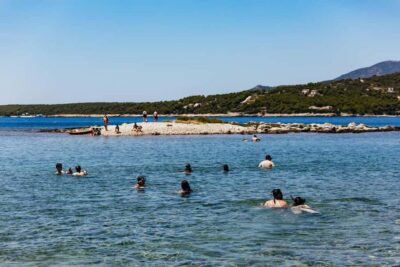
Blue Cave, Mamma Mia, Hvar and 5 Island Tour
Read our review →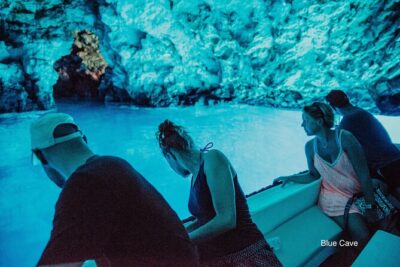
Blue cave, Mama Mia and Hvar, 5 island speedboat tour from Trogir
Read our review →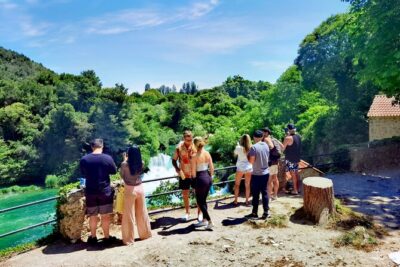
Krka Waterfalls Day Tour with Boat Ride from Split and Trogir
Read our review →
Krka Waterfalls tour with Trogir Walking tour and Krka panoramic boat cruise
Read our review →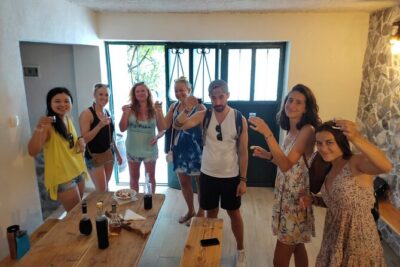
Krka National Park Tour with tour Guide & Wine tasting from Split & Trogir
Read our review →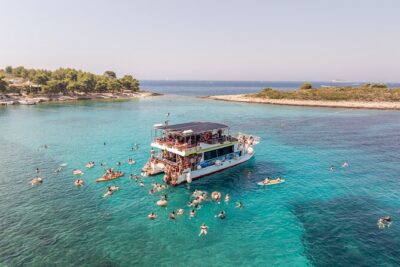
Hvar, Brač & Pakleni islands cruise with lunch & drinks from Split & Trogir
Read our review →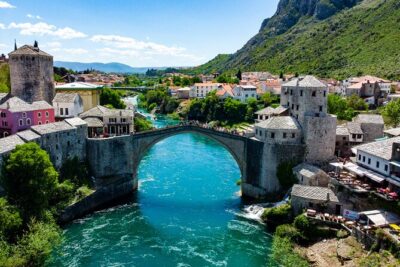
Mostar and Herzegovina Tour with Kravica Waterfall from Split & Trogir
Read our review →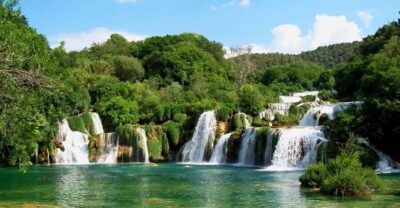
Browse the lists this tour appears in