
Reviewed · SPLIT
People of Split – meet the locals
Split is old, but this tour makes it feel current. It is interesting because you do not just look at Roman ruins, you watch how people still live inside the same walls, streets, and squares. You start by the Riva harbor, then head into Diocletian’s Palace with free admission, all while local guide Mirjana turns the stones into street-level stories. I love the storytelling style, and I love that you get built-in time for photos at the best spots.
The only real drawback is the pace. With roughly 1 hour 20 minutes to 1 hour 35 minutes, each stop is short, so you will leave with great highlights, not a slow, sit-down deep study of every corner.
Key highlights you will feel on this walk
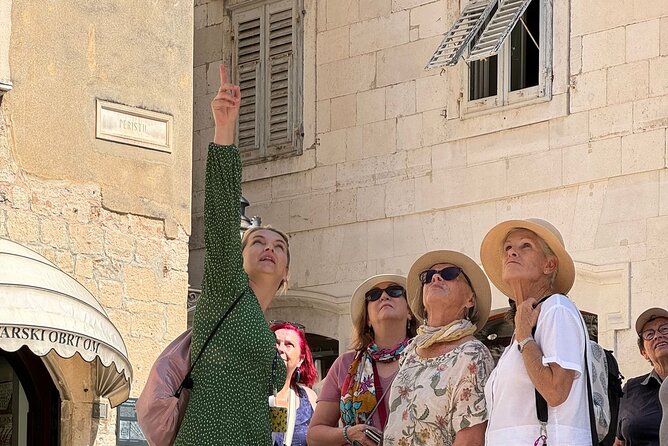
- Meet Mirjana, a native Split guide with a humor-forward approach
- Free entry into Diocletian Palace substructures and key palace spaces
- Photo stops planned at the Split sign, Peristyle, and along the most photogenic routes
- Game of Thrones filming connections tied to the palace substructures
- Dominisova ulica street-life moments, including the habit of residents hanging laundry
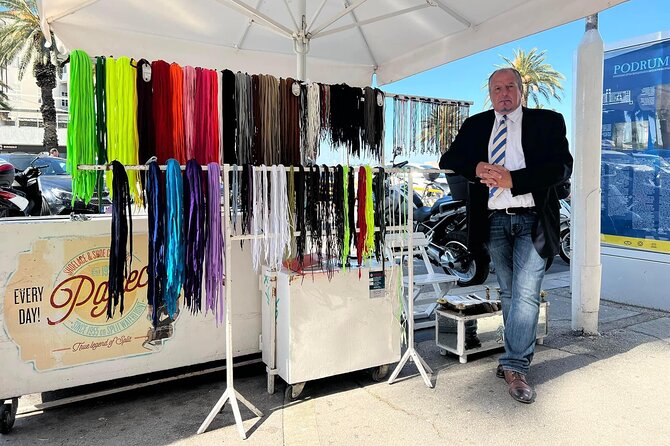
- Narodni Trg and Pjaca, where people-watching and old trades fit naturally into the route
Why People of Split is more than a monuments tour
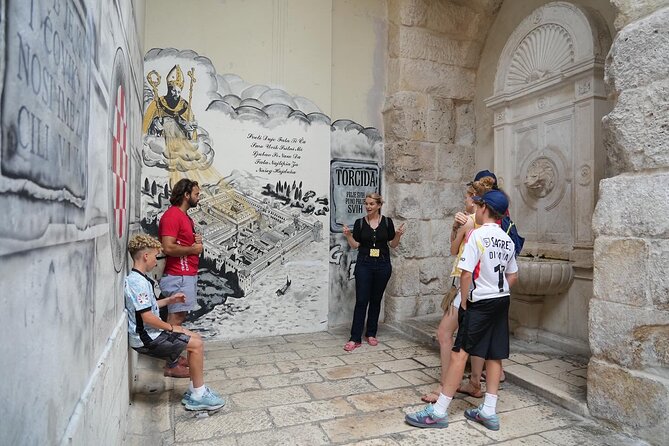
If you only chase big sights, Split can start to feel like a checklist. This experience changes that by treating the city like a neighborhood. You move through Diocletian’s Palace, then step out into the streets and squares where daily life still happens, including places where residents literally lean into view from their windows.
I also like that the tour’s focus is not just dates and stonework. Mirjana’s style is story-first. You will hear why places matter, but you will also learn how Split thinks and how locals talk about their own past, including the heavier chapters of Croatia’s 20th century history that can show up in the guiding conversation.
One more thing that helps: the route is tight and intentional. In a short time, you get variety, from Roman spaces that are still in use to a statue tradition you can join with your own hand, plus a square built outside the ancient core that’s still a daily meeting point.
More of Split worth an open tab:
- Split: Krka Waterfalls Trip with Boat Cruise and Swimming
★ 4.8 · 10,519 reviews - From Split: Krka Waterfalls, Food & Wine Tasting Tour
★ 5.0 · 9,326 reviews - Blue cave, Mamma Mia and Hvar, 5 islands speedboat tour
★ 5.0 · 7,150 reviews
Price and value: a private tour for up to 8, not a crowded scramble
This costs $258.88 per group for up to 8 people. That sounds pricey until you do the math. If you fill all 8 spots, you are roughly at about $32 per person, and you are not splitting attention with strangers in a big crowd.
It is also a private experience, meaning only your group participates. That matters because the guide can adjust as you go. The overall vibe is more personal, and you are more likely to get your specific questions answered without feeling rushed.
On top of that, several key stops include admission ticket free time, and snacks are included. So you are not only paying for guiding, you are paying for access and pacing. If your group is even half-full, it can still feel like good value for a city with so much to see and such a short time window to do it well.
Getting oriented at the Riva harbor and the Split sign
You meet at the iconic Split sign at the Riva harbor area, inside the old city district. The guide starts with a photo right away, which is a simple trick, but it helps you get your bearings fast. You know where the route begins, and you immediately connect the tour to the look and feel of Split’s waterfront.
This first stretch matters more than it sounds. The harbor side gives you context for why the palace and old streets grew the way they did: people needed a strong connection to sea routes, trade, and arrivals. Even before you enter the complex, you can feel the city’s layout forming in front of you.
Timing is brief here, about 15 minutes. That is by design. You are not spending half the tour outside. You are setting a reference point, then moving in.
Practical note: the meeting point is listed at Split sign, 21000 Grad, Split, Croatia, and the tour ends at Golden Gate, Dioklecijanova 7. So you finish still close to the historic core, which is handy if you want to keep walking after the tour.
Diocletian Palace substructures: walking through a still-used layer of history
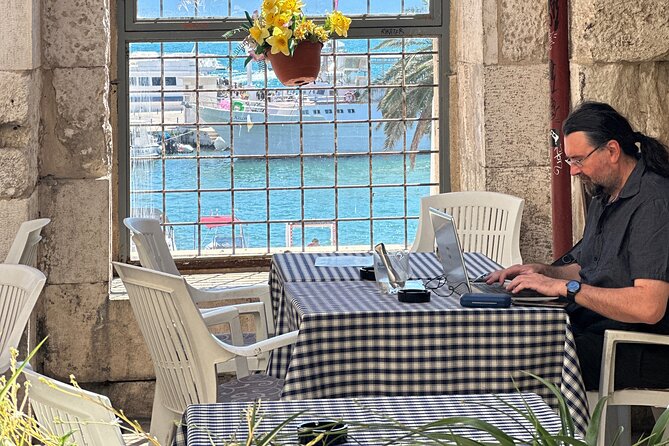
Next you enter the Diocletian Palace substructures, one of the most striking parts of Split for anyone who likes architecture and stories tied to real spaces. The tour description is clear that this is a structure around 1,700 years old and still in use today.
This stop also has a modern pop-culture hook. It connects to filming locations for Game of Thrones, so even if you are not a hardcore history person, you have a concrete visual anchor. The point is not to trade accuracy for TV nostalgia. The point is to show you how the filming tie-ins happen because the spaces have the right scale, mood, and stone character.
You will spend around 10 minutes here. Because it is short, you should think of it as an orientation moment: you learn what you are looking at, and then you move on before you get overloaded.
Same stretch of the Dalmatian coast, a different kind of day:
- From Split: Krka Waterfalls, Food & Wine Tasting Tour
★ 4.9 · 6,598 reviews - Split/Trogir: Blue Cave, Mamma Mia, Hvar and 5 Island Tour
★ 4.6 · 6,320 reviews - Blue Lagoon & 3 Islands Cruise with Lunch from Split
★ 4.5 · 5,756 reviews - Split: Old Town and Diocletian Palace Walking Tour
★ 4.9 · 4,727 reviews
The Peristyle of Diocletian’s Palace: photos, myths, and “still living” corners
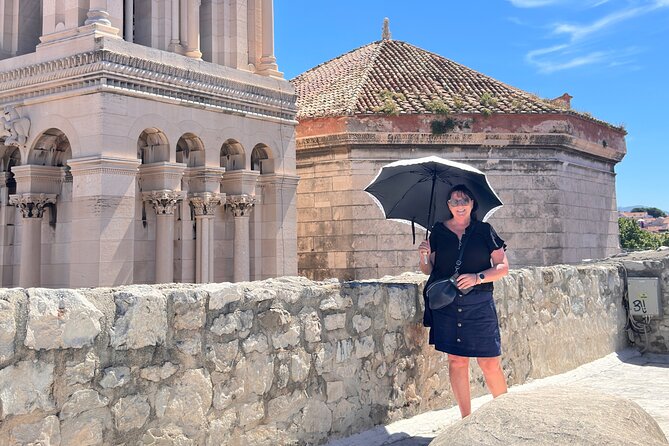
The tour then brings you to the Peristyle of Diocletian’s Palace, built in the 4th century as a retirement home for Roman Emperor Diocletian. This is one of the big open moments, and you will pause for photos and for the stories that make the palace feel more than a skeleton of ruins.
This stop is also where the tour leans into that “People of Split” idea. The description specifically points to hidden corners and secret spots you visit inside the palace area, plus a chance to sample fresh produce from local vendors and meet artisans who have practiced their craft for generations.
Even if you skip buying anything, the value is in what the guide shows you. You learn where everyday life sits inside ancient stone. You notice how commerce and craft still fit into the same footprint, and you understand why residents never treat the palace like a dead site.
Expect about 35 minutes total at this phase, so this is the longest stop. It is the part of the walk where you can genuinely reset your brain and start seeing the city as a living overlap of eras.
Dominisova ulica: learning how locals use the windows and the day
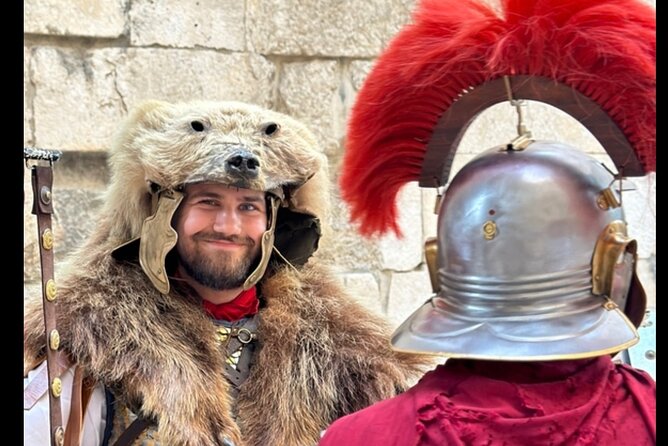
From the palace core, you move to Dominisova ulica, one of Split’s best-loved streets. Here the tour slows down in a different way. Instead of focusing on one monumental object, you focus on people and habits.
The description paints a clear picture of what you should look for: locals leaning out their windows for fresh air, clothes hung to dry, and that casual sense that the street is part of the home. The guide uses this to teach something simple, but powerful. Pause. Observe residents. Respect how the city actually feels.
This is a 10-minute stop, so you cannot win the city with one glance. You will have to do your part by looking at details. Watch how the street connects homes to the flow of visitors. Notice how residents treat sightlines and movement. That is how you get the “people” in People of Split.
Gregory of Nin and the statue toe tradition
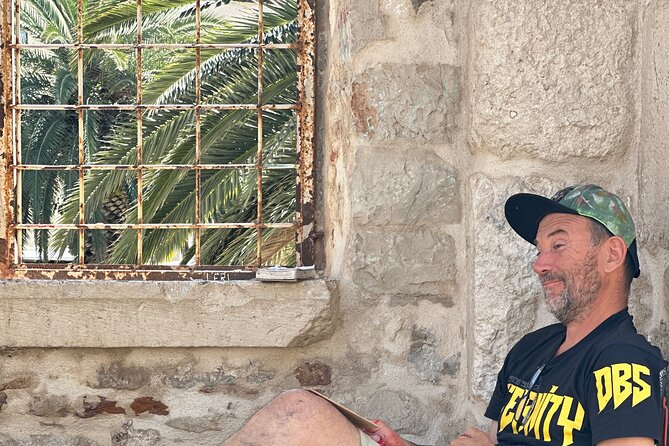
Next comes the Grgur Ninski Statue, tied to Gregory of Nin. The tour includes time to go there, rub a toe, and hear why his statue is in Split.
That toe-rubbing tradition is not just a quirky photo moment. It is a small ritual that turns history into action, and it gives you a physical way to connect with the story. I like these moments because they stop the tour from feeling purely cerebral. You participate, you smile, you remember the reason.
This stop is also about 10 minutes. It fits perfectly after Dominisova ulica because it shifts you from everyday street-life cues back to a single, memorable symbol.
Narodni Trg and Pjaca: trades, activism, and the best kind of people-watching
The last stage brings you to Narodni Trg, with a transition to Pjaca, the first square built outside the ancient city. The description leans into what makes squares useful in a place like Split: people meet, stories travel, and daily life keeps rewriting the meaning of the stones.
You will spend about 10 minutes here, but the guide’s focus is broad. Pjaca is described as a place where people fell in love, where you can spend an entire day just watching, and as a hub of activism that stays alive in Split. The tour also connects the square to old trades, with a chance to see traditional craftsmen at work.
The best value you get from this stop is context. You end with a square that still functions like a square, not a souvenir stage. Even with limited time, you come away knowing where locals naturally walk and talk, which helps a lot once you leave the tour.
The tour ends at Golden Gate, Dioklecijanova 7. That is a very usable finish point if you plan to keep exploring on foot.
Guide style matters: Mirjana’s storytelling keeps it personal
Nearly every highlight in the experience is tied to the guide, and specifically to Mirjana, the local guide from Split. The guiding style is repeatedly described as warm, funny, and story-forward. It is not dry dates and building descriptions. It is about what life in Split means and how the city’s layers connect, from Roman-era foundations to more recent Croatian history.
What I think makes Mirjana’s approach work for most people is flexibility. The tour is designed as a walking experience, but you can still ask questions and get answers that actually match your interests. If you want more Roman context, you get it. If you want human-scale everyday details, you also get it.
One more detail worth noting from the overall experience: you get suggestions for the best photo spots in town. That sounds minor, but it changes your experience. Instead of grabbing random angles, you take photos from spots that match what you just learned, and that makes your pictures feel connected to place.
How this 1 hour 20 minutes to 1 hour 35 minutes tour fits your day
Because the total time window is tight, you should schedule this early enough that it helps you the rest of the day. Think of it as a map that your brain remembers, not just a walk you survive.
Here’s how the pacing works in a practical way:
- You start with orientation at the Split sign.
- You move into Diocletian’s Palace substructures for access and scale.
- You spend the most time in the Peristyle area, including hidden corners and a more cultural pause.
- You shift to daily street life at Dominisova ulica.
- You finish with a symbol moment at Gregory of Nin, then a social square at Narodni Trg and Pjaca.
By the time you reach the end near Golden Gate, you are ready to keep walking without feeling lost.
Practical tips for making the most of it
Since this is a guided walking tour, wear comfortable shoes. Split’s old streets and palace areas can be uneven, and you will be on your feet for most of the experience.
Arrive a few minutes early so you can start with the planned photo at the Split sign without rushing. Also, come with at least one question. Mirjana’s format is built around conversation and storytelling, so your curiosity gets turned into better answers.
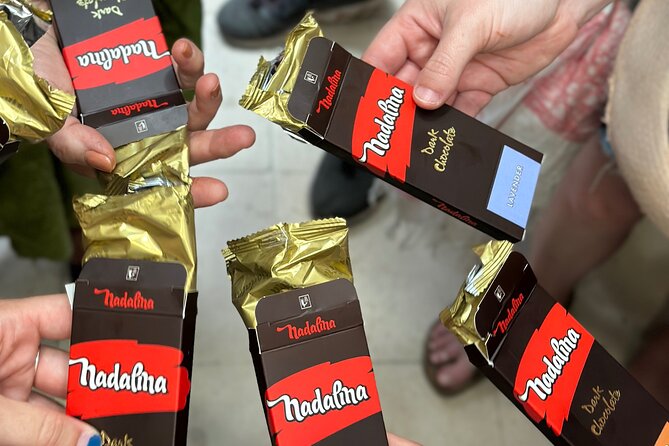
Snacks are included, which helps you stay comfortable through the full route. Tips and gratuities are not included, so if you plan to tip, you will want to have that in mind.
Service animals are allowed, and the tour notes say most travelers can participate. If you have mobility concerns, you might want to consider that you are moving between multiple old-city stops in a short time period.
Should you book People of Split?
I recommend this tour if you like Split as a real place, not just a photo background. It is especially worth it if you want Diocletian’s Palace with context you can actually use, plus the street-level details that explain why locals still treat these spaces as home.
Book it if:
- You want a private experience for up to 8 people and a guide who can respond to your interests.
- You care about the stories behind places, including the Game of Thrones connection at the palace substructures.
- You enjoy photo stops and small rituals like the Gregory of Nin toe tradition.
Skip it if:
- You want a slow museum-style tour with lots of time sitting down in one spot.
- You prefer self-guided exploring with no planned route or time limits at each location.
If your goal is to get your bearings in old Split and leave with the feeling that you met the city, not just visited it, this is a strong choice.
Fresh options around Split
- Walking Tour Split★ 4.7 · 61 reviews
- Unique vintage Tomos moped tour Split – Back to the ’80s★ 4.8 · 17 reviews
- Essential Diocletian’s Palace Tour for First-Time Visitors★ 4.8 · 19 reviews
- Split: Trogir Open Top Bus Trip + Free Split Walking Tour★ 4.1 · 17 reviews
- Ranch 22 Podstrana, ” Horse riding 12 km from SPLIT “★ 4.5 · 79 reviews
- Zinfandel Wine Tasting & Storytelling with Dalmatian Food★ 5.0 · 20 reviews
- 1 st Waterbike Safari in the World★ 5.0 · 23 reviews
- Full-Day Quad and Wild Horses Safari in Livno from Split★ 5.0 · 12 reviews