Reviewed · PRIVATE
Experience Split With Local Professional Historian – Private
A private, two-hour history walk in Split is interesting because the old town is basically a live textbook. You connect street names, arches, and squares to the big story of Diocletian’s Palace and what happened after the Romans faded. I love that your guide is a local master’s degree historian, and I like that you get 3D reconstruction images to help you picture parts of the palace that are hard to see today.
The main thing to consider is timing and weather. This tour runs in the early evening window (Monday to Friday), and it needs good weather, since much of it is walking and looking around outdoors.
Key highlights you’ll feel fast
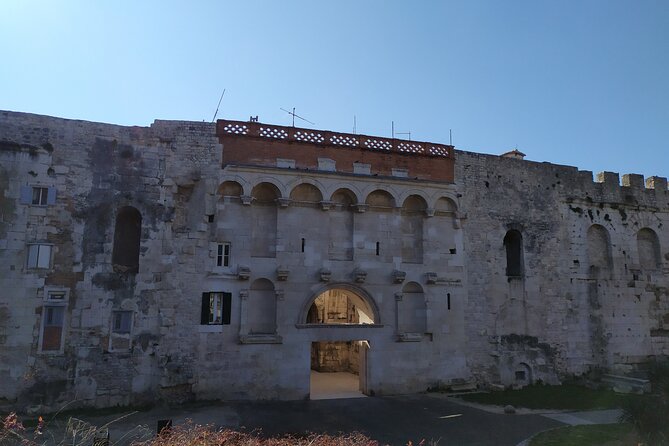
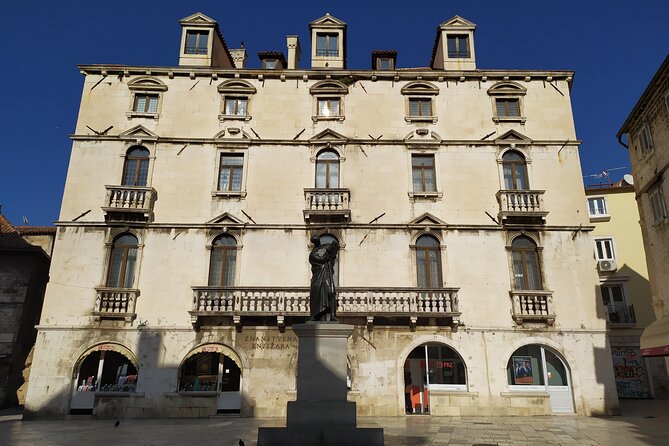
- Golden Gate as your starting anchor, right across from the Gregory of Nin area so the story clicks immediately
- 3D palace visuals that help you understand spaces like cellars and private areas without getting lost
- Diocletian’s Palace from the right angles, including Peristyle and the Triclinium viewpoint
- Roman religion to Christian Split, with the Temple of Jupiter and Saint Domnius Cathedral stops (mostly from the outside)
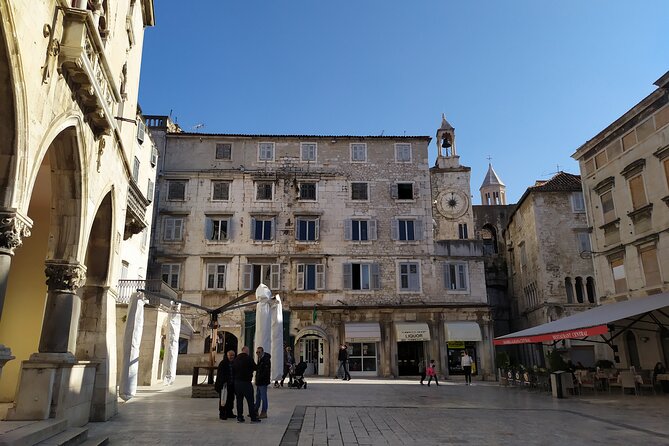
- A smart finish at Pjaca (People’s Square), where your bearings in the old town finally lock in
Why Split’s Roman Core Works So Well on a 2-hour Private Tour
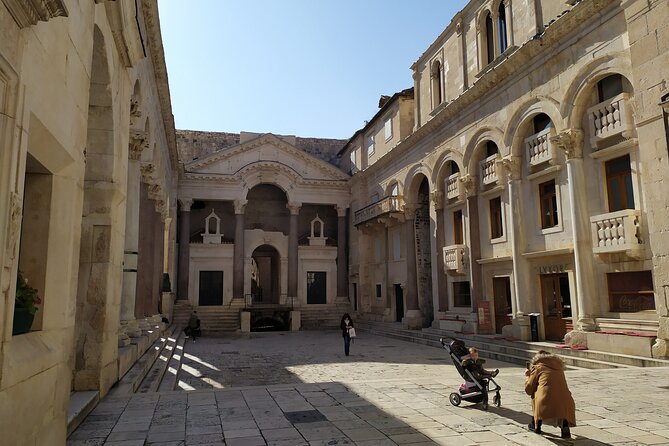
Split’s old town can feel like random stone at first glance. This tour fixes that by moving in an order that mirrors how power and belief evolved there. You start at a palace gate, move through palace spaces, then finish in the civic squares where people lived, shopped, and gathered.
Because it’s private for your group (up to 15), the pace stays practical. You’re not just absorbing facts, you’re learning how to read what you’re seeing, even when a building looks different from the way you expect it to look.
A few more Split days worth comparing
- SPLIT-PRIVATE Walking Tour of Diocletian’s Palace & Old Town
★ 5.0 · 467 reviews - Private Krka Waterfalls tour with 30min Boat Cruse
★ 4.0 · 458 reviews - Split by Private Electric Rickshaw – Palace & Hidden Gems
★ 5.0 · 412 reviews
Golden Gate: The Doorway That Explains Split’s Big Power Move
You meet at Golden Gate (Dioklecijanova 7), the northern gate of Diocletian’s Palace. It might not be made of gold, but it is one of Split’s most recognized landmarks, and the guide uses it as your “map pin.”
From here, you get the palace backstory in plain terms: who Diocletian was, why this place was built, and how the gate’s position connects to the rest of the old city. You’ll also get the useful relationship between Golden Gate and Gregory of Nin nearby, so two separate famous spots start making sense as one connected chapter of the city.
This is a good first stop because the ground truth is right in front of you. You can look across the street and feel how the palace and the later medieval world grew around it.
Gregory of Nin’s Statue: A Famous Figure, Explained Without the Lecture Vibe
Next you’ll head to the Grgur Ninski (Gregory of Nin) Statue. It’s short and focused, but it’s not treated like a quick photo stop. Your guide shares story and key facts about Gregory of Nin and why there is such a major monument dedicated to him in Split.
The value here is context. You learn why this person matters for Split’s identity, which makes later sights feel personal instead of just ancient. It also helps you understand how Split’s history isn’t only Roman. It keeps changing, and that’s part of the charm.
Palazzo di Diocleziano: The Palace That Still Shapes the City
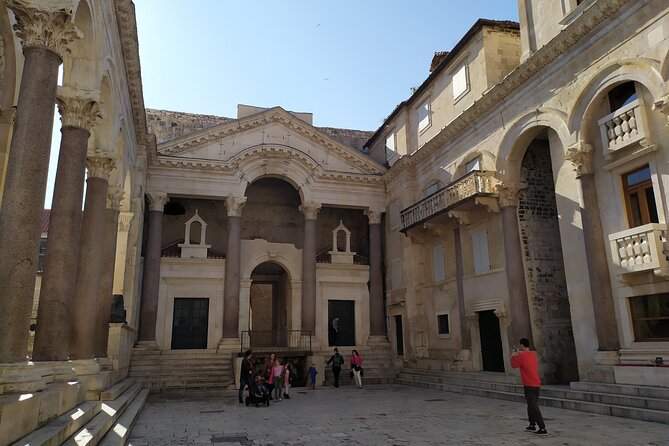
Then you transition into Diocletian’s Palace itself, the main monument in the center of Split. Built by one of the most successful Roman emperors, it remains one of the best preserved palace complexes of its kind.
Your guide frames Diocletian’s role in the Roman Empire and then shifts to what matters most for your walk: the palace’s layout and the “hidden gems” that you can spot with the right explanation. You’ll also hear how the palace transitioned into a medieval city, which changes how you read everything you see today.
This stop is where the tour earns its keep. If you’ve ever toured ruins and felt like you were guessing, the 3D reconstructions and guided viewpoints here help you stop guessing. You learn what to look for, so the stone stops feeling random.
Same stretch of the Dalmatian coast, a different kind of day:
- Split: Krka Waterfalls Trip with Boat Cruise and Swimming
★ 4.8 · 10,519 reviews - From Split: Krka Waterfalls, Food & Wine Tasting Tour
★ 5.0 · 9,326 reviews - Blue cave, Mamma Mia and Hvar, 5 islands speedboat tour
★ 5.0 · 7,150 reviews - From Split: Krka Waterfalls, Food & Wine Tasting Tour
★ 4.9 · 6,598 reviews
The Peristyle: Where People Met, and Where They Didn’t
At the Peristyle of Diocletian’s Palace, you’re standing in the functional heart of the palace. This space wasn’t only pretty. It connected people and controlled boundaries between everyday life and imperial life.
You’ll hear how Peristyle functioned as a social hinge, a place that both brought people together and separated them from authority. The guide also explains how the palace buildings changed over time as Christianity expanded, so you can understand why later religious use fits into the earlier Roman structure.
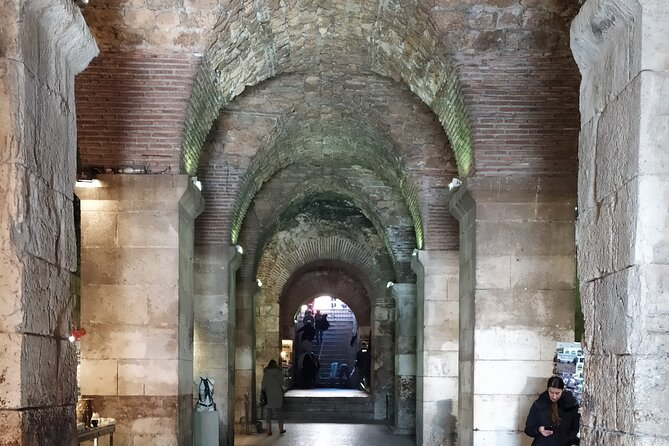
From Peristyle, you move into the central area of the palace substructure, where the talk extends into the cellars. Even if you are only seeing certain areas from viewpoints, the guide explains how these spaces were used across history and what they meant for Split.
Triclinium and the Temple Stops: Reading Roman Daily Life and Belief
You’ll also check Triclinium from the palace central areas. Here the focus is how emperors and Romans ate, and how the dining room was organized. The best part is the cause and effect: your guide ties eating habits to culture, power, and the way spaces were designed for rank.
After that, you look at the Temple of Jupiter from outside. Roman temples were not optional decoration. Religion was a key part of how the empire explained the world and how people supported authority.
Then you move toward Cathedral of Saint Domnius (St. Domnius) for an outside visit. Your guide points out significant parts you can notice from the exterior and shares story and details you might otherwise miss. You’ll also get a heads up about interesting things inside, which is useful if you plan to add a self-guided visit later.
Vestibulum of Diocletian’s Palace: The Private Passage With Real Meaning
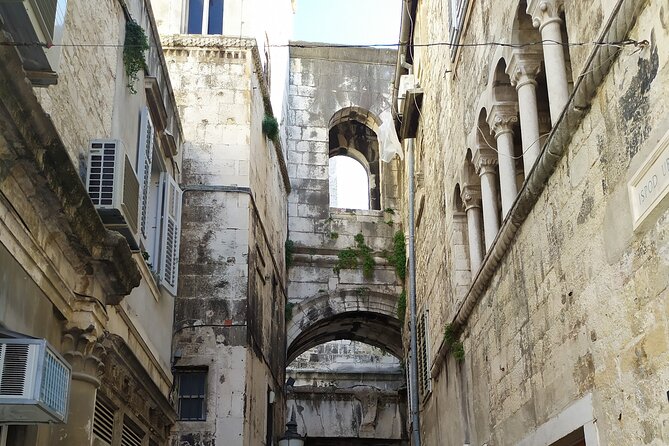
The tour then focuses on the Vestibulum, the preentrance area of Diocletian’s private chambers. This is one of those stops that sounds small, but it explains a lot about how Roman spaces were layered, from public to private.
You’ll find out what it looked like, and more importantly, what its function was. It helps you understand that architecture in the palace wasn’t just about grandeur. It was about controlling access.
This is also a nice change of pace before you leave the palace complex and start moving back into the more city-life rhythm.
From Palace Streets to the Harbor, Riva’s Long View of Split
You end the palace-centered walking and shift to Riva Harbor, Split’s main city promenade. Here the guide changes tone slightly, from imperial interiors to the waterfront story of daily life.
You learn how Riva was built over the centuries and why it became central for locals. Even though you are only spending a short time here, the takeaway is big: the old town stones connect to how people actually live now.
If you want to picture where locals go after work, this is the spot that makes that mental image feel real.
Fruit Square to Pjaca: How the Old Town Finally Feels Like a Place
The tour continues with Fruit’s Square (Trg Brace Radic), a small but charming square. You’ll hear why it’s called Fruit Square and which monument in the center matters, along with key details about what surrounds it.
Then you step into Pjaca (People’s Square), Split’s historic gathering center from medieval times to today. Your guide explains how squares function in cities, and then gives you the specific story behind this one.
Your tour finishes at People’s Square, a strong landing spot because you can easily branch out afterward. If you’re hungry, you’ll be close to options. If you want one more stop, it’s easy to move on without backtracking.
Price and Value: When This Works Best for Your Group
The tour price is $156.21 per group, up to 15 people, for about two hours. That sounds like a lot if you travel solo, but it becomes reasonable fast once you spread it across a group.
Here’s how I think about value for a tour like this:
- You’re paying for a specialized historian guide, not just a route marker.
- You’re getting 3D reconstruction visuals, which help you understand palace spaces that are not obvious.
- You’re getting a tight, private format, so you can ask questions and control the pace.
If you’re traveling as a couple or small group, this is often a strong use of time because Diocletian’s Palace is the kind of place where context is everything. If you are a solo traveler, it can still be worth it if you want your time in Split to feel purposeful, but it may be pricier than bigger group alternatives.
What You’ll Learn Without Feeling Overloaded
This tour is built around viewpoint learning. Instead of rattling dates nonstop, the guide connects each spot to a bigger idea you can carry forward as you walk.
You’ll get:
- a mental map of the palace spaces that matter, like Peristyle, Triclinium, cellars, and private access areas
- a clear shift from Roman culture to Christian life through the Jupiter and Saint Domnius stops
- a better read on why the squares and promenade are where life centers
That’s the real benefit. You leave knowing how to look at Split, not just what you saw.
Practical Tips for Getting the Most From Your Two Hours
Plan for walking on uneven old-town stone. Wear shoes you trust, especially around the palace areas and near the squares.
Go with at least one question in mind. For example, ask how the palace became a medieval city, or how Roman imperial life showed up in dining and access spaces. Your guide is set up to answer that kind of question, and the tour format gives you room to do it.
If you want to add extra sites afterward, People’s Square is a smart exit point. From there, you can choose your next move without feeling stuck inside the palace maze.
Should you book this private Split history walk?
Book it if you want a high-impact orientation to Split’s most famous layers: Diocletian’s Palace, the Roman religious thread, the Christian shift, and the city spaces where daily life still happens. It’s also a great pick if you like asking questions and you value a guide who can explain difficult architecture in plain language, with 3D reconstructions helping you picture what’s missing.
Skip it only if you prefer long museum-style visits or you want a tour heavy on interior ticketed sightseeing. This experience is built for outdoor viewpoints and understanding what you see, and you may want to handle extra indoor stops on your own.
If your goal is to understand Split fast and then enjoy the rest of your day, this is a solid way to do it.
Fresh options around Split
- Walking Tour Split★ 4.7 · 61 reviews
- Unique vintage Tomos moped tour Split – Back to the ’80s★ 4.8 · 17 reviews
- Essential Diocletian’s Palace Tour for First-Time Visitors★ 4.8 · 19 reviews
- Split: Trogir Open Top Bus Trip + Free Split Walking Tour★ 4.1 · 17 reviews
- Ranch 22 Podstrana, ” Horse riding 12 km from SPLIT “★ 4.5 · 79 reviews
- Zinfandel Wine Tasting & Storytelling with Dalmatian Food★ 5.0 · 20 reviews
- 1 st Waterbike Safari in the World★ 5.0 · 23 reviews
- Full-Day Quad and Wild Horses Safari in Livno from Split★ 5.0 · 12 reviews
Private, compared.
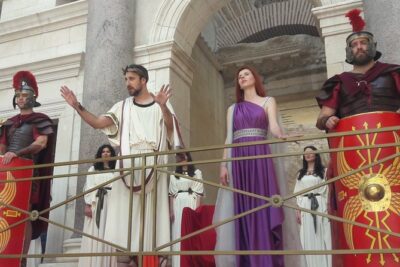
PRIVATE Walking Tour of Diocletian’s Palace & Old Town
Read our review →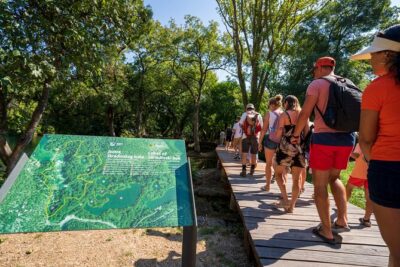
Private Krka Waterfalls tour with 30min Boat Cruse
Read our review →
Split by Private Electric Rickshaw – Palace & Hidden Gems
Read our review →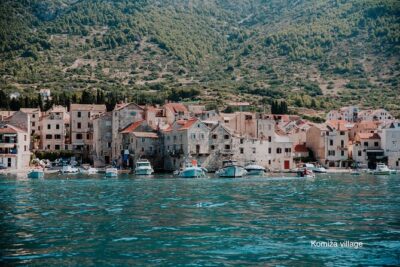
Private Blue cave, Mamma Mia and Hvar, 5 islands tour from Split
Read our review →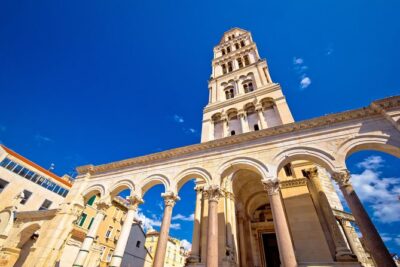

Private Full-Day Krka Waterfalls Tour with Wine Tasting
Read our review →
Private Boat Tour by local expert – Create Your Itinerary
Read our review →