
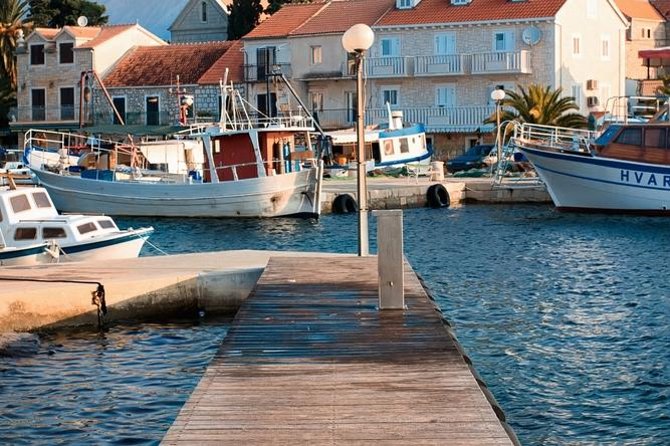
Reviewed · SPLIT
Croatia Island Hopping: Dalmatia from Split (8 days)
This route is interesting because you get the “fly-by-ferry” feel of the Dalmatian coast, but with the heavy lifting handled. I love the balance of guided walking time and real free time on your own schedule, and I also like that you hop between islands using included ferry or catamaran rides instead of constantly re-planning. One possible drawback: hotel quality and location can vary a lot, so double-check what’s most important to you, like being close to old town versus having a nicer hotel feel.
If you want a trip where you can sleep, eat, wander, and catch boats without playing logistics roulette, this one fits. The small group size helps too, with a maximum of 10 people, and in a good way, it keeps drivers and guides from feeling like taxi dispatchers. Still, you should be prepared for the fact that some days are travel-heavy, meaning you will have less time in each place than if you based yourself in one town for longer.
Key Things I’d Focus On Before You Go
- Diocletian’s Palace in Split plus a late-morning walking start so you learn the city fast
- Hvar and Korčula by sea, using scheduled ferry or catamaran hopping
- Dubrovnik Old Town with a guided walking tour built in, then hours to roam your way
- City walls and Srđ cable car as your big-view add-on during Dubrovnik
- Small group (up to 10) and transfers timed for smooth day flow
- Backup changes when boats do not run, with rerouting handled when needed
Why This 8-Day Split to Dubrovnik Island Hop Can Be a Smart Value
You are paying for a full chain: hotels for seven nights, shared transfers, boat rides, and guided walking time in key places. That matters because Adriatic island travel is easy to love and tricky to manage if you do it from scratch. This format keeps you moving, but it also reduces the number of things that can go wrong when you are on holiday.
The real value is the way the days are structured. You get a guided start where the city makes more sense right away, then you get time to act like a local for the rest of the day. That approach helps in places like Split and Dubrovnik, where the best views and best photo lanes are easier to find once someone points you to the main beats.
Now, the honest catch: you are not choosing every hotel. If you are the type who cares deeply about walking distance and room comfort, you should plan to treat the accommodations as a variable. Some stays are excellent for location, but others can feel a bit far, with rooms that are on the small side.
More of Split worth an open tab:
- Split: Krka Waterfalls Trip with Boat Cruise and Swimming
★ 4.8 · 10,519 reviews - From Split: Krka Waterfalls, Food & Wine Tasting Tour
★ 5.0 · 9,326 reviews - Blue cave, Mamma Mia and Hvar, 5 islands speedboat tour
★ 5.0 · 7,150 reviews
Split Arrival, Then Diocletian’s Palace Sets the Tone
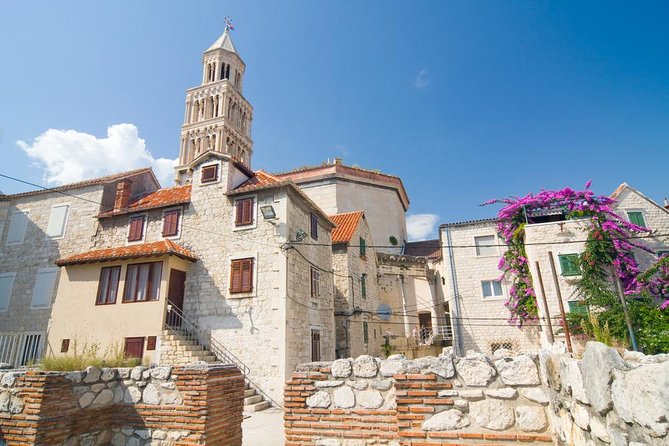
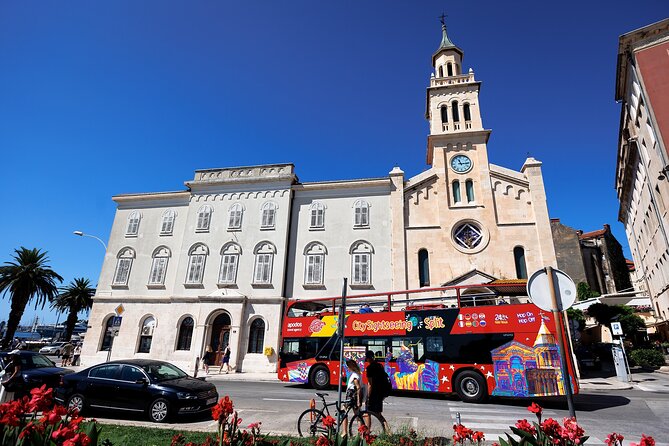
Day 1 is straightforward: you arrive at Split Airport and transfer to your hotel for an overnight stay. On Day 2, you start with a late morning walking tour of Split, which is a smart move. Split’s center works best when you understand what you are looking at, and Diocletian’s Palace is the anchor for the whole town.
You will learn the basic story of the palace, which was the retirement estate of a Roman emperor and later became a living city center for around 3,000 residents. That context changes everything. Instead of seeing walls and arches as random ruins, you see how the architecture still shapes everyday life.
Then comes the sea jump. After the Split walking time, you take a ferry or catamaran ride to Hvar and spend the night there. I like this sequencing because it prevents the classic mistake of arriving, wandering for a day, and then losing the energy needed for the island leg.
Practical tip: Split gets busy and you will likely start with walking, so wear shoes you trust. The old streets are not hard, but they do add up once you layer on palace lanes and waterfront paths.
Hvar Town: Lavender Vibes, Wine Country Views, and Time to Pick Your Pace
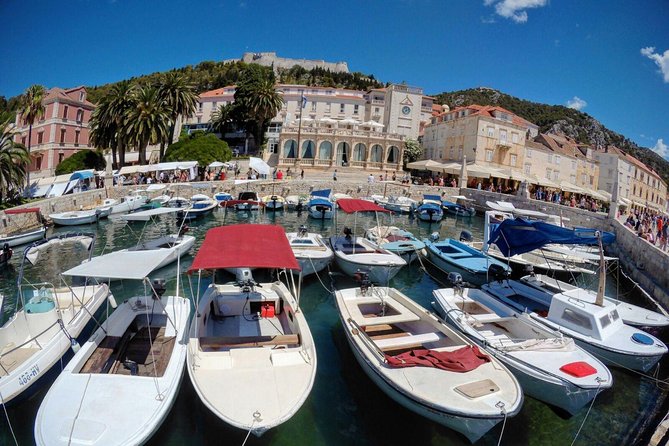
Hvar is the stop that most people imagine first, and it delivers in a real way. The island is known for lavender fields, strong red wines from steep vineyards, and the “sunniest island” reputation. You also get the glamorous side, especially around the waterfront where the energy can feel very summer-season.
On Day 3, you are on your own in Hvar town. This is one of the easiest days to personalize. If you want atmosphere, wander the waterfront and squares. If you want culture, prioritize the sights tied to Hvar’s long tradition, including the note about the oldest theatre in Europe. Even if you do not go inside, knowing what you are looking at gives the town a bigger story.
On Day 4, you get more breakfast time and free time in the morning, with options that range from town squares to calmer waterfront areas like Jelsa, plus photo-friendly spots such as Vrboska bridges and vineyards of Ivan Dolac mentioned for that area. Then you leave Hvar in the afternoon and hop by boat to Korčula, arriving for an overnight stay.
One consideration: Hvar can feel very happening, especially in peak season. If you want quiet, plan for early mornings and late walks. The afternoon-to-evening transition is also a rhythm check, since you are switching islands that day.
Also, if weather disrupts boat schedules, you are not completely stuck. There is a proven backup approach on this kind of route, and in at least one case a catamaran leaving Hvar was replaced by a quickly arranged alternative routing. That kind of fix matters more than it sounds.
Korčula: A Venetian Stronghold Town You Can See Without Rushing
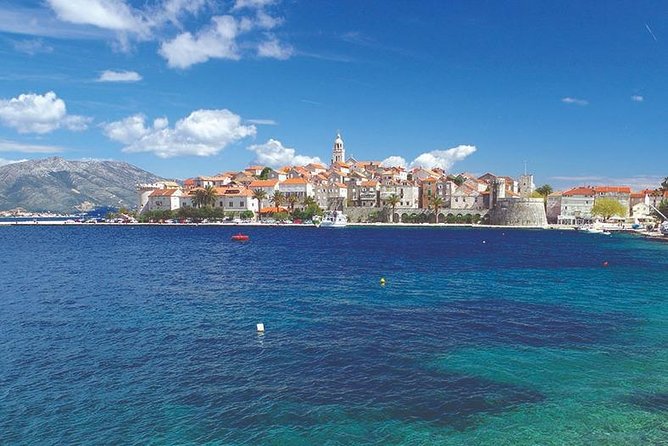
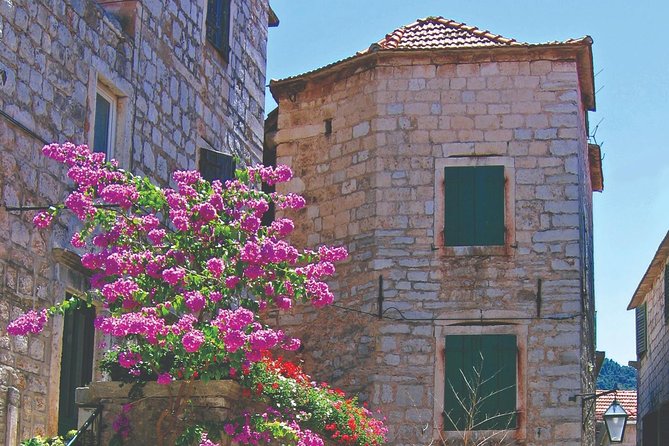
Korčula sits in the far south of Croatia and often feels a notch calmer than the bigger headline stops. You will see signs of Venetian influence immediately, including lion statues and the stonework details that show up around facades and gates. Even if you are only here for part of a day plus arrival time, the town layout invites slow strolling.
On Day 4 evening you arrive and settle in. Then on Day 5, you spend time in Korčula Town itself, strolling narrow curved streets, checking churches and palaces, and exploring a medieval town that is often described as among the better preserved in the Mediterranean.
Here is why Korčula works for this itinerary format: it is compact enough to enjoy on foot, but detailed enough to feel like more than a quick stop. It is also a helpful breather. After Split and Hvar’s energy, Korčula feels like a “let’s look closer” kind of day.
Then you transfer to Dubrovnik in the afternoon, and that is when the trip starts to feel like the main event.
Same stretch of the Dalmatian coast, a different kind of day:
- From Split: Krka Waterfalls, Food & Wine Tasting Tour
★ 4.9 · 6,598 reviews - Split/Trogir: Blue Cave, Mamma Mia, Hvar and 5 Island Tour
★ 4.6 · 6,320 reviews - Blue Lagoon & 3 Islands Cruise with Lunch from Split
★ 4.5 · 5,756 reviews - Split: Old Town and Diocletian Palace Walking Tour
★ 4.9 · 4,727 reviews
Dubrovnik Old Town and the City Walls, With the Key Views Planned

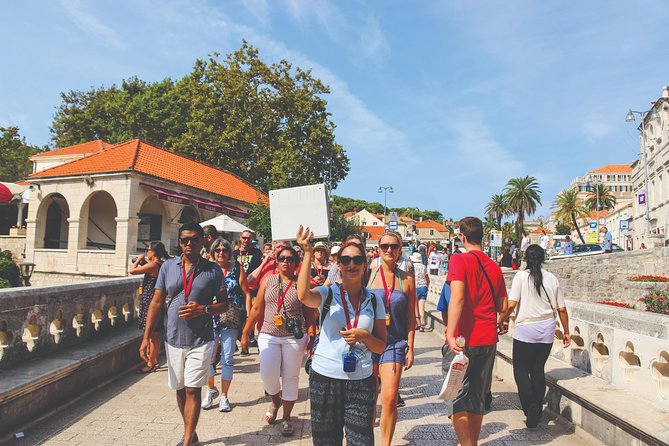
Dubrovnik is a different world than the islands. It is dense, dramatic, and built for walking. Day 6 is your core Dubrovnik day, after you have breakfast and a walking tour in the morning.
You are looking at a UNESCO World Heritage Site, and the tour is designed to help you orient quickly. Medieval layouts still shape the streets, while baroque facades show up in the palace architecture and religious buildings. You can expect stops like the Franciscan Monastery, the Church of St. Blaise, and the Rector’s Palace to land on your route.
Then the best part starts: you turn loose and explore on your own. Dubrovnik rewards self-guided wandering because you can keep changing your angle. Do not treat it like a checklist.
A must-do if you have even a little energy is a ride on the city walls for the fresh perspective. After that, add the cable car to Srđ for panoramas over Dubrovnik and the coastline. Both are the kinds of upgrades that make Dubrovnik feel worth the long day, even if you already saw photos.
If you are tired, keep it simple: old town streets first, walls when you can see more clearly, then the cable car if timing and lines work out.
Lokrum and the Elaphite Islands: Your Day to Choose Serenity or Beaches
Day 7 is your flexible day. This is where the itinerary lets you shape the trip. The easiest day-trip suggestion is Lokrum Island as a trip from the Old Town Harbor. It is described as calm and green, with holm oak, pine, and laurel forests. You also get the fun detail of peacocks and bunnies as the island’s permanent inhabitants.
Then there are the nearby Elaphite Archipelago options, described with sandy beaches, heritage points, hiking trails, and good food. This is your choose-your-own adventure day, either for a calmer nature break or a more active outdoors day.
My practical advice: decide based on how your Dubrovnik day energy is. If you feel like you need a reset, do Lokrum. If you want a beach and walking mix, do Elaphites. Both can work, but your stamina is the deciding factor, not the brochure.
Price and Hotels: What You Are Really Paying For, and What Can Vary
At about $1,483.31 per person for eight days, you are not just buying ferries and a map. You are paying for reduced mental load: transfers, included boat rides, hotel nights, and organized guidance at the right moments.
That said, the biggest risk in value is not the route. It is the hotel selection and placement. Some people report a first hotel in Split that felt far from the most desirable old town vibe, and later stays that were more average in comfort or location. In Dubrovnik specifically, there have been cases where rooms were small and bathrooms compact, plus a slightly messy arrival transfer experience.
At the same time, there are also reports of hotels that were solid and well located, and the more central you are, the easier the trip feels. If your dream is to be able to change clothes and step out quickly, location is not a small detail.
So here is how I’d judge the value for you:
- If you like the structure and want fewer planning tasks, this price can feel fair.
- If you are picky about room size and walk-to-everything location, you might want to compare and prioritize the accommodation plan before you lock it in.
Logistics That Matter: Tickets, Transfers, and What Happens When Boats Change
This kind of trip runs on timing. The program includes pickup on arrival in Split, with a driver waiting in the Arrivals Hall holding a sign with your name. Transfers are shared across Split, Hvar, Korčula, and Dubrovnik.
You also get assistance with boat and ferry catamaran tickets. That reduces one of the most annoying parts of island travel, ticket hunting at the last minute. You receive mobile tickets, and the program provides support for delivery or similar handling of tickets during the route.
One detail I really appreciate is the way disruptions are handled. If a catamaran cannot leave on schedule, the plan can pivot to an alternative route. That is not glamorous, but it is what keeps your trip from falling apart on a windy day.
Group size helps here too. A maximum group of 10 people means less chaos during meeting points and fewer delays if a bus load needs extra coordination.
Who This Tour Suits Best, and Who Might Be Happier Doing It Independently
This tour suits you if you want structure without feeling trapped. You get walking tours for orientation, then free time to wander, eat, shop, and choose your own pace in each town.
It also fits if you want a “one week, many places” trip. The route covers Split, Hvar, Korčula, and Dubrovnik, plus optional day trips to Lokrum or the Elaphites. You see a lot of variety without needing to figure out every connection.
You might want to skip this kind of fixed route if hotel comfort and location are your top priority and you dislike uncertainty. You also might prefer a more flexible plan if you are the type who wants deeper time in one island rather than a multi-stop rhythm.
Should You Book This Split-to-Dubrovnik Island Hop?
Book it if you want an organized island chain trip where you can spend your energy walking, eating, and enjoying views instead of chasing schedules. The best reason to book is the overall balance of guided context plus freedom, plus the fact that ferries, transfers, and ticket support are built in.
Do not book blindly if hotel location is a deal-breaker for you. Ask yourself what matters more: easy logistics or being in the most central possible hotel room. If you can accept that accommodations might be a mixed bag but the route itself runs smoothly, this can be a strong value for the time you get.
Finally, if you love cities you can walk and islands you can explore on foot after a short ferry ride, this itinerary matches that style well.
FAQ
How long is the Croatia Island Hopping tour from Split to Dubrovnik?
It runs about 8 days.
Where does the tour start and end?
It starts in Split (with pickup/transfer around Split Airport or your Split hotel) and ends with a transfer to Dubrovnik Airport or to other accommodation in Dubrovnik.
What’s included in the price?
The package includes seven nights of hotel accommodation, arrival and departure transfers, shared transfers in Split, Hvar, Korčula, and Dubrovnik, boat or ferry or catamaran tickets, and assistance with ticket handling. It also includes walking tour time in Dubrovnik and breakfast on five days.
Are ferry and catamaran rides between islands included?
Yes. Boat or ferry or catamaran tickets are included, along with assistance for those tickets during the program.
Do I get walking tours in each destination?
You get a walking tour in Dubrovnik, and the program also schedules guided walking time in Split. Additional guided time may be part of the route day-by-day.
How many people are in the group?
The maximum group size is 10 people.
What optional excursions are mentioned during the Dubrovnik free day?
You can choose to visit Lokrum Island or the Elafiti Islands as optional day trips.
What kind of ticketing do I get?
You receive mobile tickets.
Where will I meet the driver when I arrive?
Your driver waits in the Arrivals Hall at Split Airport and holds a sign with your name.
What is the cancellation timeframe?
You can cancel up to 6 days in advance for a full refund, with partial refunds available if you cancel 2 to 6 days before the experience starts.
Fresh options around Split
- Small-Group Communist Tour of Split – Boutique group tour★ 5.0 · 7 reviews
- Controversies behind Split and Croatia-Anthropologist guide★ 5.0 · 59 reviews
- Split City Tour By Electric Rickshaw┃Riva Ride★ 5.0 · 50 reviews
- Coffee, storytelling & walk – The best private tour of Split★ 5.0 · 46 reviews
- Chill Private Walking Tour of Diocletian’s Palace★ 5.0 · 35 reviews
- Canyoning basic on Cetina river from Omiš★ 5.0 · 66 reviews
- River Rafting from Split- Cliff Jumping- Cave Visit★ 5.0 · 90 reviews
- Private Split City Walking Tour – Spanish Guide★ 4.5 · 12 reviews