
Reviewed · SPLIT
Secret Split: Socialist Architecture & brutalism – Urban Utopia
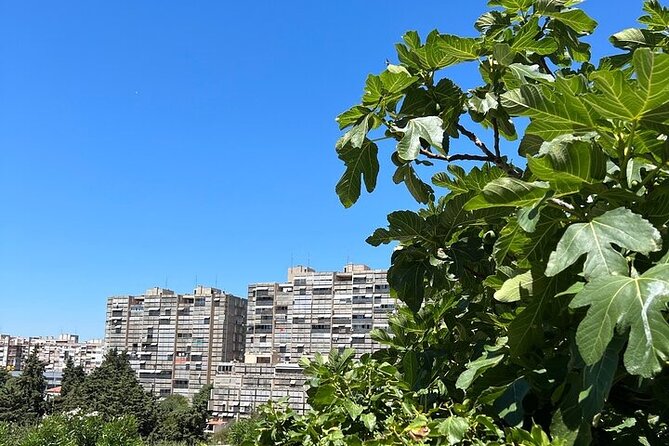
Split’s most famous scenes are Roman. This tour goes the other direction, into the 20th century and a socialist housing experiment built with concrete confidence. You’ll walk a part of the city most visitors never reach, where everyday life was designed on purpose, not just left to chance.
I especially love how the route stays practical. You get the real feel of the spaces, from open pedestrian areas to clean geometry, and you learn what designers were trying to do for children, families, and neighbors. And I really liked meeting the guide, Mirjana, whose passion for Split comes through in every turn, especially when she connects architecture to how people live here now.
One consideration: this is a residential, outdoor walk. You’ll be outside for the whole experience, and brutalist buildings can look plain at first glance before they start making sense.
Key things that make Secret Split worth your time
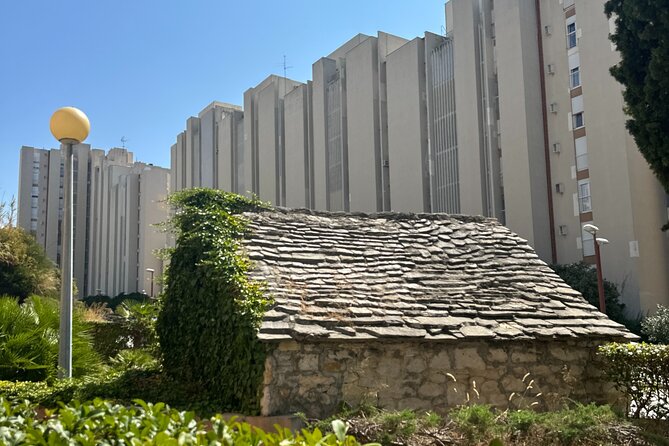
Split 3, the post-war experiment: a socialist urban plan created to handle rapid change.
MoMA connection: Split 3 appeared in MoMA’s Toward a Concrete Utopia exhibition in New York in 2018.
A city within a city: you’ll see how pedestrian, daily-life spaces were designed to work together.
Brutalism as care: the tour reframes concrete as a social idea, not just an aesthetic.
Meet locals, not actors: you’ll have time for local artists and activists as part of the experience.
A focused neighborhood route: this is not a highlights loop, it’s a walk into modern Split.
Why Split 3 feels like a living idea, not a museum exhibit
Most cities preserve the past with plaques. Here, you’re stepping into a modern past that’s still in use. Split 3, built in the 1970s as an expansion of Split, was designed as a utopian vision for life, space, and society. The big twist is that it wasn’t just theory. The plan shaped how people move, meet, and use public space day after day.
That’s why I like this tour’s tone. It’s not nostalgia. It treats the architecture as a real social tool, with real consequences. The guide puts you in the mindset of the planners, then shows you what remained, what was never fully realized, and what still influences daily routines.
You’ll also get a strong sense of why brutalism shows up here in a different way than in other places. Yes, you’ll see raw buildings and bold forms. But the tour keeps returning to a simple idea: concrete here was meant to support community, not just to be visually dramatic.
More of Split worth an open tab:
- Split: Krka Waterfalls Trip with Boat Cruise and Swimming
★ 4.8 · 10,519 reviews - From Split: Krka Waterfalls, Food & Wine Tasting Tour
★ 5.0 · 9,326 reviews - Blue cave, Mamma Mia and Hvar, 5 islands speedboat tour
★ 5.0 · 7,150 reviews
Finding Papandopulova ulica’s concrete logic, and the MoMA moment
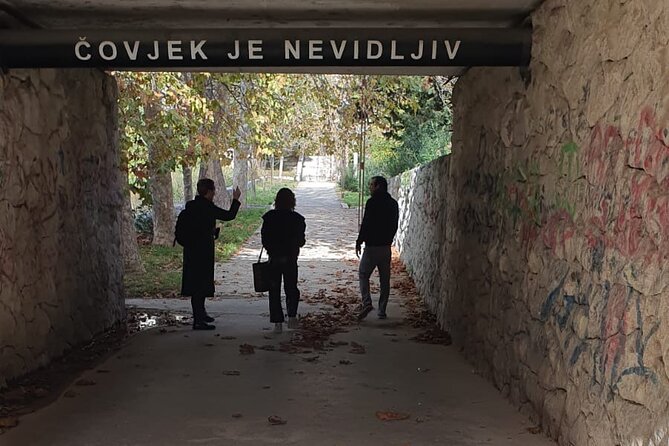
You start at Ul. Šime Ljubića 3, then head into Papandopulova ulica, the first spotlight area of Split 3. This is where the big theme becomes physical. Instead of talking abstractly about urban planning, the tour shows you how the streets and blocks were organized, with clear lines and open spaces built for movement on foot.
In this section, you’ll learn that Split 3 was featured internationally. The guide connects the neighborhood to MoMA’s Toward a Concrete Utopia exhibition in New York (2018). For me, that’s a practical anchor. It helps you understand that what you’re seeing is not just a local quirk. It’s part of a larger conversation about 20th-century architecture and social design.
What to watch for as you walk:
Pedestrian-first space: you’ll notice how the plan favors moving on foot and using shared areas.
Clean geometry: the design isn’t accidental. Shapes and sightlines are doing work.
Community layering: public space, residential life, and everyday routines were meant to overlap.
A small caution: brutalism can feel severe if you expect ornament and charm. Give it a little time. The tour helps you read the design, and once you start seeing the intent behind the form, the buildings stop feeling cold and start feeling purposeful.
How the plan answered demographic growth in Split-Dalmatia County
Next comes the bigger context in the Split-Dalmatia County area. This is where the tour widens the lens beyond one street and into why Split 3 existed at all. You’ll hear how the project responded to rapid demographic growth, and how the socialist urban model tried to provide space and structure for expanding city life.
One of the most helpful parts here is the balance. The tour doesn’t pretend the plan was perfectly delivered. It explains that Split 3 was never fully realized, yet it still ended up in the annals of urbanism and architecture of the 20th century, not only in Croatia but internationally.
That matters for your understanding. When a plan is unfinished or partly implemented, the result can look uneven, or simply confusing, especially if you only judge it from today’s expectations. With the background, you’re better equipped to interpret what you see. You can separate what was designed, what was altered, and what grew organically after the fact.
If you’re the type who likes cities with a backstory, this section is a strong match. You’ll leave with a clearer sense of how architecture responds to pressure, not just taste. In practical terms, it also helps you see the neighborhood like a system instead of a collection of buildings.
Art activism and critical communication in modern Split
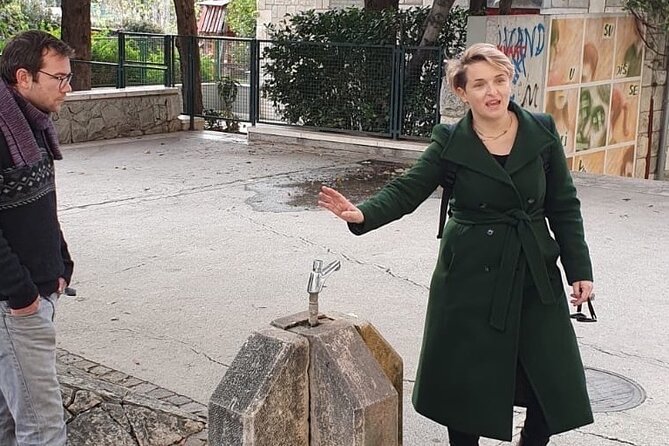
The final stretch keeps the story grounded in people, not just design. You’ll hear about art activism in Split, and how explicit critical communication shows up as part of public life. This isn’t presented as a separate, random stop. It ties back to the tour’s main point: a city plan shapes daily life, and people shape the meaning of that plan over time.
This is also where you’re positioned to meet local artists and activists. That inclusion is valuable because it turns your walk from a one-way lecture into a conversation. You’re not only learning what planners believed. You’re seeing how creative voices respond to the urban reality around them.
What I like about this part is that it makes the whole tour feel alive. Concrete blocks and open squares are still there, but you also get the sense that culture, messaging, and community action are active forces in these spaces. The neighborhood isn’t just preserved. It’s interpreted.
You might find it helpful to ask yourself a question while you walk: how would you use this space if you lived here? That simple mental exercise makes the activism piece feel more relevant, because it shows how public communication needs physical settings to work.
Same stretch of the Dalmatian coast, a different kind of day:
- From Split: Krka Waterfalls, Food & Wine Tasting Tour
★ 4.9 · 6,598 reviews - Split/Trogir: Blue Cave, Mamma Mia, Hvar and 5 Island Tour
★ 4.6 · 6,320 reviews - Blue Lagoon & 3 Islands Cruise with Lunch from Split
★ 4.5 · 5,756 reviews - Split: Old Town and Diocletian Palace Walking Tour
★ 4.9 · 4,727 reviews
Brutalism here, care in concrete
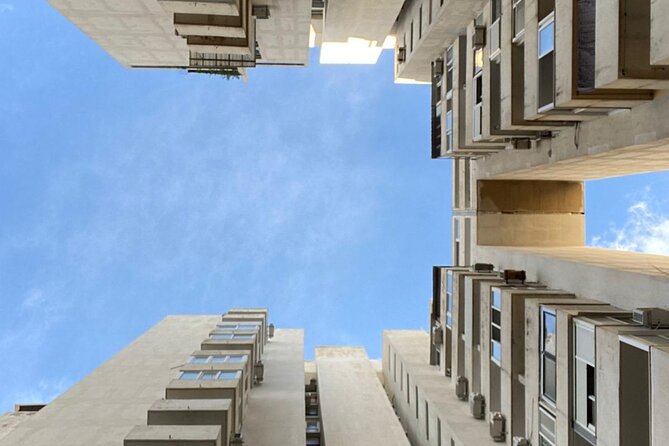
Brutalism gets a lot of reputations. People either love it or dismiss it as harsh. This tour nudges you toward a third interpretation. It explains that brutalism wasn’t just about concrete as a material. It was about care, at least in the intentions of the designers who imagined these spaces for real life.
You’ll see raw buildings and clean geometry, yes. But the tour frames those features as tools. The geometry can make movement clearer. The openness can support community interaction. The building massing can shape how daily life folds into shared areas.
And that’s where you start understanding why Split 3 has attracted international attention. The plan reads like a social argument in stone and concrete. It says: daily life deserves structure, common space, and thoughtful design.
For your own takeaway, try this: don’t judge brutalism only by the first impression from the sidewalk. Instead, notice how space changes as you move. The tour route gives you enough variation that the forms begin to make practical sense.
Who this tour is perfect for
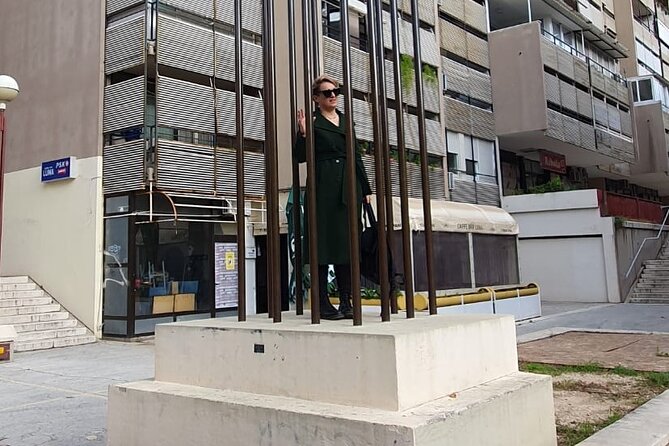
This is not the best choice if you only want postcard views or quick Roman highlights. It’s for people who want to understand modern life in Split through architecture, planning, and the human use of space.
I’d strongly consider it if:
You like 20th-century architecture and housing design.
You enjoy walking tours that explain how cities work, not just what they look like.
You want context for why a neighborhood can become a global example, like the MoMA link.
- You’re curious about how community and public communication fit into daily life.
It’s also a good option if you’re traveling with someone who thinks architecture is boring. This tour uses real neighborhood logic to make brutalism understandable, and it has enough people-focused content to keep it from turning into pure theory.
Price and value for a 1 to 3 hour specialist walk
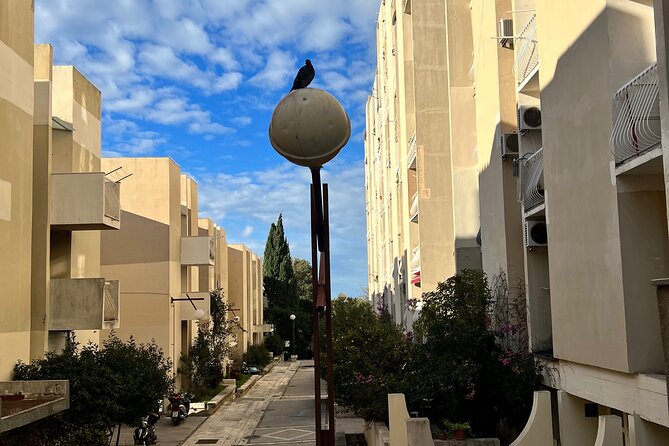
At $113.90 per person, this tour sits in the category of a focused, guided experience rather than a budget add-on. The value comes from three places.
First, you’re not doing a general city walk. You’re getting a route built around Split 3 and modern socialist planning, with context that connects to an international architecture exhibition at MoMA.
Second, the included guide team matters. You get a licensed tourist guide and a certified heritage interpreter, which typically means you’re getting both storytelling and interpretation of the architectural context.
Third, you’re meeting local artists and activists during the experience. That’s one of those details that can genuinely change the feel of a tour. It’s the difference between passively seeing buildings and understanding how people talk about them.
If you’re short on time, the duration helps. It runs about 1 to 3 hours. That’s enough time to get meaning from the walk without turning your day into a marathon.
Practical stuff you should know before you go
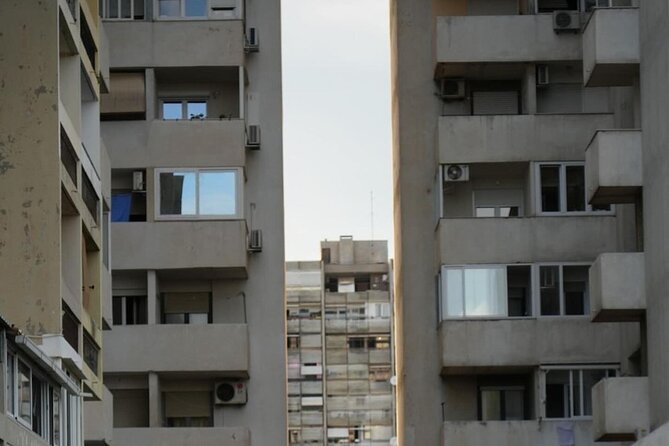
This is a walking experience and it is near public transportation, so you can plan to arrive without stress. The start is Ul. Šime Ljubića 3 and the tour ends back at the same meeting point.
The schedule provided indicates availability on Monday through Thursday, 8:00 AM to 7:00 PM within the listed season range. If you’re traveling outside that window, you’ll want to double-check the exact dates when you book.
Mobile ticket is part of the experience. The tour is also described as private for your group, which can be a big quality boost if you like a more tailored pace.
If you have specific needs, the information provided says service animals are allowed and most travelers can participate. Since it’s an outdoor walk, wear shoes you trust on city sidewalks and keep an eye on sun and shade, especially in warmer months.
Should you book Secret Split: Socialist Architecture and Brutalism?
Book it if you want a Split that goes beyond the usual Roman storytelling. This tour is a strong choice when you’re curious about how cities are designed for real life, then reinterpreted by real people. The Split 3 focus, the MoMA Toward a Concrete Utopia connection, and the chance to meet local artists and activists make it feel like you’re seeing the city with better questions in your head, not just better photos on your phone.
Skip it if you’re mainly after scenic highlights or you dislike walking. Also consider that brutalist architecture can be an acquired taste, but the guide, including Mirjana’s passion, does a good job of translating what you’re seeing into something readable.
If you’re aiming for depth in modern Split, this is a smart use of time.
FAQ
How long is the Secret Split walking tour?
The tour lasts approximately 1 to 3 hours.
Where does the tour start and end?
It starts at Ul. Šime Ljubića 3, 21000, Split, Croatia, and ends back at the same meeting point.
What is the price per person?
The price is listed as $113.90 per person.
What’s included in the tour?
Included are a tour with a licensed tourist guide and certified heritage interpreter, visiting the residential area of Split, and meeting local artists or activists.
Do I need to pay for admission tickets?
Admission tickets for the listed stops are listed as free.
Is this tour private or shared?
This is described as a private tour or activity. Only your group will participate.
When is the tour available?
The provided opening hours are Monday through Thursday, 8:00 AM to 7:00 PM, within the listed season dates.
Is a mobile ticket provided or required?
Mobile ticket is listed as a feature of the experience.
Can I cancel for a full refund?
Yes. You can cancel up to 24 hours in advance for a full refund.
Is the experience suitable for most travelers, and are service animals allowed?
The information says most travelers can participate, and service animals are allowed.
Fresh options around Split
- Walking Tour Split★ 4.7 · 61 reviews
- Unique vintage Tomos moped tour Split – Back to the ’80s★ 4.8 · 17 reviews
- Essential Diocletian’s Palace Tour for First-Time Visitors★ 4.8 · 19 reviews
- Split: Trogir Open Top Bus Trip + Free Split Walking Tour★ 4.1 · 17 reviews
- Ranch 22 Podstrana, ” Horse riding 12 km from SPLIT “★ 4.5 · 79 reviews
- Zinfandel Wine Tasting & Storytelling with Dalmatian Food★ 5.0 · 20 reviews
- 1 st Waterbike Safari in the World★ 5.0 · 23 reviews
- Full-Day Quad and Wild Horses Safari in Livno from Split★ 5.0 · 12 reviews