
Reviewed · TROGIR TOURS
Best of Split & Trogir: Private VIP Tour with Local Guide
What makes this Split and Trogir tour so interesting is the way it stitches together two totally different worlds in one smooth half day, Roman Split and Venetian-flavored Trogir. I really like the private VIP format because you get real attention at each stop, not just a rush through photos. I also like that the local guide storytelling brings the places to life, including small details like the toe-worn luck ritual at Grgur Ninski’s statue.
One possible drawback to plan for is time. With an approx. 6-hour schedule, each main stop is around 15 minutes, so you will have to love quick context more than long wandering. Also, some sights are listed as paid admissions, such as the Cellars of Diocletian’s Palace, St. Lawrence’s Cathedral, Kula Karmelengo, and Palace Cipiko.
Key highlights you will feel right away
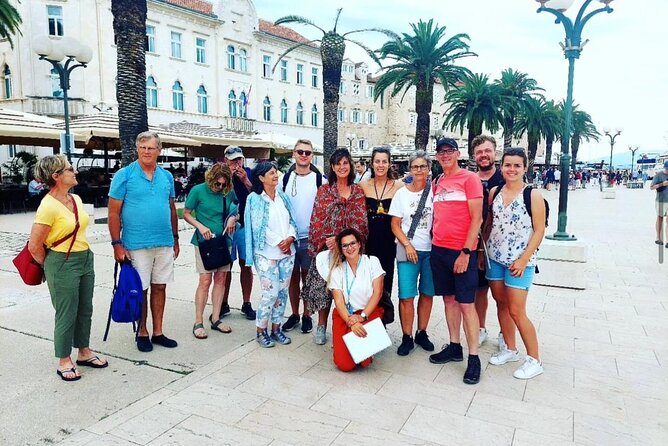
- Private group, local attention: It is designed so only your group joins you.
- Split plus UNESCO Trogir: You get Roman palace power, then a Venetian-style old town.
- Free stops help your value: Several key sights are marked with free admission in the tour plan.
- Meaningful details, not just landmarks: Look for the toe-worn tradition at Grgur Ninski and carved reliefs around town.
- Views that pay off: Kula Karmelengo gives wide outlooks over the old town, marina, and nearby islands.
- Guides make the difference: Kristina and Andrea were praised for clarity, crowd navigation, and personal stories that added texture.
Private VIP comfort, English guide, and pickup in Split
This is a private VIP tour priced at $228.78 per person for about 6 hours. That number only feels reasonable if you value two things: a guide who can explain fast and well, and a route built to keep your time from getting eaten by confusion or long lines. Since it is private, you do not have to wait for strangers or squeeze around a crowd while someone is deciding where to stand.
Pickup is offered, and the tour uses a mobile ticket, which matters because parking, ticket offices, and finding the right entrance can be a chore in old-town areas. The tour is offered in English, and the experience provider is Discovery tours. Another small practical note, this one tends to be booked early on average, so if your dates are firm, it is smart to lock it in rather than hoping.
The best part of a private guide is not the chauffeured feeling, it is that you can ask one question and get a real answer. In reviews, Kristina was singled out for being extremely easy to understand and for adding personal stories that kept local traditions alive. Andrea was also praised for helping people move through the crowds with more ease, and even for adjusting the order so the day flowed well.
More Trogir departures and old-town time:
- Split/Trogir: Blue Cave, Mamma Mia, Hvar and 5 Island Tour
★ 4.6 · 6,320 reviews - Krka Waterfalls Day Tour with Boat Ride from Split and Trogir
★ 5.0 · 2,134 reviews - Krka Waterfalls tour with Trogir Walking tour and Krka panoramic boat cruise
★ 5.0 · 1,659 reviews
Peristyle of Diocletian’s Palace, the crossroads of the empire
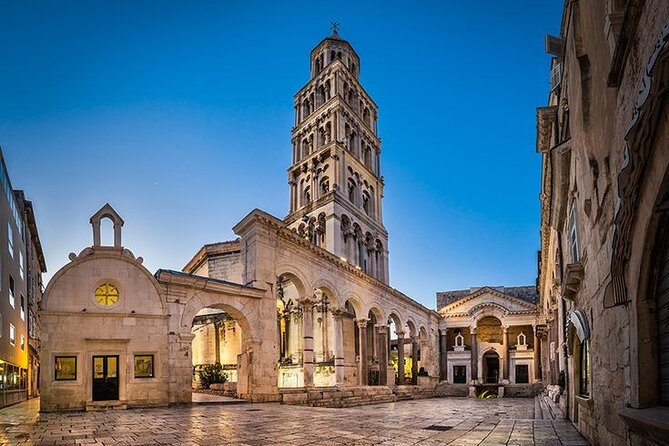
You start in the heart of Split’s Roman-world layout at the Peristyle of Diocletian’s Palace. This is a rectangular open court with a colonnade, placed right at the crossroad of the two main roads of the palace complex. In plain terms, this is where power and foot traffic met. You will not just be looking at pretty stone, you are looking at a city plan that dictated how people moved.
Expect a short stop, about 15 minutes, so you will want to use this moment to orient yourself for the rest of the day. I like the Peristyle because it gives you a mental map. Once you understand the palace geometry, the later pieces, like Jupiter’s temple location and where the substructures sit, make more sense.
Good news for your wallet: the plan lists admission for this stop as free. That makes it an easy win early on, when your legs are still fresh and your brain is ready to absorb big ideas.
St. Domnius Cathedral, an early Catholic landmark in working form
Next is the Cathedral of Saint Domnius, consecrated around the turn of the 7th century AD. What makes it special is not just age. It is described as the oldest Catholic cathedral in the world that remains in use in its original structure, without near-complete renovation later. The bell tower is from the 12th century, which adds a second layer of time.
This is the kind of stop where a guide matters. With a quick visit, you need the right signposts. Ask yourself what you should notice in 15 minutes: the continuity of worship in the same footprint, the way later Christian identity layered onto Roman-era space, and how the building holds meaning even when the tour pace is fast.
Admission details for this specific stop are not stated in the information you have, so treat it as a “check on-site” situation. Either way, it is a strong anchor for the day’s theme: Split did not just preserve ruins, it kept building its life around them.
Grgur Ninski statue and the toe-worn luck ritual
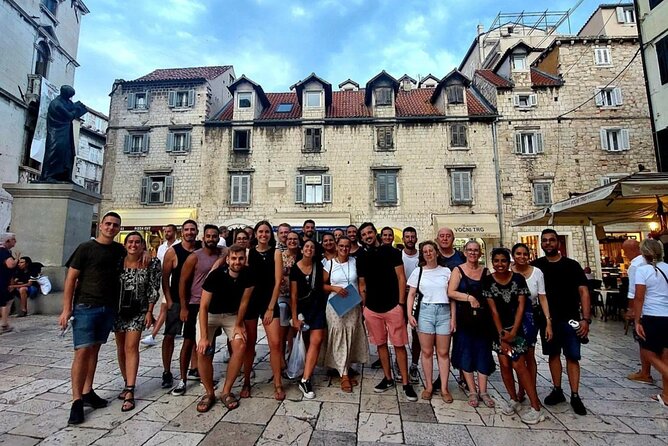
Then you get a fun, human-scale stop: the Grgur Ninski Statue. This is an 8.5-metre tall statue of Gregory of Nin by Ivan Meštrović. You will spot it because it is meant for close-up interaction. The toe is famously worn smooth and shiny from people rubbing it, a tradition said to bring good luck.
This is one of those moments where you should pay attention to etiquette. The toe is the focal point, so if you want a photo, step to the side a bit and do not block others. In a short stop, it also helps you notice how public art becomes part of daily ritual, not just museum display.
Admission is listed as free for this stop, which makes it a low-cost, high-satisfaction pause.
A few more Split days worth comparing
- SPLIT-PRIVATE Walking Tour of Diocletian’s Palace & Old Town
★ 5.0 · 467 reviews - Private Krka Waterfalls tour with 30min Boat Cruse
★ 4.0 · 458 reviews - Split by Private Electric Rickshaw – Palace & Hidden Gems
★ 5.0 · 412 reviews - Private Blue cave, Mamma Mia and Hvar, 5 islands tour from Split
★ 5.0 · 387 reviews
Temple of Jupiter, a Roman relic tucked inside palace space
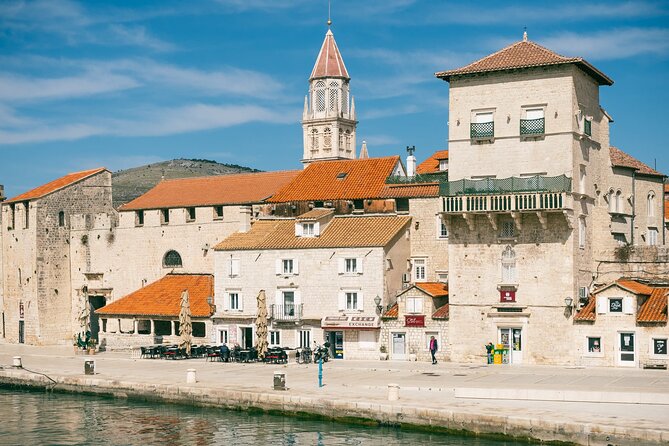
After the statue, you move to the Temple of Jupiter, or Jupiterov hram. It is located in the western part of Diocletian’s Palace near the Peristyle, built between 295 and 305 during the palace construction. Even if you are not a Roman architecture superfan, this works because it is a concrete reminder that the palace complex was built as an entire worldview, not just a residence.
What should you look for on a 15-minute stop? For me, it is the temple’s relationship to its surroundings. The guide can help you place it correctly within the palace plan, so you are not just staring at stone fragments. The best tours use stops like this to connect the dots between “big” sites and small details.
Admission for this temple stop is not noted as free or paid in the details you have, so again, think of it as a normal inclusion unless your guide tells you otherwise.
Cellars of Diocletian’s Palace, where the paid time is worth it
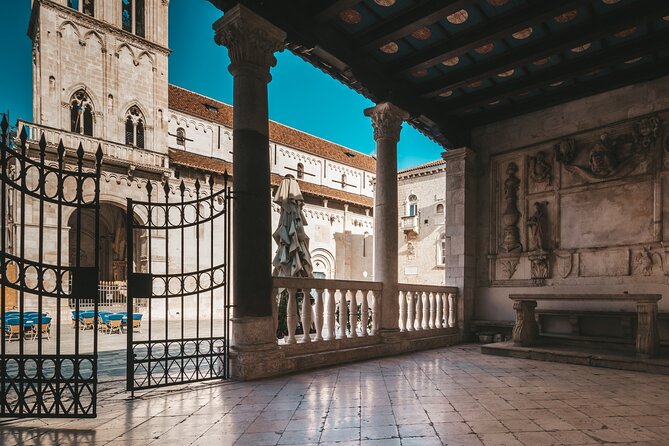
The itinerary includes the Diocletian Palace Substructures, often called the Cellars of Diocletian’s Palace. This is a set of “basement halls” at the southern end of the palace, in what is now the southernmost part of Split’s Stari grad area. The big selling point is that it is described as one of the best preserved ancient complexes of its kind in the world, tied to the idea of private apartments supported by these substructures.
This stop is flagged as admission not included, so you should treat it like the one moment where you might pay extra to get the payoff. Why does it matter? Because it shows you the palace beneath the street-level glamour. If you only see exteriors, you get a headline story. In the substructures, you get a fuller sense of how the palace functioned and how thick the Roman engineering really was.
With only about 15 minutes, you will not get a slow, museum-style experience. Still, a good guide helps you read the space quickly, pointing out what to notice rather than letting you stand there hoping the stones explain themselves.
How the day flows between Split and Trogir
Your total time is about 6 hours, and most stops are around 15 minutes. That means the tour is not about lingering. It is about getting the right context fast and then moving on before your energy drains.
The order can also be flexible. One review mentioned that the group went to Trogir first, even though the overall plan includes multiple Split highlights before Trogir. In practice, that is a sign of good guiding, because timing matters. I would go into it ready for a guided route that can adjust to crowds and movement, rather than assuming you will be marched through the exact same sequence every day.
Trogir’s central square, a UNESCO core you can picture
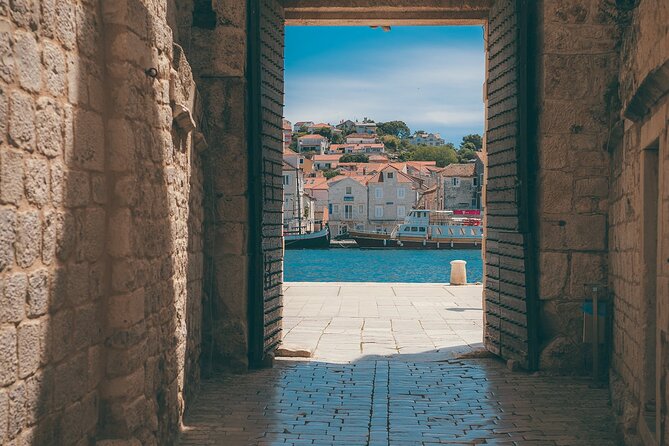
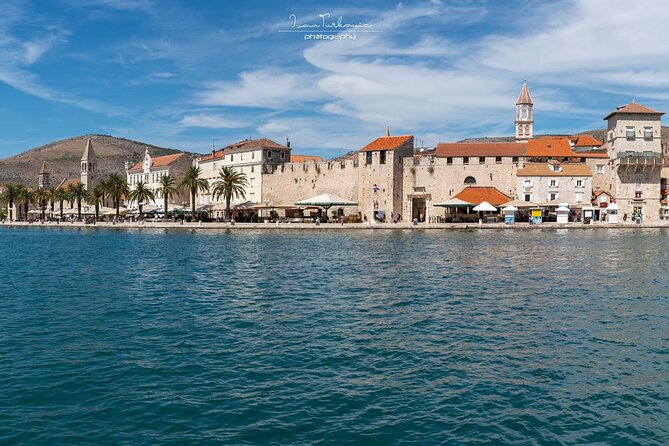
Once you reach Trogir, you start in the Central Square, also known as John Paul II Square, the main square of the old town. Trogir is described as a charming port city in central Dalmatia, and it is included on UNESCO’s list of monuments. That UNESCO label is not just paperwork here. It is a strong reason why walking the core feels unusually coherent.
Expect to see prominent surrounding buildings including the Loggia and Clock Tower. The Loggia used to function as a public courtroom. The tour information also notes details you can try to spot: six pillars decorated with capitals, plus reliefs carved into the wall. In summer, the pillars can be harder to see because a coffee bar sits nearby, but the relief called The Relief of Justice made by Nicholas Florentino is described as clearly visible.
This is a good example of why a guide helps. You are not just hearing “Loggia, cool.” You are being told what is worth your 15 minutes of attention.
Admission is listed as free for this stop, another helpful value point.
St. Lawrence’s Cathedral, Romanesque-Gothic built across centuries
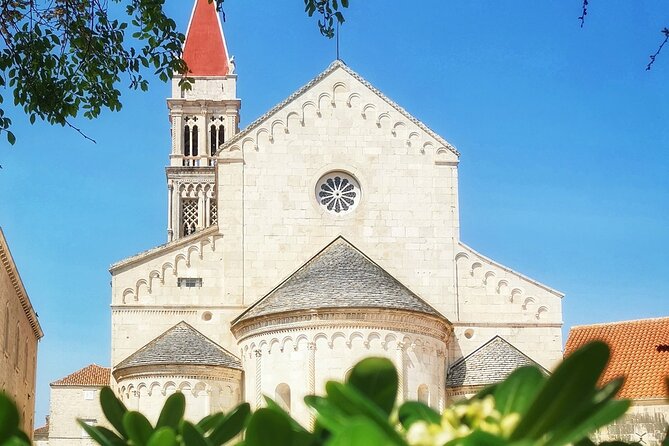
Next comes Saint Lawrence’s Cathedral (Katedrala Sv. Lovre). It is described as a Roman Catholic triple-naved basilica built in Romanesque-Gothic style. The key detail is that construction lasted several centuries, so it illustrates the styles that succeeded each other in Dalmatia.
If you have ever looked at one building and thought, why does it look like it belongs to different eras, this is exactly that kind of stop. With enough time, you can compare elements side by side. With 15 minutes, you still get the big lesson: buildings can be time capsules, even when they are still active.
Admission is not included in the tour details you have. I think that is still a fair trade if you want more than exterior streets. Cathedral interiors and architectural details are where a paid admission often feels justified.
Kula Karmelengo fortress, Venetian coastal defense and big views
Then you head to Kula Karmelengo, the Kamerlengo Fortress. Built in the 15th century during Venetian rule, it was designed to protect Trogir from naval attacks. Today, it is about perspective as much as defense history.
You will get views over the old town, the marina, and nearby islands. This is one of those “you can see why it mattered” stops. If you are the type who likes understanding why people built fortifications, you will enjoy connecting the structure to the coastline and harbor.
Admission is not included here as well. Still, a fortress viewpoint is one of the most practical paid stops on a half day itinerary because you feel it instantly, even if your time is short.
Town Loggia and Palace Cipiko, where civic life and noble power meet
Back in town, the tour includes the Town Loggia, described as the public meeting place of medieval Trogir. This is where important decisions were announced and legal matters discussed. It is a reminder that city life was built around gathering and governance, not just trade.
From there you visit Palace Cipiko (Čipiko Palace), the largest residential palace in Trogir. It is an example of Gothic-Renaissance architecture and belonged to the influential Čipiko family, showing the wealth and power of Trogir’s noble past.
This is one of the places where I like having a guide in front of you. In a self-guided walk, you might see a facade and move on. With context, you can read what the building is trying to communicate about status and who held authority.
Admission for Palace Cipiko is not included in the tour details you have. If you are deciding whether to pay on the spot, weigh it against what you like. If you love architecture and social history, it is a strong match. If you prefer only exterior photos, you might choose to skip the paid interior.
What makes the guides feel different, Kristina and Andrea as examples
The tour’s strongest feedback points revolve around the guide experience. Kristina was praised for being extremely easy to understand and for adding personal stories that made traditions feel alive. Andrea was praised for being knowledgeable and for helping the group navigate crowds with ease, plus a smart route that started with Trogir.
You can use this when you book. If you can request preferences, choose whichever guide style fits you. If you want clear explanations with a warm local voice, Kristina’s style seems like a great fit. If you want crowd-smart movement and route adjustment, Andrea’s approach sounds like your speed.
Price and value, is $228.78 per person a fair deal?
At $228.78 per person, this is not a budget walking tour. It makes sense when you count what you are getting and who you are traveling with.
Here is the value logic I use:
- You are paying for private time with a guide, not a shared experience.
- You have pickup offered, which saves hassle.
- The tour uses a mix of free and paid stops. Free admissions include the Peristyle of Diocletian’s Palace, Grgur Ninski’s statue, Trogir’s central square, and the Town Loggia.
- The paid sites listed as not included are the Cellars of Diocletian’s Palace, St. Lawrence’s Cathedral, Kula Karmelengo, and Palace Cipiko.
So the question becomes, will you want those interiors and paid viewpoints? If yes, the price is easier to justify. If you only care about a couple of exterior highlights, you might feel the cost more.
Also, this route is ideal if you are short on time. Two cities, multiple iconic stops, and quick explanations in about 6 hours is hard to replicate on your own without spending extra time figuring things out.
Who should book this Split and Trogir VIP tour
Book this if:
- You like history, but you also like explanations that make the place click quickly.
- You want to see Roman Split and medieval Venetian-style Trogir without building an itinerary from scratch.
- You care about efficient pacing, because each stop is brief and focused.
Skip it or consider a lighter version if:
- You want to linger in one cathedral or one palace area for a long, slow session.
- You only want one city, because this plan covers both and aims to keep motion smooth.
Should you book? My decision guide
I would book this tour if you want a guided route that connects major sights to the stories behind them, especially the “why” of Roman palace space and the “why” of Trogir’s civic and coastal power. The private VIP setup and English guidance make it a good choice for first-timers to Split, and it is also a nice way to make a single day feel like two places.
If your dream day is hours of self-guided wandering and you hate paying for admissions, then you might feel boxed in by the fast stop pattern. For most people, though, the mix of free highlights and optional paid “where it really matters” sites makes it a smart value day, not just a sightseeing checklist.
FAQ
How long is the tour?
The tour is listed as approximately 6 hours.
Is this tour private?
Yes. It is a private tour or activity, and only your group participates.
Is pickup included?
Pickup is offered.
What language is the tour in?
The tour is offered in English.
Do I need to buy tickets for each stop?
Not all stops require paid tickets. Some stops are marked free, while others are marked as admission not included, including the Cellars of Diocletian’s Palace, Saint Lawrence’s Cathedral, Kula Karmelengo, and Palace Cipiko.
Is a mobile ticket used?
Yes, a mobile ticket is included.
Can I bring a service animal?
Yes, service animals are allowed.
Is free cancellation available?
Yes, you can cancel up to 24 hours in advance for a full refund.
Fresh options around Split
- Walking Tour Split★ 4.7 · 61 reviews
- Unique vintage Tomos moped tour Split – Back to the ’80s★ 4.8 · 17 reviews
- Essential Diocletian’s Palace Tour for First-Time Visitors★ 4.8 · 19 reviews
- Split: Trogir Open Top Bus Trip + Free Split Walking Tour★ 4.1 · 17 reviews
- Ranch 22 Podstrana, ” Horse riding 12 km from SPLIT “★ 4.5 · 79 reviews
- Zinfandel Wine Tasting & Storytelling with Dalmatian Food★ 5.0 · 20 reviews
- Full-Day Quad and Wild Horses Safari in Livno from Split★ 5.0 · 12 reviews
- Best Private Split Walking Tour, Panoramic View and Port Pickup★ 5.0 · 29 reviews
Trogir Tours, compared.
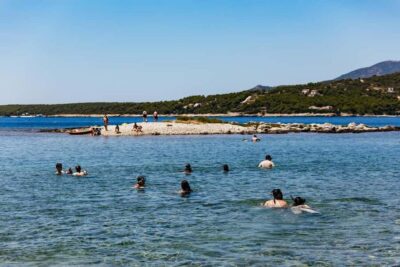
Blue Cave, Mamma Mia, Hvar and 5 Island Tour
Read our review →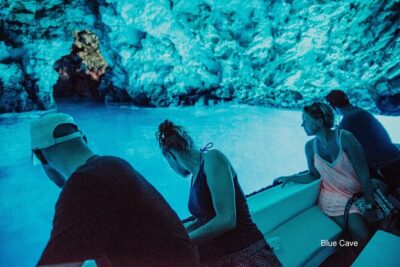
Blue cave, Mama Mia and Hvar, 5 island speedboat tour from Trogir
Read our review →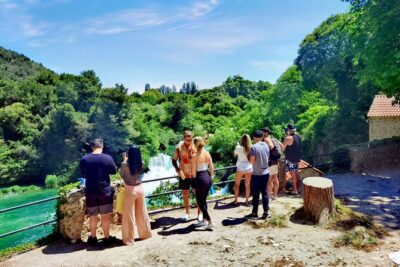
Krka Waterfalls Day Tour with Boat Ride from Split and Trogir
Read our review →
Krka Waterfalls tour with Trogir Walking tour and Krka panoramic boat cruise
Read our review →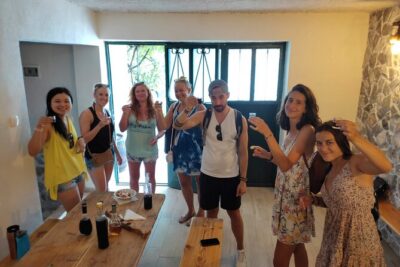
Krka National Park Tour with tour Guide & Wine tasting from Split & Trogir
Read our review →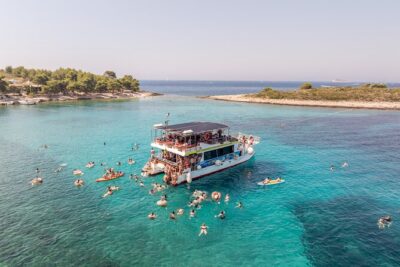
Hvar, Brač & Pakleni islands cruise with lunch & drinks from Split & Trogir
Read our review →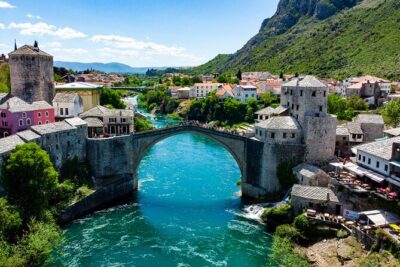
Mostar and Herzegovina Tour with Kravica Waterfall from Split & Trogir
Read our review →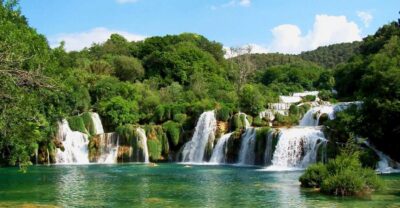
Browse the lists this tour appears in