Reviewed · TOURS
Small-Group Communist Tour of Split – Boutique group tour
A communist-themed tour in Split is interesting because it turns the city into a timeline, from WWII damage to Tito-era daily life. I like the max 8-person group because it keeps questions easy and the pace human.
I also love how the route is built around real places spread across town, so you get Poljud Stadium, the Koteks shopping area, and Split 3 without wasting time. The guiding style mixes a local historian and history teacher perspective, and on at least one departure the guide Boris brought it together with clear, grounded explanations.
The only catch is that the subject matter runs serious. You will hear about dictatorship under Tito and the violent breakup of Yugoslavia in the 1990s, so it is not a carefree, light sightseeing loop.
Key highlights at a glance
- Small group size (up to 8) for a more conversational pace
- Private, air-conditioned vehicle that links dispersed sites efficiently
- Boris-led, local historian style storytelling with an education-teacher approach
- Architecture-focused stops at Poljud Stadium, the China Wall, and Split 3
- A complete storyline arc from WWII to the armored-train symbol at Kopilica
- Soda/pop included, a soft local drink tied to communist-era culture
Why a communist tour in Split feels different
Split is usually sold as a waterfront city and a Roman-stone kind of town. This tour flips the angle and reads Split through its 20th-century political life and built environment.
What makes it work is the way the stops are scattered on purpose. You start at a square where the guide sets the WWII and Yugoslavia context, then you move into architecture and everyday-life remnants from the communist period. It is history by way of streets, buildings, and design choices you can still point to.
Even if you are not a politics person, you will probably enjoy the design and city-planning clues. You will hear how the socialist era shaped housing policy, schooling, health systems, and the economy, then you will look at specific blocks and structures that still shape how people move through Split today.
More of Split worth an open tab:
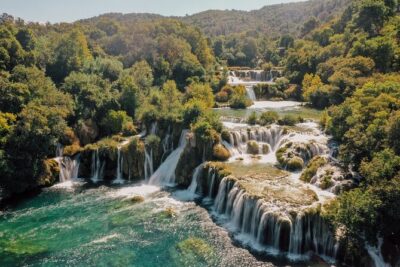
- Split: Krka Waterfalls Trip with Boat Cruise and Swimming
★ 4.8 · 10,519 reviews - From Split: Krka Waterfalls, Food & Wine Tasting Tour
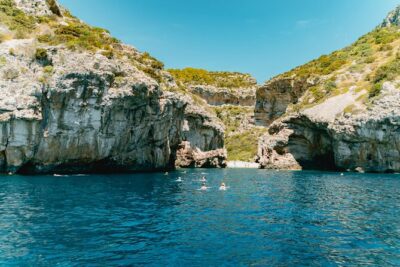
★ 5.0 · 9,326 reviews - Blue cave, Mamma Mia and Hvar, 5 islands speedboat tour
★ 5.0 · 7,150 reviews
Price, timing, and how to judge value
This tour costs $108.14 per person for about 3 hours 30 minutes. That is not a bargain fare, but you do get practical extras that help justify the price if you care about comfort and coverage.
You are paying for: a private vehicle with air-conditioning, a small max 8-person group, and guided context that connects multiple dispersed sites. If you tried to stitch these places together on your own, you would likely spend time figuring out routes and still miss the focused explanations you get on the tour.
A useful detail: this experience is often booked about 10 days in advance on average. That is a sign it sells with people who specifically want this theme, so it is smart to lock in early rather than wait for the last minute.
Getting there and what the 9:00 am start means
You meet at the autobusno stajalište Sv. Frane, Trg Franje Tuđmana (in Split). The start time is 9:00 am, and the tour ends back at the meeting point.
Because the tour uses a private vehicle, you do not have to worry about constant long walks just to cover ground. Still, you will spend time stopping, listening, and walking at points where the guide needs you to look at details on buildings and around plazas.
Also, the tour runs best with good weather. If conditions are poor, it can be switched to another date or refunded, depending on how the provider handles it.
Stop 1 at Trg Franje Tuđmana: WWII context and visual evidence
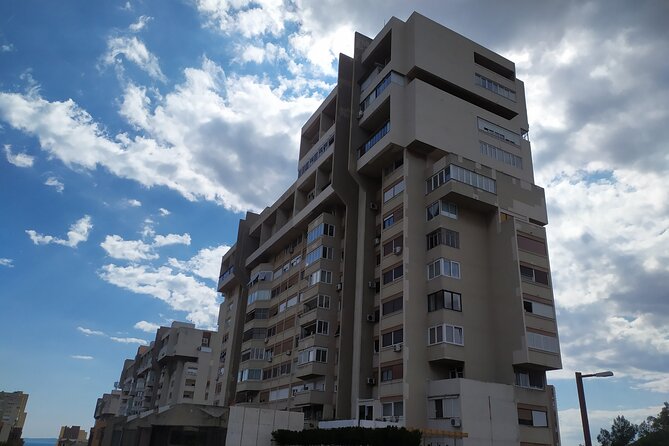
You begin at Trg Franje Tuđmana at the bus stop area. The guide introduces the communist tour of Split with major happenings during WWII in Split and Yugoslavia, and how those events fed into the birth of the new communist state.
One of the most effective parts of the start is that you are shown pictures of damage made in Split during the War. You are not just told a story in abstract terms. You are given visual proof that helps explain why later architecture and planning mattered so much to the people who rebuilt and reshaped the city.
This stop is short, about 25 minutes, and it is basically the setting of the stage. If you are sensitive to heavy material, this is where you will feel it first, but it also makes the later contrasts more meaningful.
Same stretch of the Dalmatian coast, a different kind of day:
- From Split: Krka Waterfalls, Food & Wine Tasting Tour
★ 4.9 · 6,598 reviews - Split/Trogir: Blue Cave, Mamma Mia, Hvar and 5 Island Tour
★ 4.6 · 6,320 reviews - Blue Lagoon & 3 Islands Cruise with Lunch from Split
★ 4.5 · 5,756 reviews - Split: Old Town and Diocletian Palace Walking Tour
★ 4.9 · 4,727 reviews
Stop 2 by Poljud Stadium: architecture with international attention
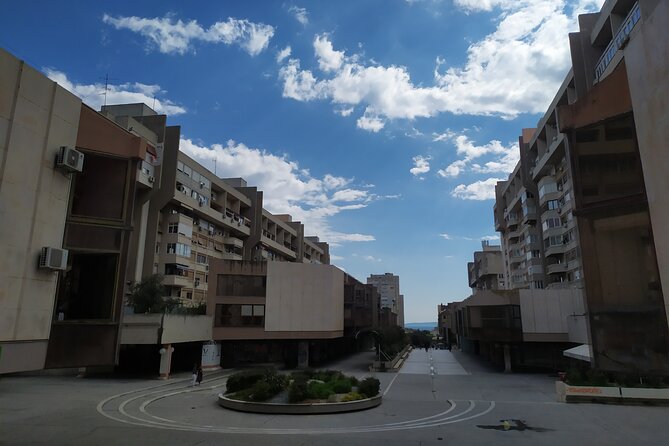
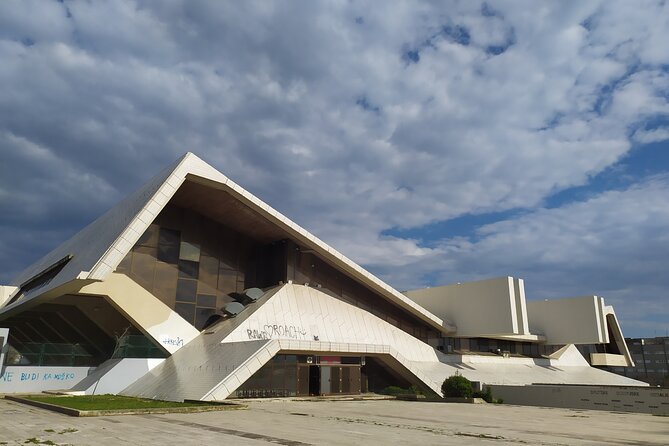
Next you get a short panoramic look while the guide talks about Poljud Stadium, described as the most beautiful stadium built during the communist period in Yugoslavia. It was known outside the country and was built to host a major sporting event, the Mediterranean Games.
You also learn something that raises the stakes for design lovers: Poljud Stadium was one of the top exhibits of Yugoslavia architecture in an exhibition shown at MoMA in New York. That is not a trivia throwaway. It gives you a reason to look closely at what you see in front of you, not just accept it as local architecture.
Right at the same location, the guide points out the China Wall, called the widest existing building in Split and linked to Yugoslav socialist architecture. Even if you have never heard of China Wall before, the explanation makes it easier to notice the scale and function of the structure.
This stop is brief, about 10 minutes, so come with a curious eye and you will get a lot from a little time.
Stop 3 at Koteks: the idea of modern shopping in a divided world
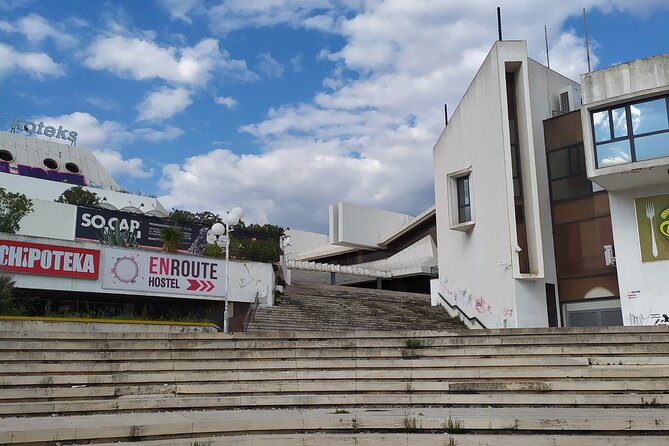
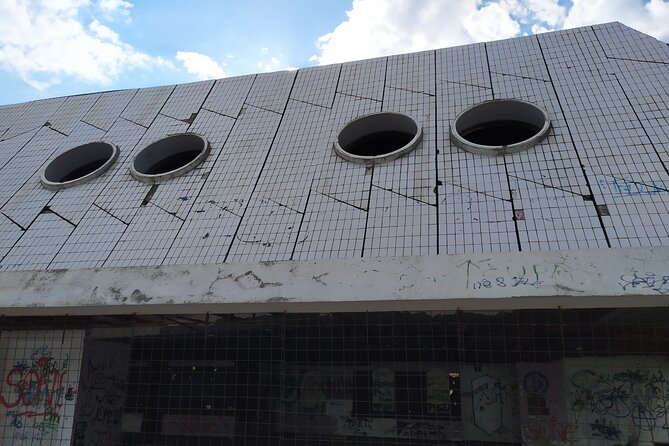
The tour then heads to the Koteks area, described as the first shopping mall in Yugoslavia. You walk around the space and hear how the communist state tried to imagine modern shopping, along with why that idea did not last.
The guide explains the mall’s short popularity and later decay over the years. You also get a human story about consumer life, described as being pulled between open West and closed East, with locals often needing to be creative to supply different types of goods.
This is the stop where the tour turns from buildings to behavior. It helps you understand how policies can show up in everyday habits, like what people could access and how they found workarounds.
The time here is about 30 minutes. It is long enough to walk the area and listen, but short enough to keep the tour moving.
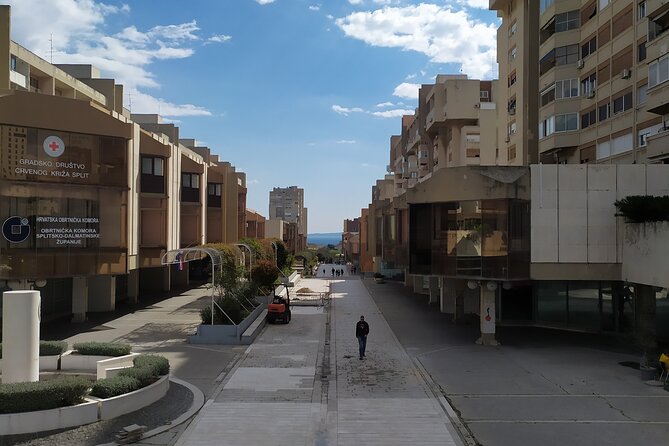
Stop 4 in Split 3: Tito-era planning you can still walk through
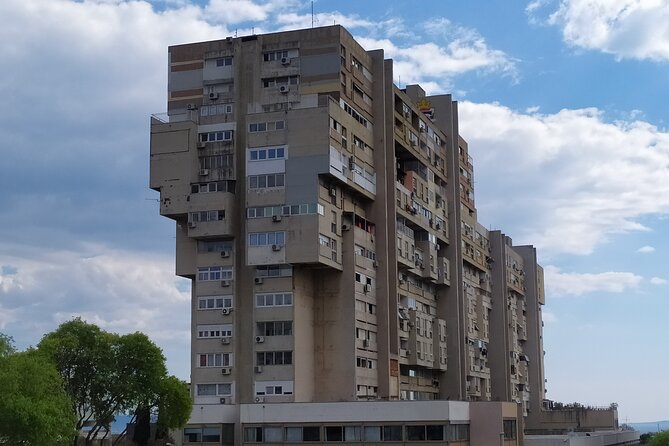
Split 3 is a purpose-built communist Yugoslavia neighborhood, created to provide quality living, working, and resting places for residents. This part of the tour leans hard into urban planning and the everyday systems people depended on.
As you walk around, the guide focuses on architecture styles and what local architects left as signatures on different buildings. One example you will hear about is a building called Cruiser. You also connect the design to the systems the guide describes, including housing policy, educational system, health system, economy, social life, and politics, with emphasis on Tito.
Another reason this stop feels special is that Split 3 was recognized as an important residential project in a Yugoslavia architecture exhibition at MoMA in New York. Again, it is not just name-dropping. It frames Split 3 as something that mattered beyond Croatia and beyond its time.
You also get free time here, about 1 hour 10 minutes, which is a big chunk of the tour. Use it to slow down. If you like photos, take them. If you prefer a quiet break, take that too. This is the point where you can absorb what you heard without being in constant listening mode.
Stop 5 at Kopilica railway station: the armored train and the violent end
The final stop is at Kopilica railway station, where the guide explains reasons Yugoslavia did not manage to survive and why the end in the 1990s was violent, leading to war.
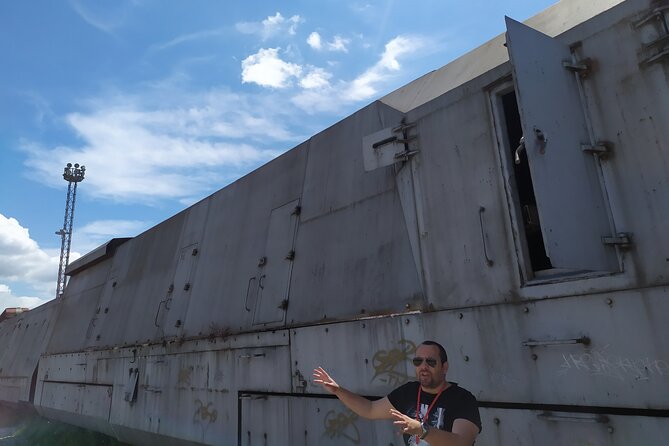
As part of the storytelling, you look at an armored train exposed on the railway. The guide frames it as a symbol of the beginning of the bloody end of Yugoslavia and says it changed relations between nations and religions in Southeast Europe again.
This is where the tour lands its emotional message. After architecture and planning, you end with a physical object tied to conflict, and it reframes everything you saw earlier. It also makes the tour’s structure feel intentional, not random.
This stop lasts about 30 minutes, so you finish with enough time to ask one last question, then you are back at the meeting point.
Included comfort touches: AC, private transport, and communist-era soda/pop
Three practical things make this tour easier to enjoy than a standard walking-only sightseeing plan.
First, you get air-conditioned private transportation. That matters in Split when the sun is doing its thing.
Second, you get a mobile ticket, and the tour includes a few scheduled moments where you are not constantly on the move.
Third, you receive soda/pop, described as a typical soft local drink popular in communist Yugoslavia, and still popular today. It is a small inclusion, but it fits the theme nicely, and it adds a tiny break in the middle of a heavy storyline.
Who this tour suits best
This experience is ideal if you like history that you can actually see. You are not just reading about the communist era in a book. You are looking at Poljud Stadium, the China Wall, Koteks, Split 3, and an armored train, and you are hearing how they connect.
It is also a good match if you enjoy design and city planning. Even if politics is not your main interest, the way the tour links architecture to housing, schooling, and health systems gives the built environment a purpose.
If you want a purely neutral, light overview of Split, this may feel too focused. The tour discusses dictatorship and the violent breakup of Yugoslavia in the 1990s, so you should be ready for that tone.
The one question to ask yourself before booking
Do you want Split’s 20th century told through buildings and political change, not just through old stones and views?
If yes, this tour is a strong pick because it covers multiple locations in a short time with a small group and guided interpretation that helps you connect the dots quickly.
If that topic range makes you uneasy, consider a different Split theme. The city is big enough to support both styles of travel.
Should you book this communist Split tour?
Book it if you want a structured, education-style walk through communist-era Split that stays practical: short stops, vehicle between sites, and a guide who ties each place back to a clear storyline.
Skip it if you dislike political material or prefer mostly cheerful sightseeing. Also, if you know you struggle with topics involving war and violent conflict, this is worth thinking about ahead of time.
With a max 8 travelers format, English language delivery, and air-conditioned private transport, it is a good way to see parts of Split most visitors miss, without turning the day into an exhausting self-guided scavenger hunt.
FAQ
How long is the Small-Group Communist Tour of Split?
It lasts about 3 hours 30 minutes.
What is included in the price?
You get soda/pop, an air-conditioned vehicle, and private transportation. The stops listed are described as admission ticket free.
Is the tour offered in English?
Yes, the tour is offered in English.
How large is the group?
The tour has a maximum of 8 travelers.
Where do we meet, and where does it end?
You meet at autobusno stajalište Sv. Frane, Trg Franje Tuđmana, 21000 Split, Croatia. The tour ends back at the same meeting point.
What is the cancellation policy?
Free cancellation is available. You can cancel up to 24 hours in advance for a full refund, and changes within 24 hours of the start time are not accepted. The tour also requires good weather, and if it is canceled due to poor weather you are offered a different date or a full refund.
Fresh options around Split
- Controversies behind Split and Croatia-Anthropologist guide★ 5.0 · 59 reviews
- Split City Tour By Electric Rickshaw┃Riva Ride★ 5.0 · 50 reviews
- Coffee, storytelling & walk – The best private tour of Split★ 5.0 · 46 reviews
- Chill Private Walking Tour of Diocletian’s Palace★ 5.0 · 35 reviews
- Canyoning basic on Cetina river from Omiš★ 5.0 · 66 reviews
- River Rafting from Split- Cliff Jumping- Cave Visit★ 5.0 · 90 reviews
- Private Split City Walking Tour – Spanish Guide★ 4.5 · 12 reviews
- Classic Tuk Tuk City Tour Split★ 5.0 · 80 reviews
Tours, compared.
Blue cave, Mamma Mia and Hvar, 5 islands speedboat tour
Read our review →
Blue Cave, Mamma Mia, Hvar and 5 Island Tour
Read our review →

Blue Cave & 6 Islands Speedboat Tour From Split or Podstrana
Read our review →